· Flow · 4 min read
Commitments and Energies in a Kanban System - Lessons from LKBE 2011 That Still Matter
Revisiting my 2011 Lean Kanban Benelux talk on commitments, flow energy, routing, and predictability, with practical guidance for today's product and portfolio environments.
Back in 2011 at Lean Kanban Benelux, I shared a talk about a question I still hear all the time:
How do we keep commitments in a pull/flow system without falling back into heavyweight timebox theater?
I recently revisited the transcript and slides. The language is older, but the core tension is still current. Teams want flow, leaders want predictability, and both are right.
Here is a refreshed version of the core ideas, plus what I would emphasize now.
Commitment in Flow Is Not “No Commitment”
A common misunderstanding is that Kanban means “no dates, no commitments, no accountability.”
That was wrong in 2011 and it is wrong now.
What changes in flow systems is not whether we commit, but how we commit:
- internal team commitments based on capacity and flow signals
- service-level expectations by work type
- explicit handling for fixed-date and fixed-scope work
- frequent re-planning based on evidence, not hope
In other words: commitment becomes an ongoing management activity, not a one-time planning ritual.
Use Real Options for Fixed-Date Work
One message from that talk was “never commit early unless you know why.”
That is real options thinking. Keep your options open until the economics justify narrowing them.
When fixed-date work enters your system (regulatory, market windows, contractual events), do not pretend everything is the same. Use explicit classes of treatment and make tradeoffs visible:
- what gets expedited
- what gets protected
- what gets delayed
- what gets descoped
This improves both delivery confidence and decision quality.
Energy Matters: Work Expands Unless You Shape It
The “energies” part of the talk focused on something teams still struggle with: without clear constraints, work expands to fill available space.
Testing, polishing, and integration can easily become “whatever time is left,” especially under pressure.
Some practical countermeasures:
- create small, clear scope containers
- define context-specific done criteria
- use soft time containers to trigger re-evaluation
- visualize aging work so late items get attention instead of neglect
This is not about rigid timeboxing everything. It is about creating enough productive tension to keep work moving.
Intelligent Routing Beats One-Size-Fits-All Flow
Not all work should follow the same route.
When bottlenecks are congested, forcing every item through identical steps increases cycle time variance and weakens predictability. Intelligent routing means adapting the path based on risk, urgency, and feedback needs.
This is where classes of treatment, preemption policies, and alternate routes become strategic tools rather than process trivia.
At the portfolio level, this same principle shows up as differentiated investment pathways and explicit governance policies.
Visibility Should Show Movement, Not Just Status
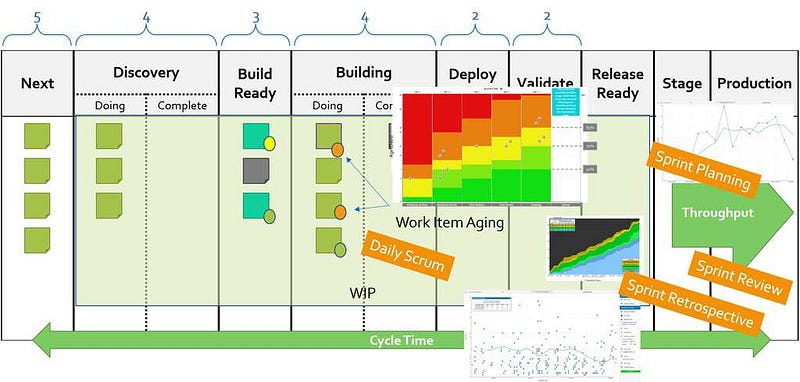
A static board snapshot is useful, but insufficient. In the original talk, I emphasized signals that show motion and risk:
- blocked work
- aging work items
- zombie cycle times
- buildup before constraints
Those signals are still some of the best early-warning mechanisms we have. They help teams swarm in time instead of post-mortem too late.
If this resonates, you will probably like my more recent writing on active flow management and portfolio metrics:
- Actively Managing Portfolio Flow
- Improving Portfolio Flow Using Flow Metrics
- Improving your SAFe Implementation with some additional Flow metrics
The Dot I Would Connect More Strongly Today
In 2011, most of this conversation was framed at team and program levels.
Today, the bigger opportunity is to connect these same flow disciplines to portfolio decision systems and strategic traction:
- flow metrics as decision inputs, not reporting artifacts
- explicit portfolio WIP policy
- outcome-oriented classes of service
- regular right-to-left portfolio reviews
That is how you move from “faster delivery theater” to measurable business progress.
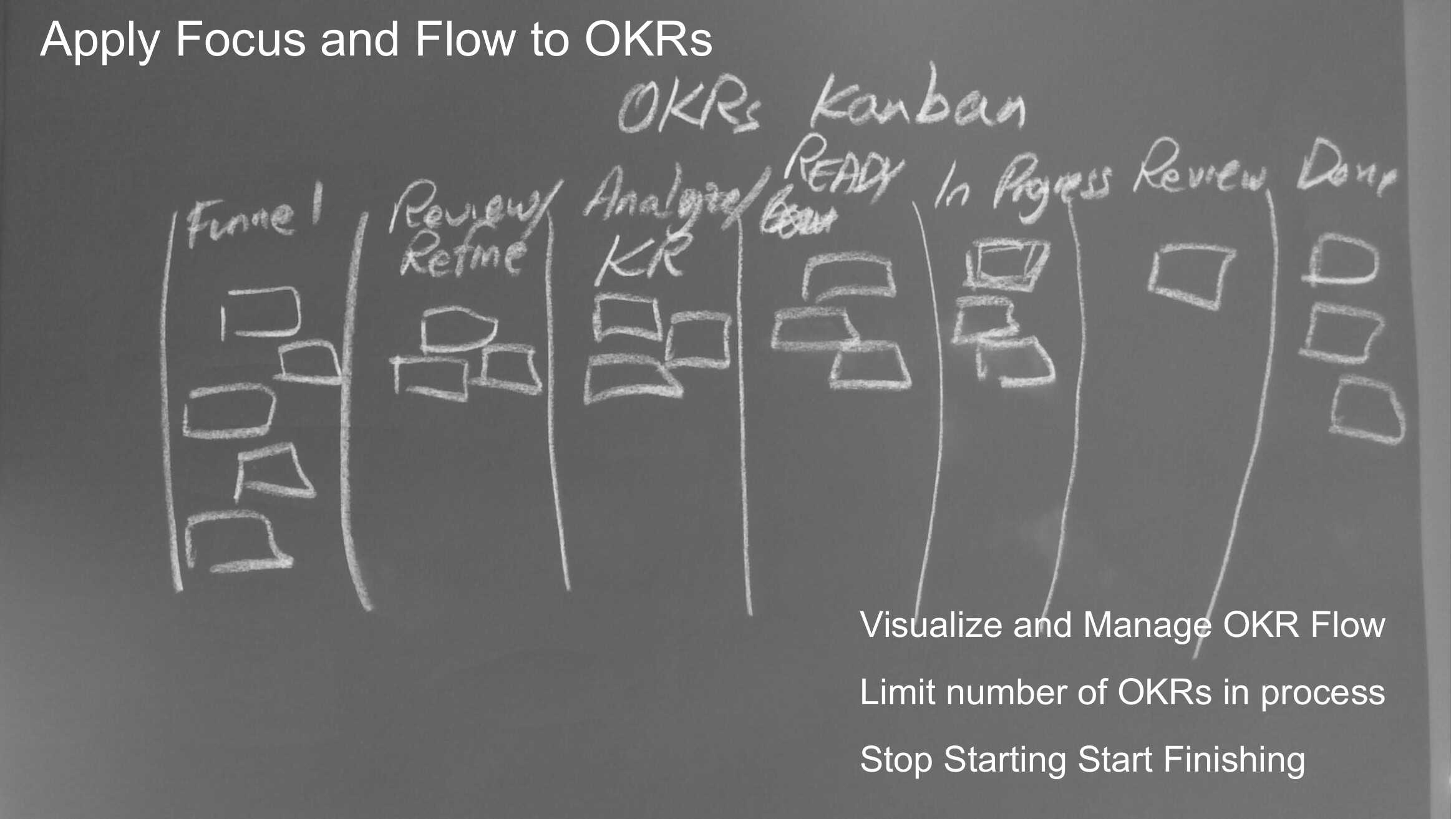
I wrote more about that bridge here: Improving strategic traction through an OKR Kanban System
If You Want to Apply This Next Week
Start simple:
- Split incoming work by class of treatment (instead of one default lane).
- Add a visible aging policy for in-flight work.
- Review flow right-to-left once a week and log concrete decisions.
- Track throughput, cycle time, and aging for at least a month before changing everything.
You do not need a perfect framework. You need clear policies, visible flow, and disciplined decisions.
The original deck is still on Prezi for historical context: Commitments and Energies in a Kanban System (Prezi)
If you want help improving commitment reliability without sacrificing flow, explore portfolio agility work or reach out.

About Yuval Yeret
Yuval is a rare practitioner who has shaped the agility path of dozens of organizations and influenced the frameworks used across the industry. He helps product and technology leaders move from agile theater to evidence-informed, outcome-oriented delivery that creates better value sooner, safer, and happier.