· Product Operating Model + Product Orientation · 4 min read
The Scaling Paradox: Why Your Success is Now Killing Your Speed
You scaled successfully — so why is it harder to ship a simple feature today than when you were 50 people? The Product Operating Model is the answer to the coordination tax that kills speed as organizations grow.
You found product-market fit. You scaled by hiring great product people and the best engineers. You’re using agile ways of working.
So why is it harder to ship a simple feature today than it was when you were 50 people?
💡 Insight: The Coordination Tax
Most organizations scale by adding ‘alignment layers’ (PMOs, sync meetings). This is a tax on your speed. True scale comes from eliminating dependencies, not managing them.
You’re not alone. Many teams start strong, laser-focused on delivering value and achieving product-market fit. But as success scales, things get messy. Dependencies pile up, alignment fades, and the startup days’ speed and impact are gone.
And it’s become a major risk to continued growth.
Why Do Product Organizations Stall?
Here’s the typical lifecycle:
Early Days: One team, minimal dependencies, clear goals. It’s all about finding product-market fit and delivering value fast.
Growth Phase: Demand grows, teams specialize, and suddenly alignment becomes a challenge. Conversations shift from outcomes to scope and timelines.
Scaling Chaos: Multiple products and cross-company initiatives create sprawling dependencies. Work devolves into projects managed with traditional methods (even if they’re disguised as “Agile”).
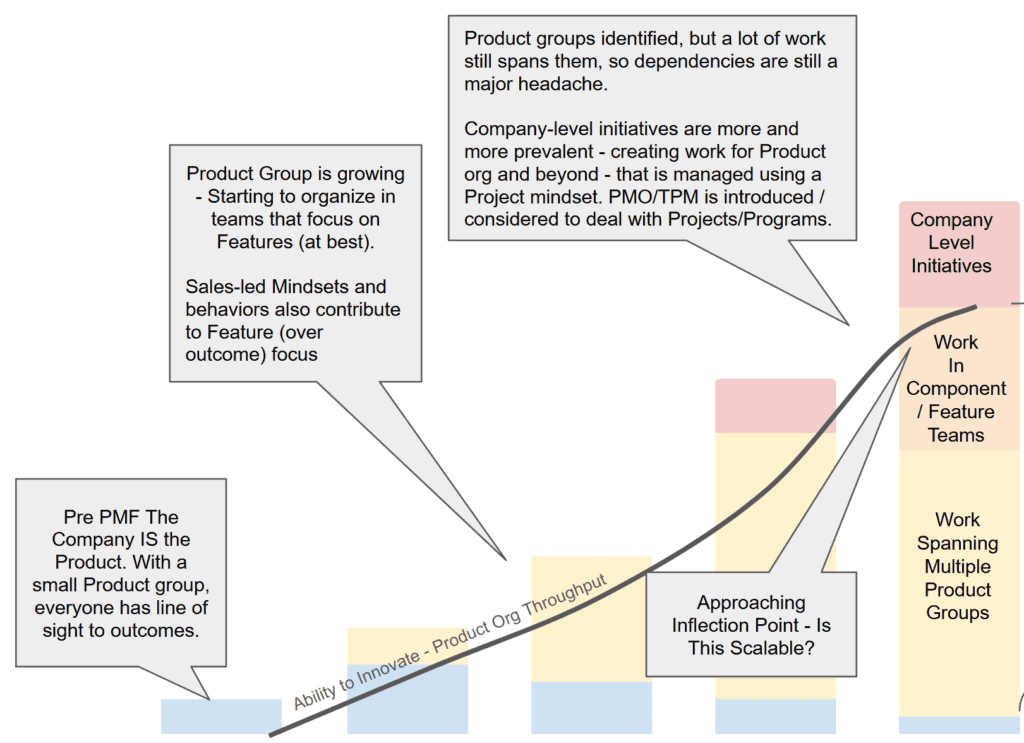
The result? Fewer empowered teams, more inefficiencies, and a lot of frustration.
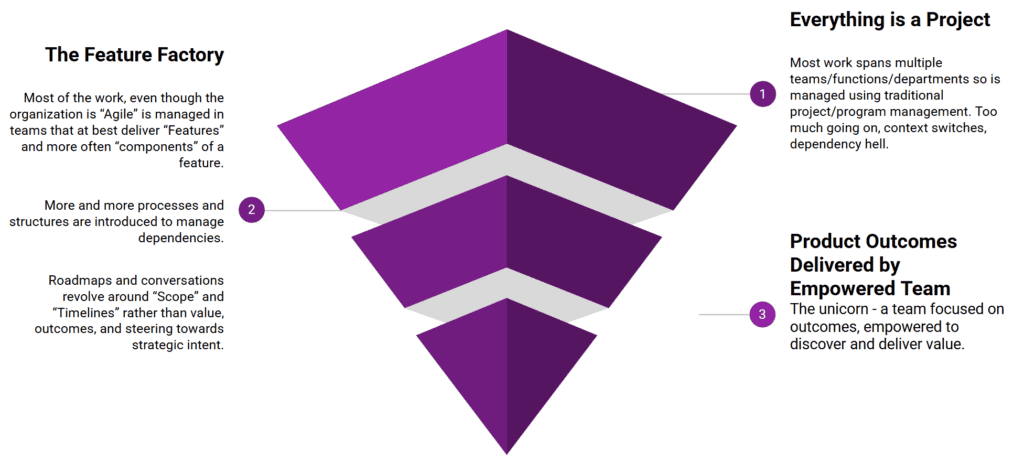
Right now, your organization is inverted. You have 10% of your teams delivering value, and 90% of your teams managing ‘coordination tax.’
You are paying senior engineers to sit in alignment meetings instead of building product.
Flipping the Pyramid
We need to stop managing dependencies and start eliminating them. We flip the pyramid not for aesthetic reasons, but to restore flow:
Empowered Product Teams: The foundation of a healthy organization. These teams own outcomes aligned with strategic goals and operate autonomously. They rarely depend on other teams to deliver value.
We want to move as much work as possible into such teams. This might require changing product topology, team structure, product architecture, identifying platforms / enabling teams that reduce the context and breadth needed to deliver product outcomes.Product Groups: For work that spans multiple teams but can still be managed within a focused group. Use when you can’t create an empowered product team, or it doesn’t make sense yet. Or when you want to encourage synergies across a set of products.
Strategic Initiatives: A small set of cross-organizational efforts managed with flow principles—focused on outcomes, evidence-driven, and limited in scope to avoid chaos. Once you limit your focus, you can apply product thinking at this level to maximize the outcomes of these strategic initiatives.
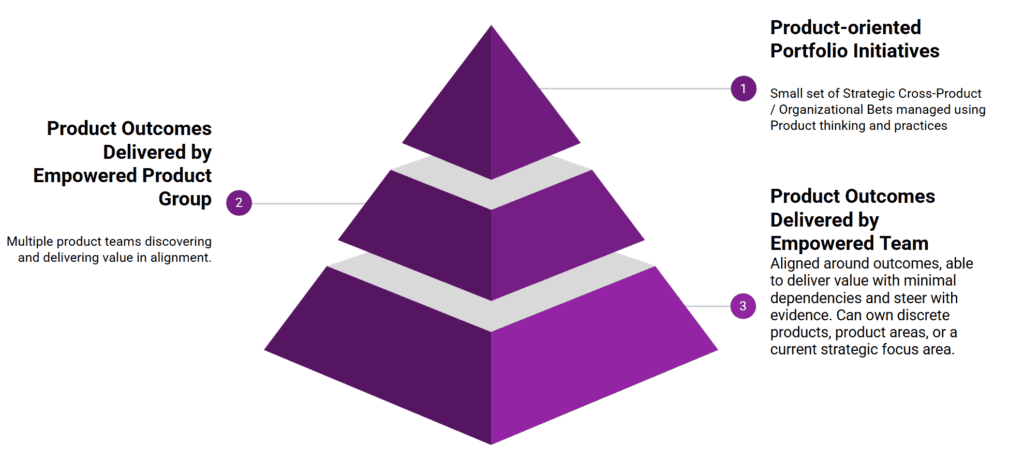
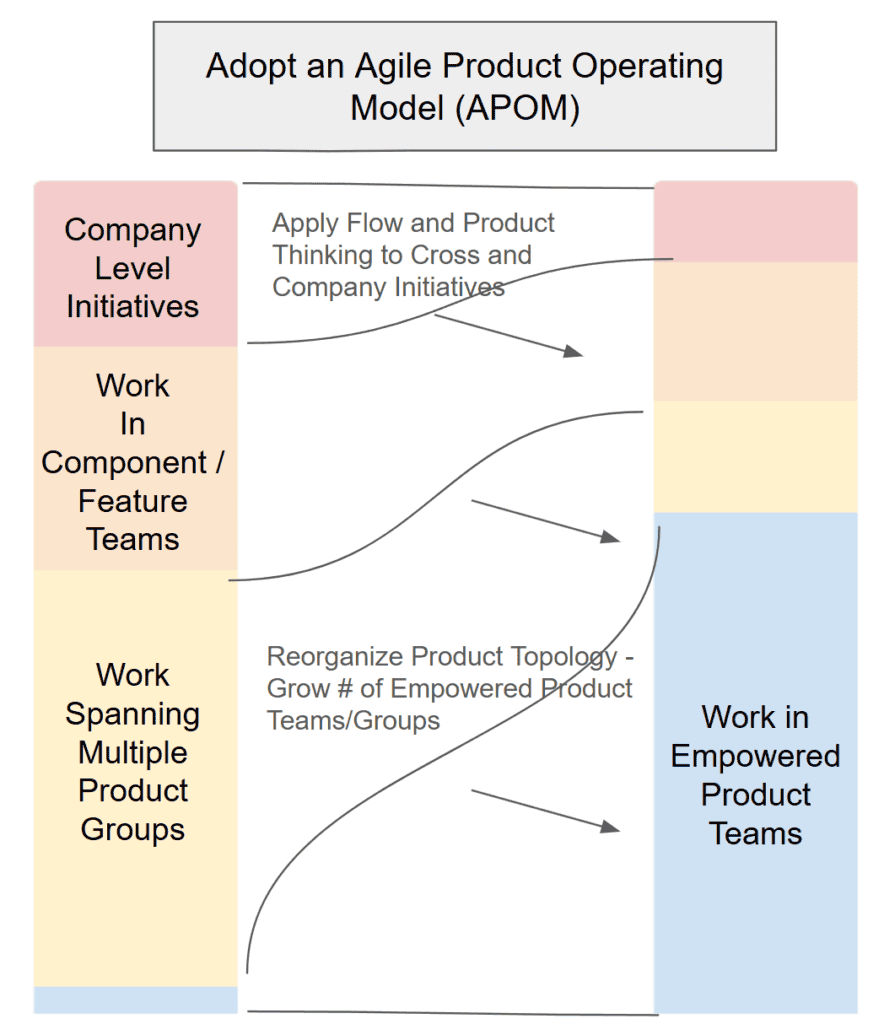
NOTE: I got the idea for this article and especially the visual above based on a conversation with John Cutler and his article on Work Shape Mix. Go read it now. It’s a gem.
The Roadmap to Change
This isn’t an overnight fix. Transforming into a healthy product organization requires:
Aligning on strategic goals and priorities.
Actively limiting the amount of work that is pulled into the higher levels of the Pyramid
Using the healthy pyramid as a north star for architectural changes that help detangle products. (Melt the iron spaghetti…)
Building platforms and enabling teams to support empowered teams.
Carefully managing the balance between team autonomy and organizational alignment.
Applying product thinking even to large-scale initiatives—closing feedback loops faster and steering with evidence.
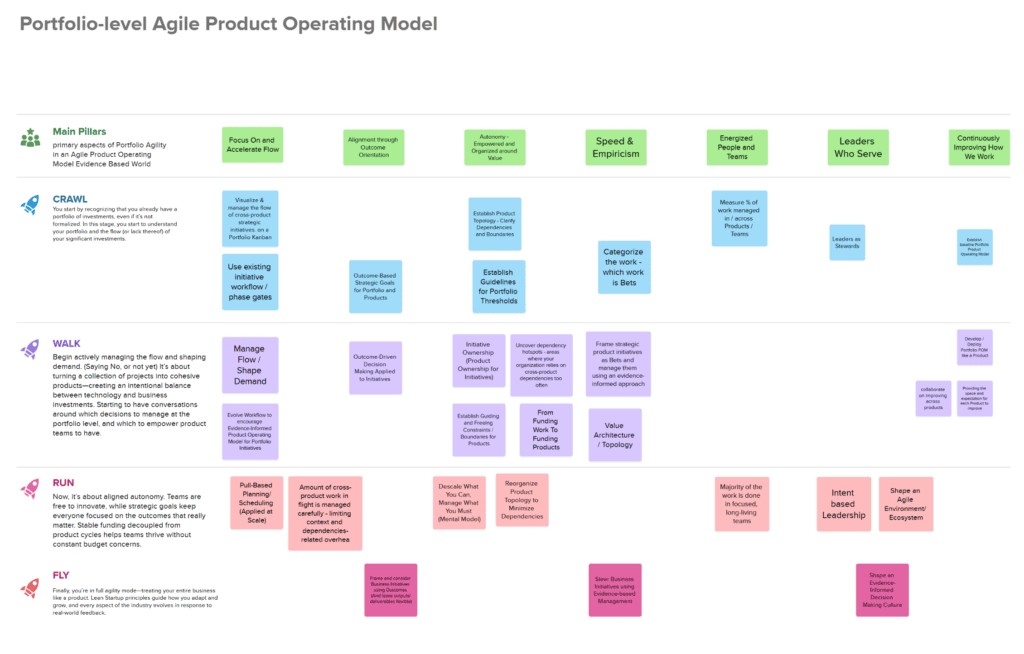
(This trail map is based on the Portfolio Agility Trail Map - a guide for applying an Agile Product Operating Model at scale)
Why It Matters
A flipped pyramid means less micromanagement, more innovation, and a clearer path to delivering real value, not just features or timelines. It’s about creating an environment where empowered teams thrive and your organization can scale without losing its soul.
If you have more engineers than ever but less speed and impact to show for it, adding more process won’t fix it. Let’s look at your portfolio topology and flow and identify precisely where the ‘coordination tax’ is killing your speed and how to evade it.
Frequently Asked Questions
Is a Product Operating Model just another reorg?
No. A Product Operating Model is mainly about behavior, decision rights, and flow. Organizational structure can support it, but structure alone will not create outcomes.
Where should we start if we are overloaded with initiatives?
Start with portfolio focus and flow. Reduce active work, clarify strategic priorities, and protect capacity for outcome-critical efforts.
How long does it take to feel meaningful improvement?
You can usually see early signal shifts in a quarter when leadership tackles the top systemic constraints. Full operating model maturation takes longer and is iterative.

About Yuval Yeret
Yuval is a rare practitioner who has shaped the agility path of dozens of organizations and influenced the frameworks used across the industry. He helps product and technology leaders move from agile theater to evidence-informed, outcome-oriented delivery that creates better value sooner, safer, and happier.