Product-Led vs Service-Led Business Models — and Where PLG, Product-Led Org, and Product Operating Model Fit
Product-led vs service-led isn't one comparison — it's three. Here's how product-led business models differ from service-led ones, and how PLG, product-led orgs, and product operating models each fit inside that.
What is the main difference between product-led and service-led business models?
The biggest split in how a business creates and captures value is product-led vs service-led. A product-led business scales primarily through the product itself — the thing you build does the heavy lifting in acquisition, delivery, and expansion. A service-led business scales through people delivering engagements (consulting, training, custom projects). While many firms blend both, their core organizational structures and growth loops are fundamentally different.
Where it gets confusing is that “product-led” then gets used three more ways inside that frame — as an organizational structure, as an operating model for how product/engineering runs, and as a go-to-market motion. People use them interchangeably and that’s where the confusion starts. I thought I’d take the time to clarify the overlaps and differences, first of all for myself.
What is a Product-Led Organization?
As opposed to Sales, Engineering, or Marketing-led organizations, a Product-Led organization is structured to deliver value through the product. These organizations often have product-oriented leaders at the helm. Examples include Tesla, Spotify, and Atlassian.
What is a Product Operating Model (POM)?
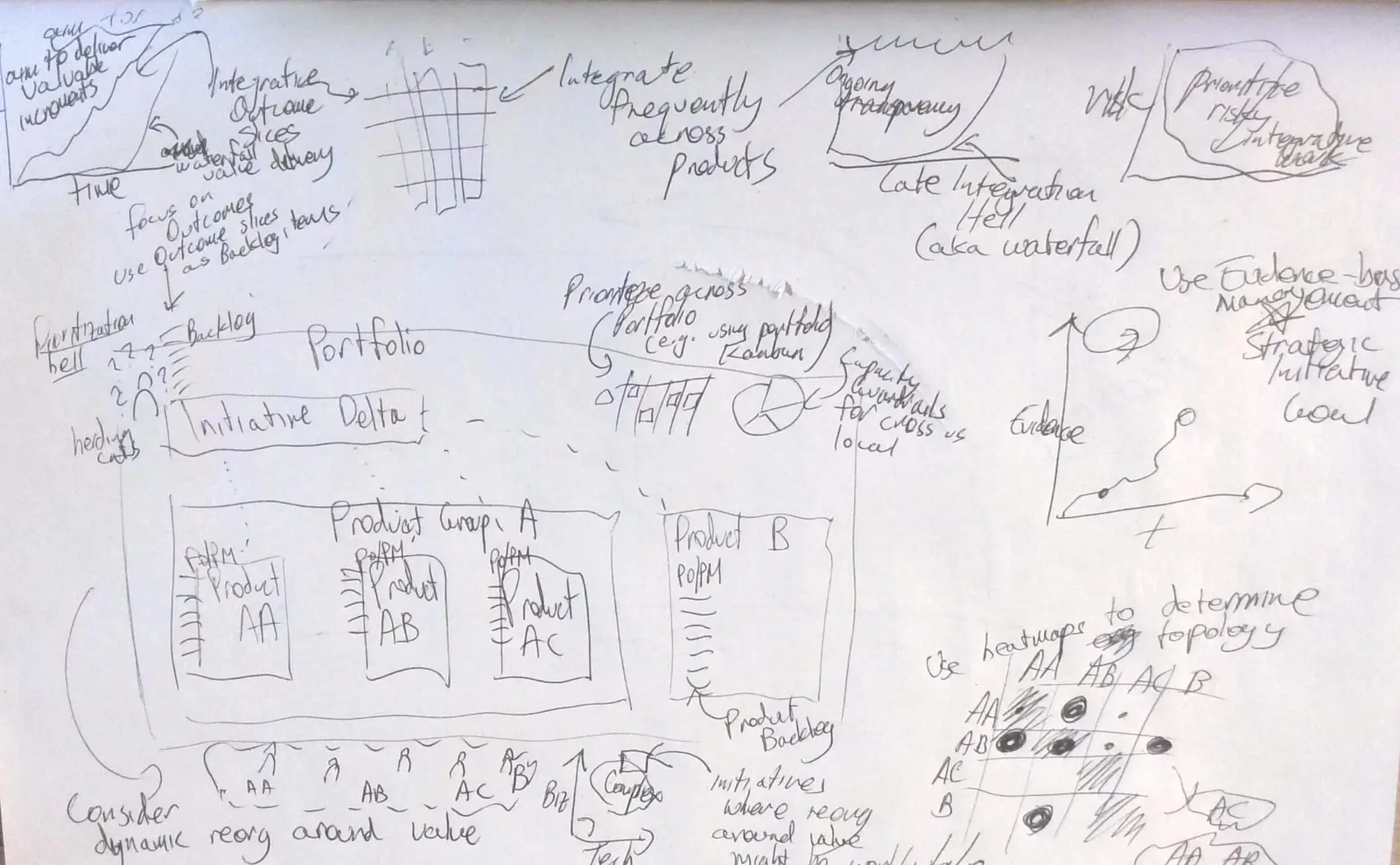
This is about how the product/engineering organization operates. It typically entails empowered product teams aligned and steering toward customer outcomes. It has gained popularity as more organizations move from project factories toward a product focus.
What is Product-Led Growth (PLG)?
A go-to-market strategy where the product itself is the leading mechanism for acquiring customers. Think Slack, Dropbox, Zoom, or Canva—utilizing freemium models and viral loops.
What is the relationship between these three terms?
A company could be a Product-led Organization, leverage a Product Operating Model, and rely on a PLG motion. It could also do each one of these or any mix.
A Product Operating Model thrives in a Product-led Organization, but it is an uphill battle in a Sales- or Marketing-led environment. It is almost essential if you’re trying to build a PLG motion because it’s so product-centric. I’m having a headache imagining an organization trying to achieve PLG without it.
What is the relationship between a Product Operating Model and Agile?
It’s tough to discern “Awesome Agile” from a Product Operating Model. I’m not talking about the theater or rituals here. I’m talking about the principles used to design the organization and run it.
If this distinction matters in your current strategy work, explore the Product Operating Model advisory path to discuss your context.
A free audio series navigating the product operating model landscape — for leaders building modern product-oriented technology organizations.
Yuval Yeret helps product and tech leaders move from agile theater to evidence-informed delivery. Work with Yuval →