AI Insights

AI Activity to Impact

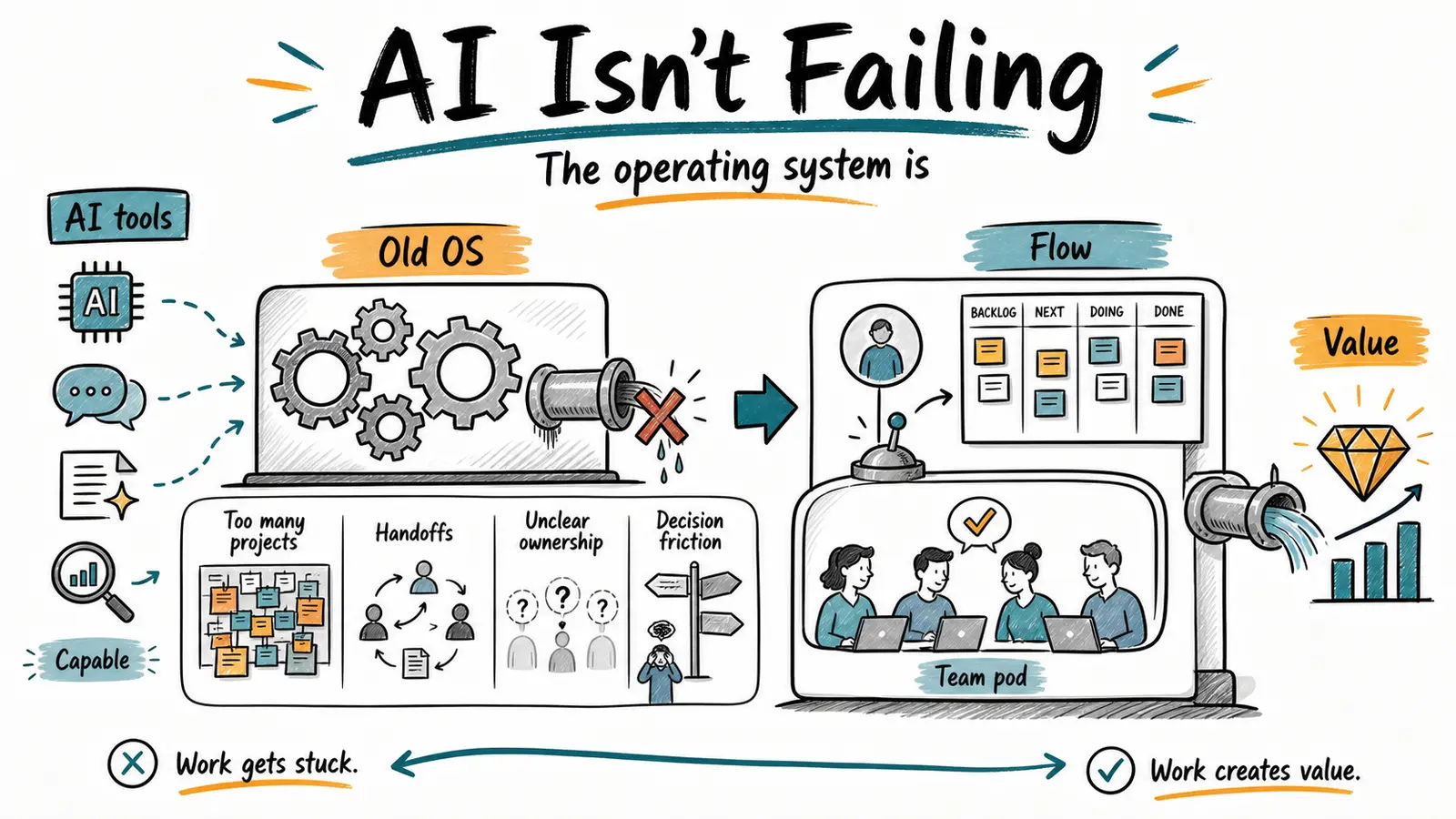
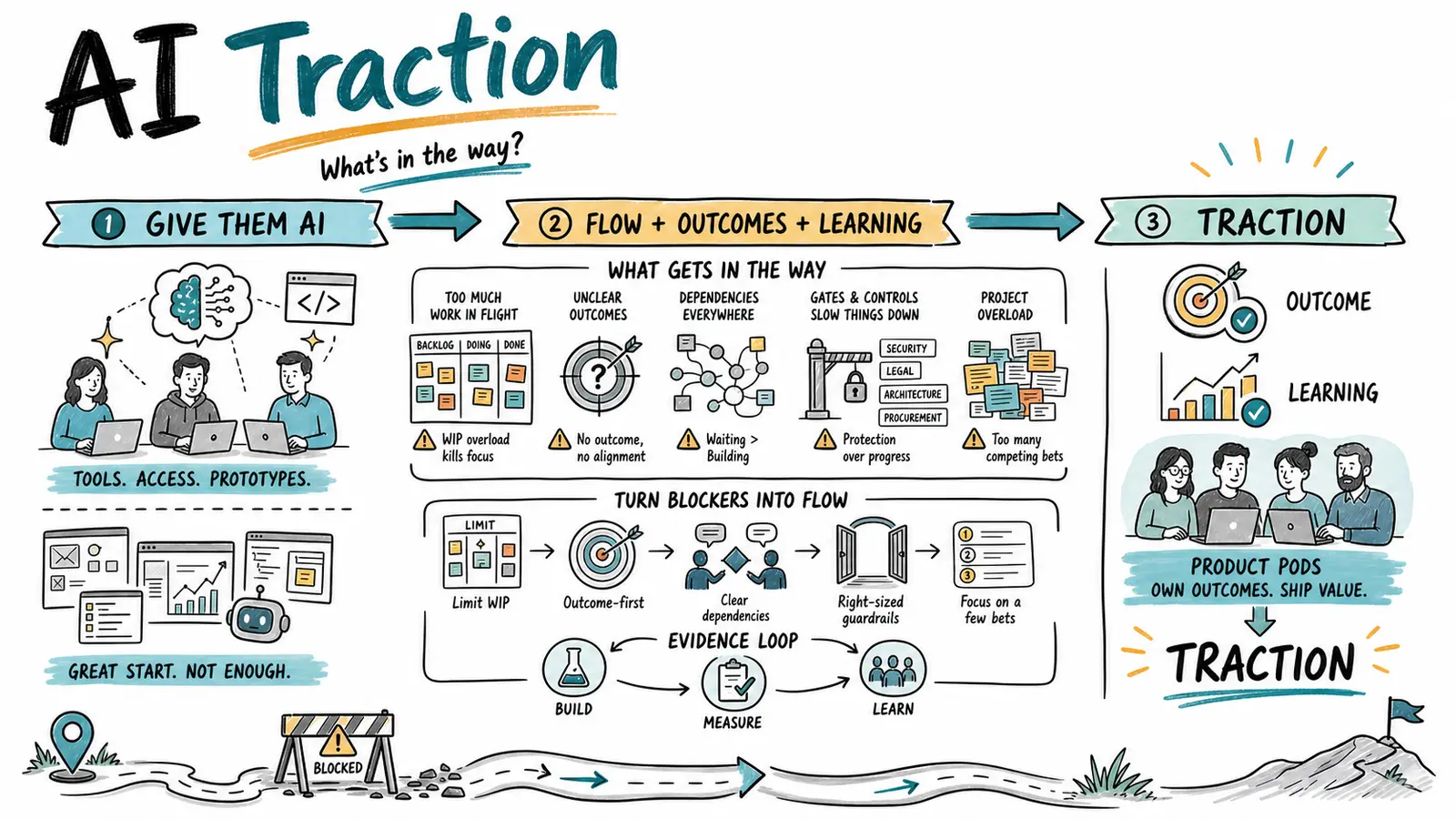
AI creates speed, not automatic value. Your operating model decides whether that speed becomes business impact.

This page pulls together my most essential perspectives on AI transformation. Below, I’ll share how AI productivity works, how to recognize and escape "AI Theater", and how to design your organization so that AI speed actually translates to business outcomes.

Why Activity != Impact

Why does massive AI activity so rarely lead to business impact?

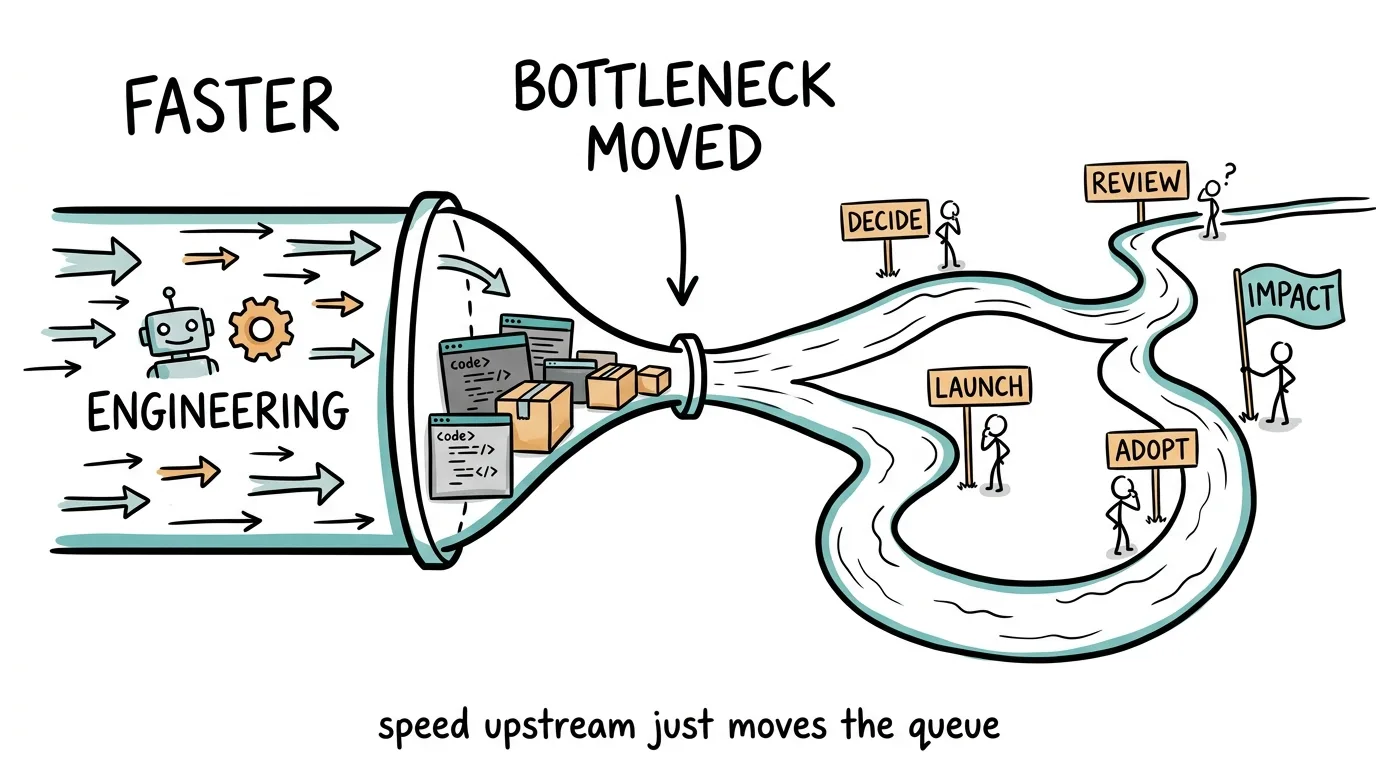
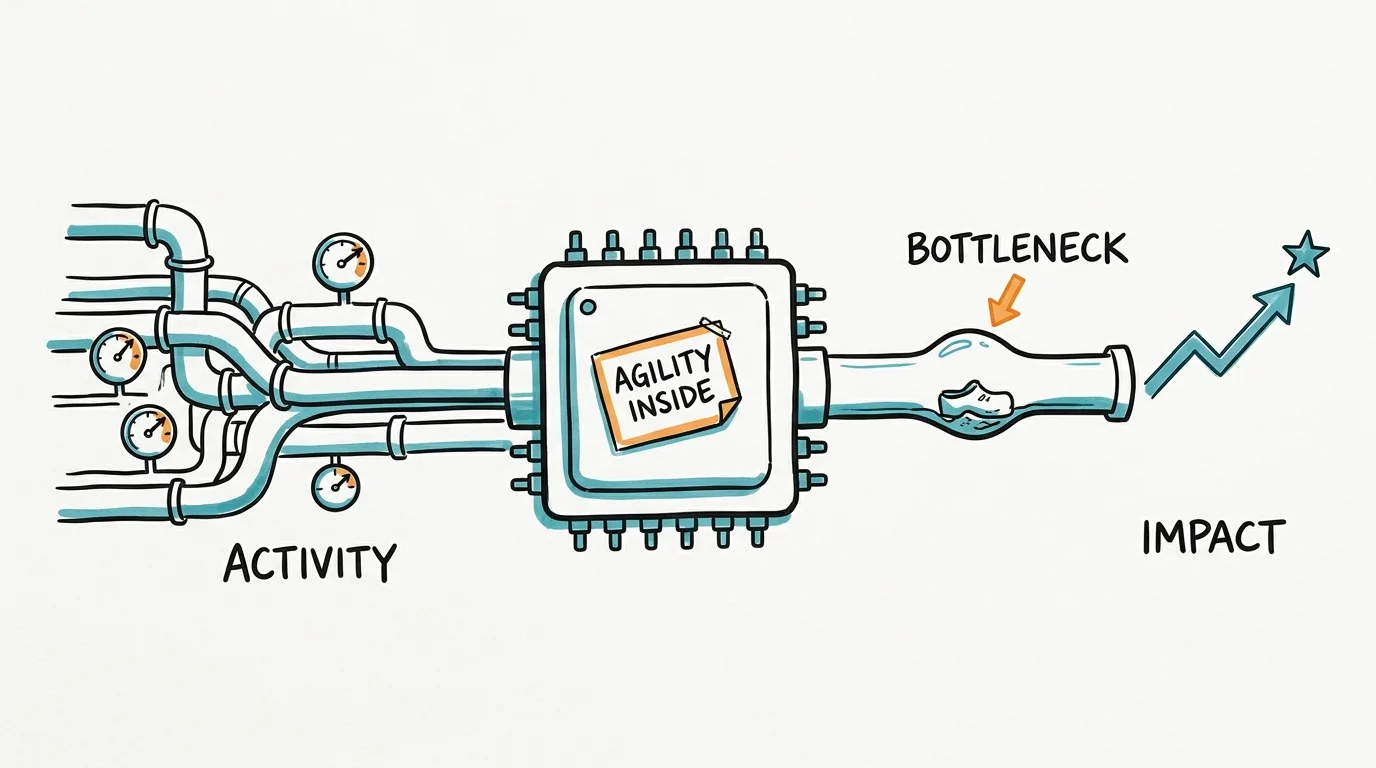
AI creates speed, but speed is uneven. When you accelerate one part of a system—like generating code or drafting copy—without addressing the downstream review, deployment, and adoption constraints, you build inventory and queue time rather than actual business value.

In many organizations, adding AI looks like massive productivity. Teams are writing code faster, drafting reports in seconds, and spawning marketing copy by the gigabyte. Yet, the end-to-end delivery times to customers remain virtually unchanged. The reason is a simple system-level mismatch.

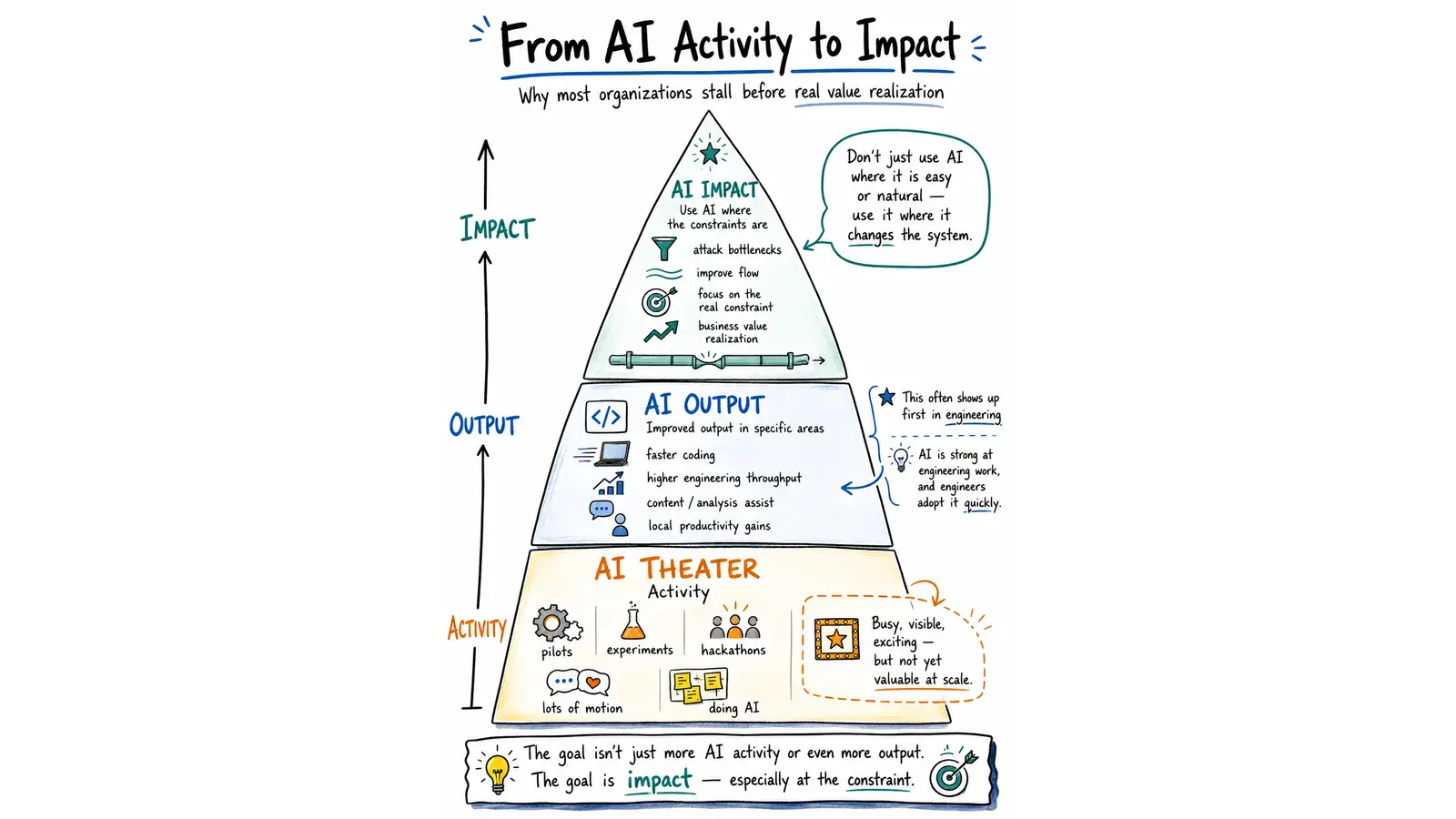
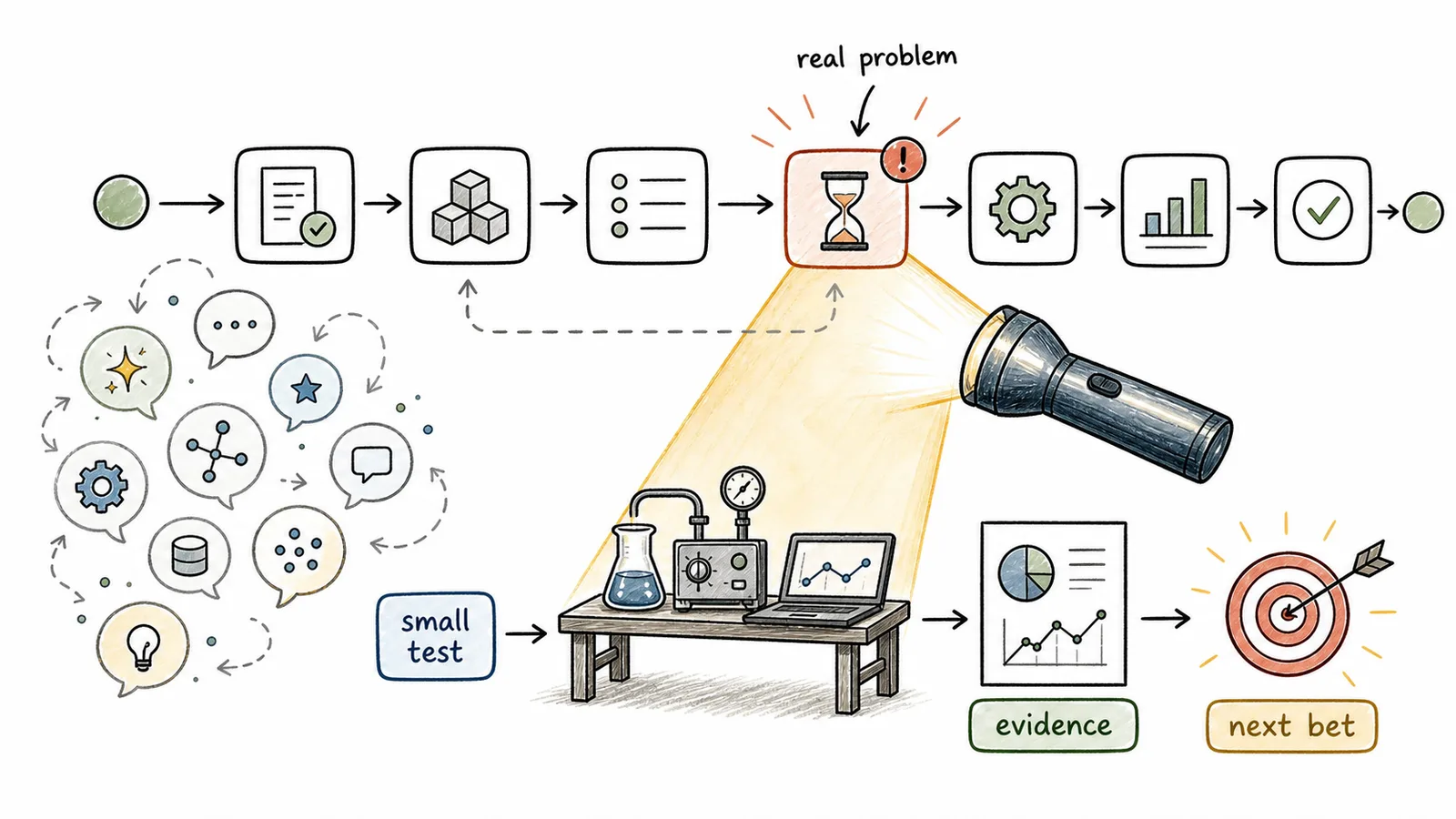
AI productivity only matters when it improves the core constraint of your value stream. If your bottleneck is code review, security approval, or customer adoption, making engineers write code faster just creates a large backlog of unreviewed code. It adds inventory and congestion, not value. To move from activity to impact, you must identify your system constraint and aim AI there.

Escaping "AI Theater"

How do you recognize and escape "AI Theater"?

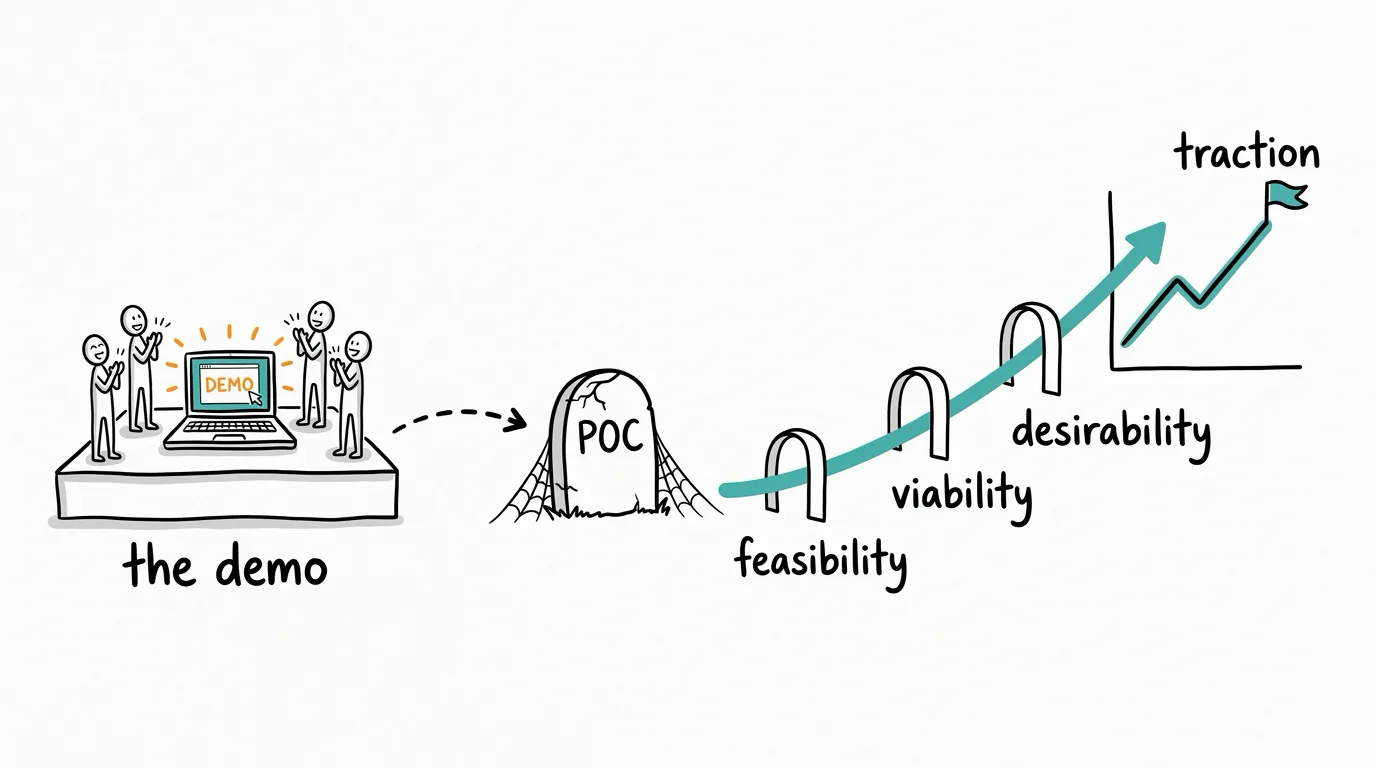
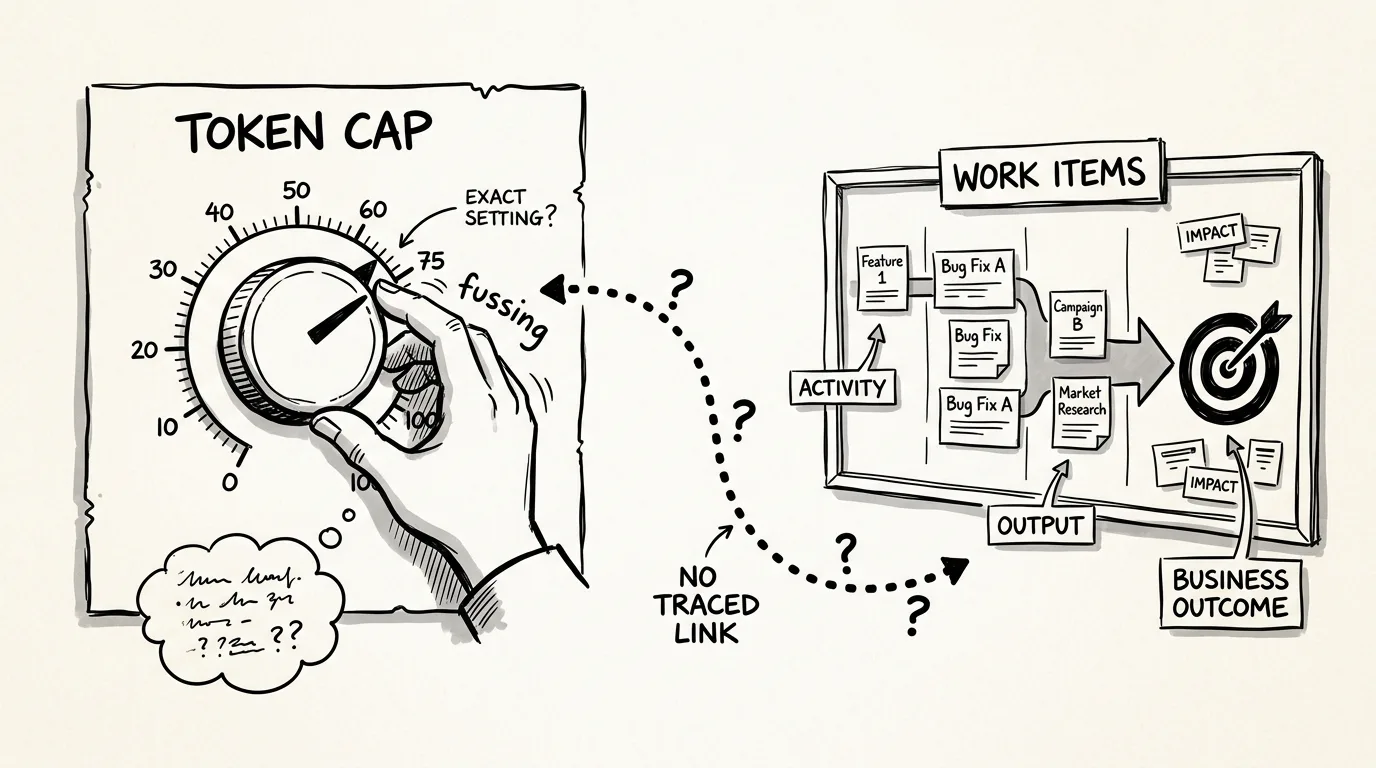
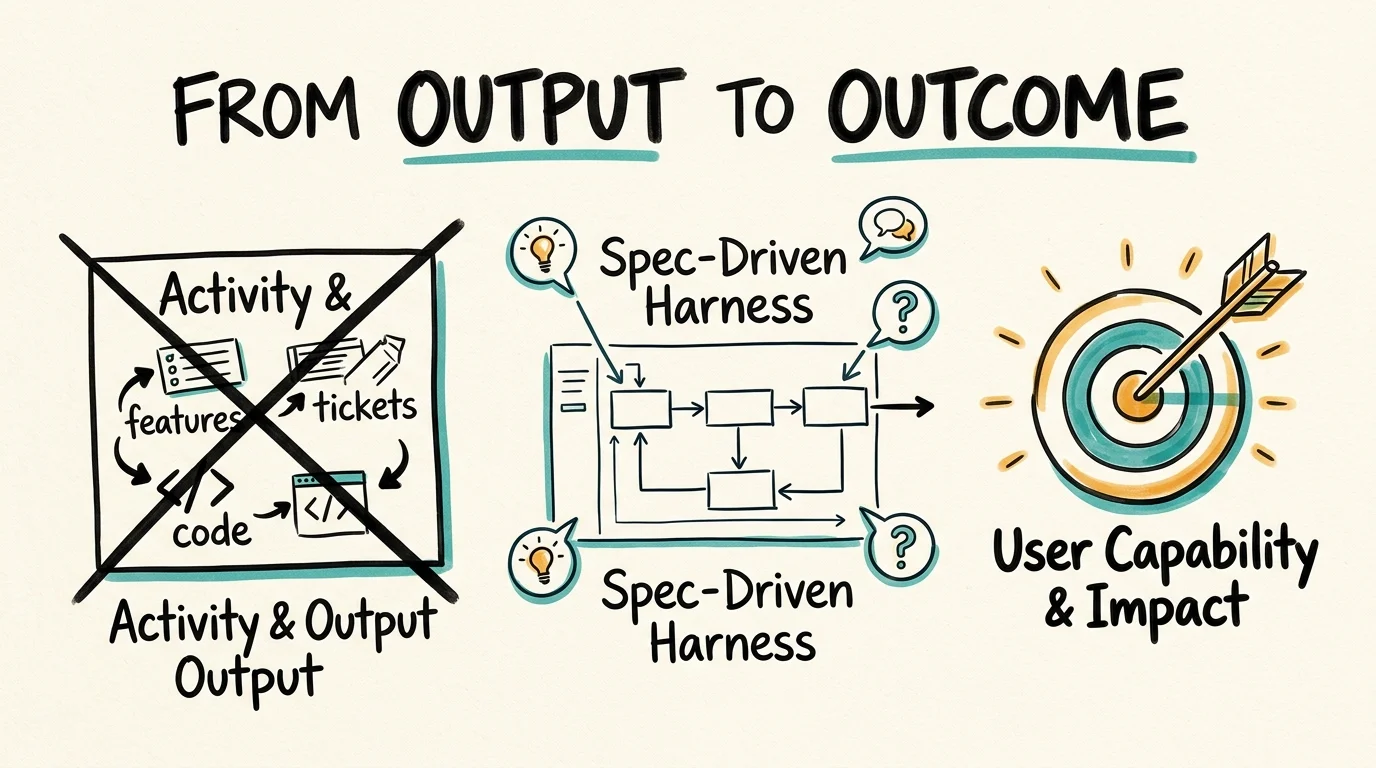
AI Theater is the illusion of progress measured by activity metrics like seats allocated, prompt libraries built, or pilots launched. Escaping it requires shifting focus from outputs to outcomes, tracking system cycle times, and measuring sponsor-ready evidence of actual business value.

It is easy to get caught up in the excitement of new models and fancy agent demos. Organizations build committees, distribute prompt swipe files, and run hackathons. They measure success by the number of tool licenses purchased or prompts submitted. This is AI Theater—it creates the appearance of progress without impacting top-line or bottom-line metrics.

To escape the theater, you must start measuring what matters. Stop tracking tool adoption as a success metric and start tracking cycle time, value-added time, customer adoption, and actual business outcomes. AI adoption should be treated as a product adoption exercise where teams pull in tools to solve concrete constraints, rather than pushing tools by executive mandate.

The Outer Loop

Why is the engineering outer loop the real constraint?

While writing code (the inner loop) has accelerated by orders of magnitude, the outer loop—including code reviews, security checks, integration, and release—remains slow. This mismatch creates acceleration whiplash, where developers build code faster than the organization can absorb, review, or validate it.

AI tools like GitHub Copilot have dramatically sped up the developer inner loop: writing, testing, and debugging code on a local machine. But code is not value until it is running in production and serving customers. The outer loop—the process of getting code from a developer machine to production—is where the real constraints live.

When the inner loop accelerates but the outer loop remains manual and slow, you experience "acceleration whiplash." Pull requests grow larger, code review queues back up, quality becomes fragile, and engineers get frustrated. Shifting from local developer productivity to system-level flow is the only way to resolve this bottleneck.

Value Realization

How do we shift from AI activity to value realization?

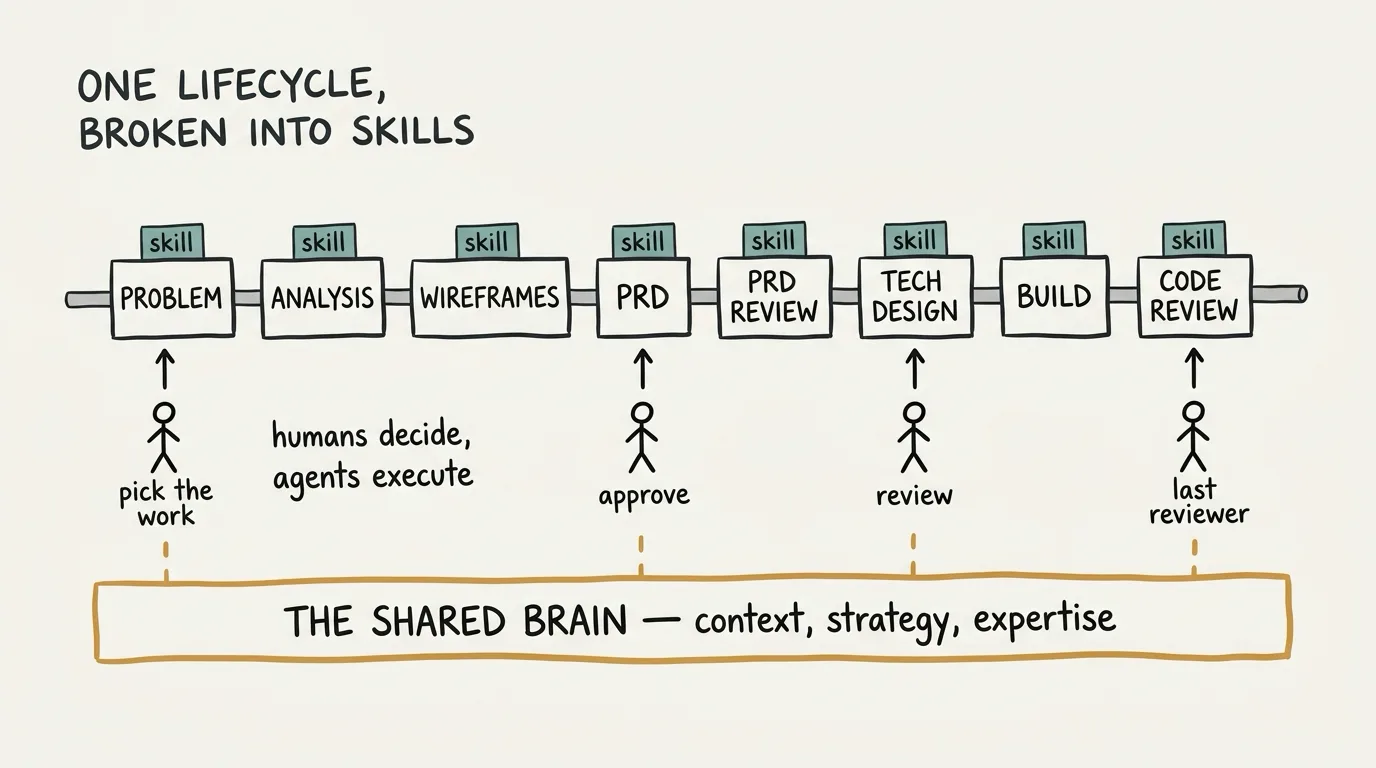
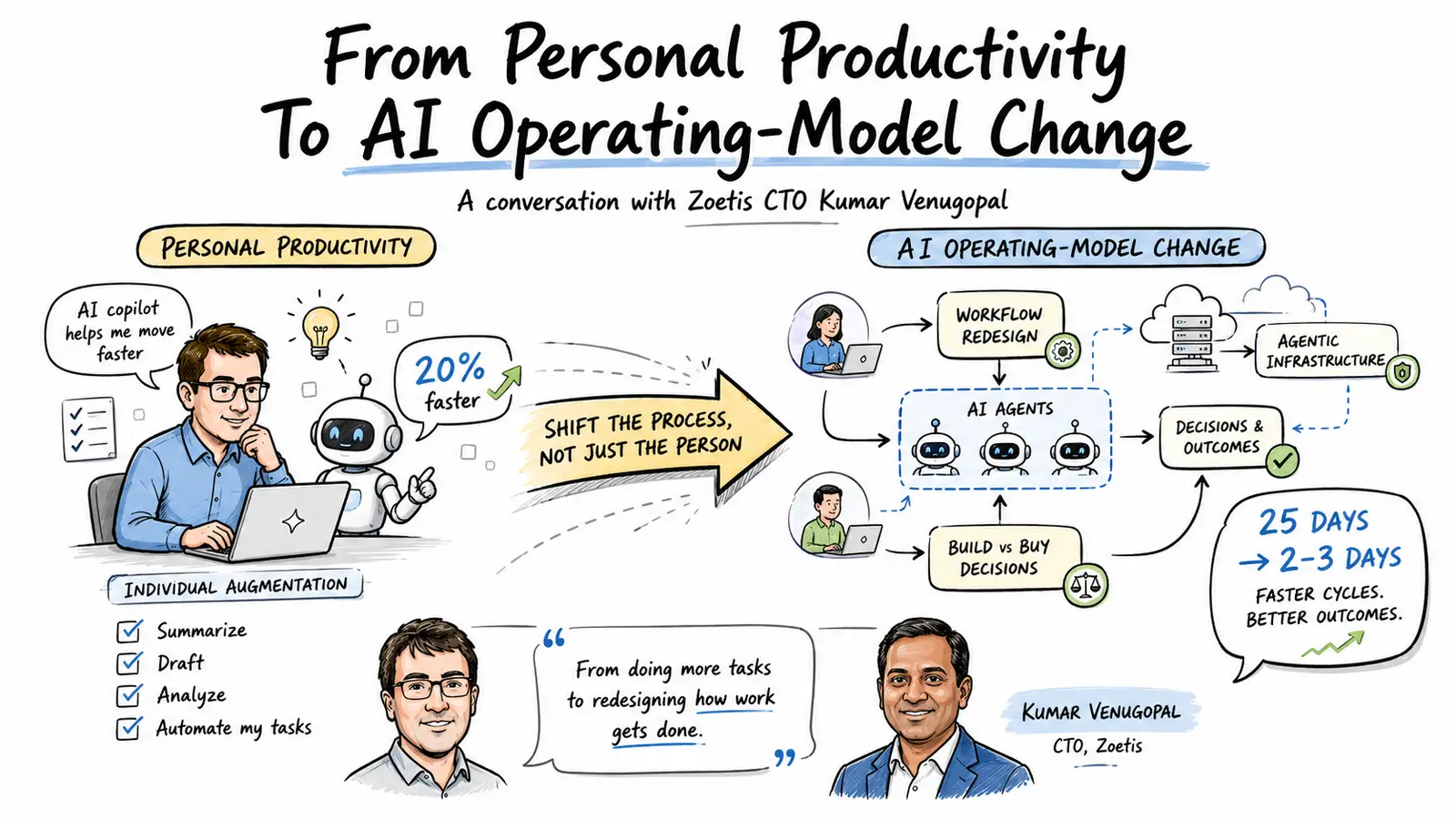
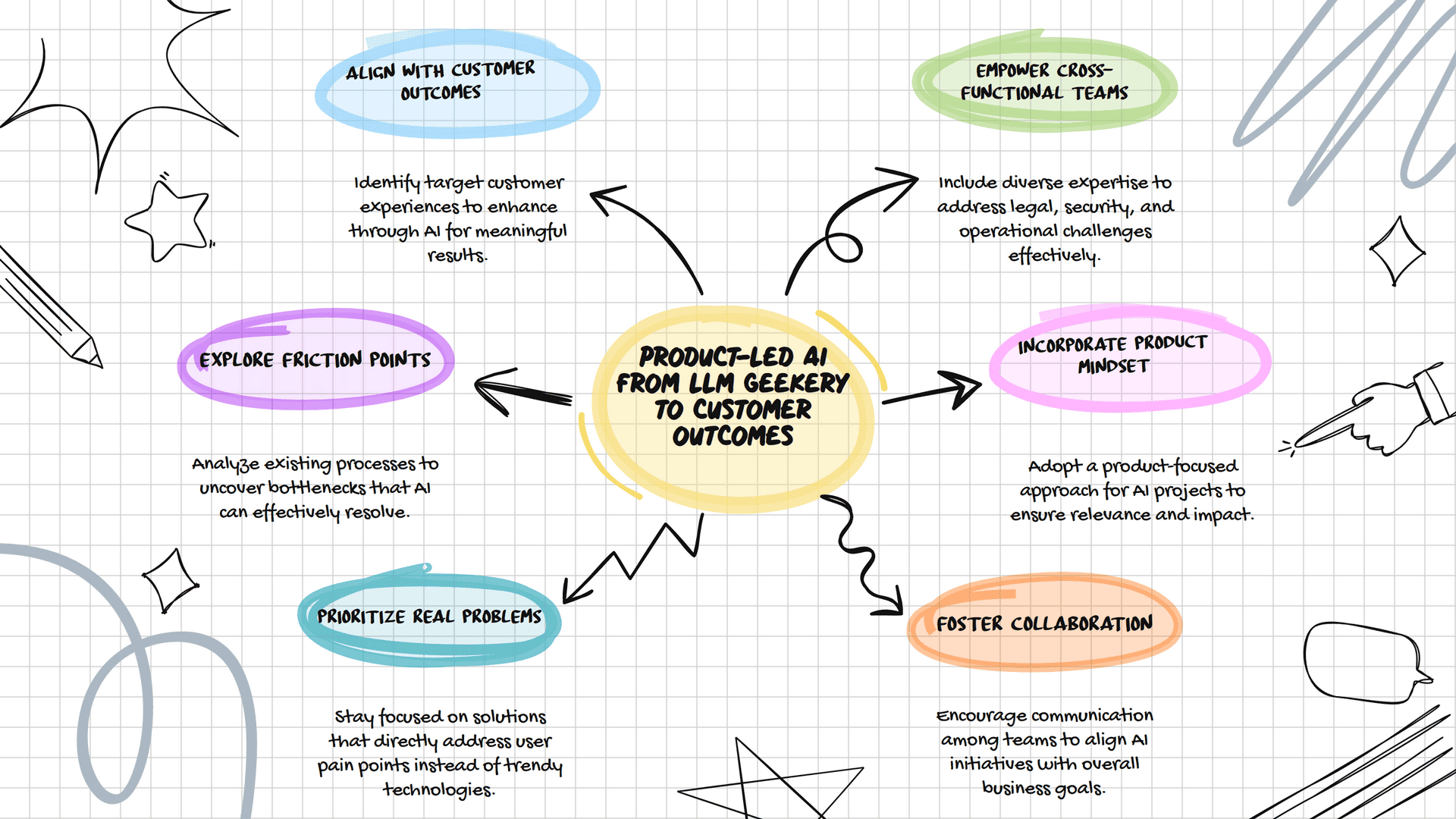
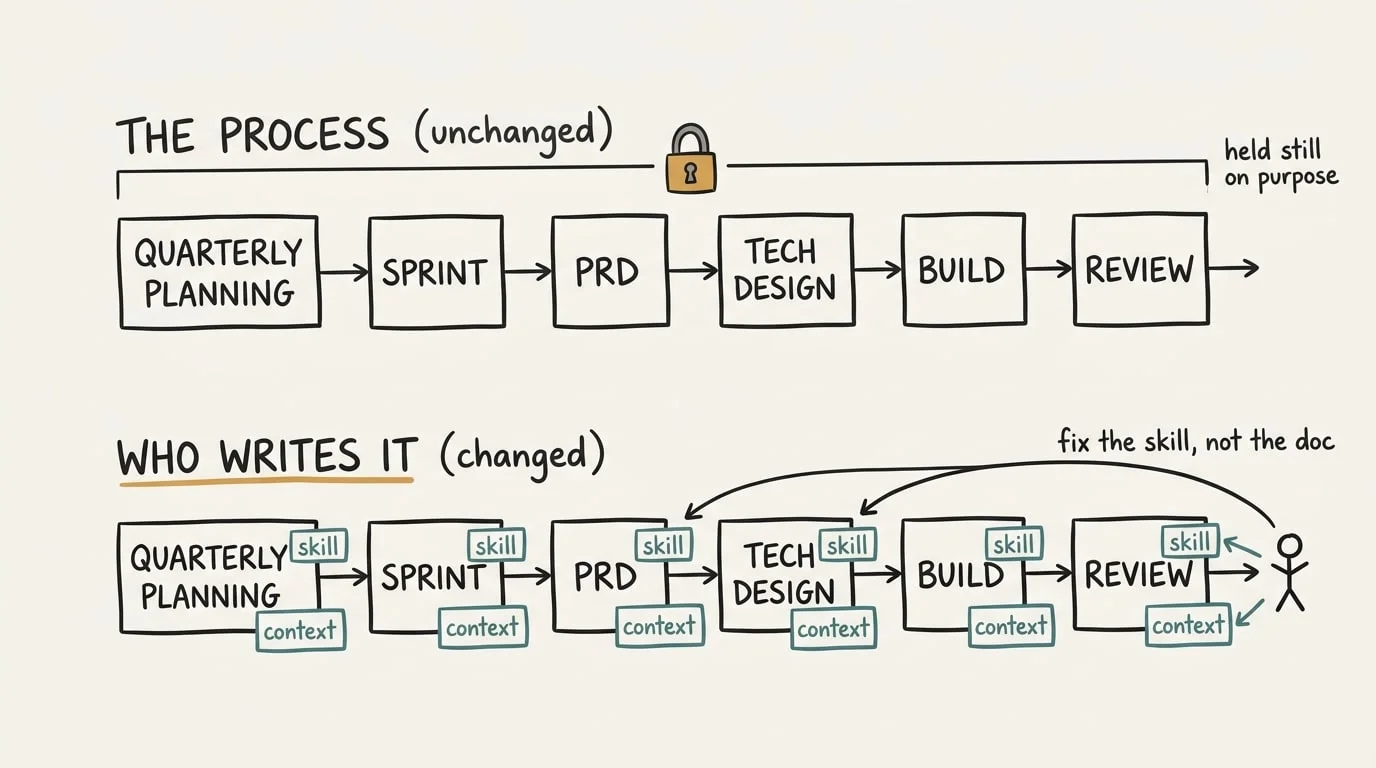
Realizing AI value requires treating internal AI contexts as products, governing in the flow of value, and funding initiatives in stages as confidence increases. Through Organizational AI Coaching, we redesign workflows to ensure AI productivity actually impacts the end-to-end constraint.

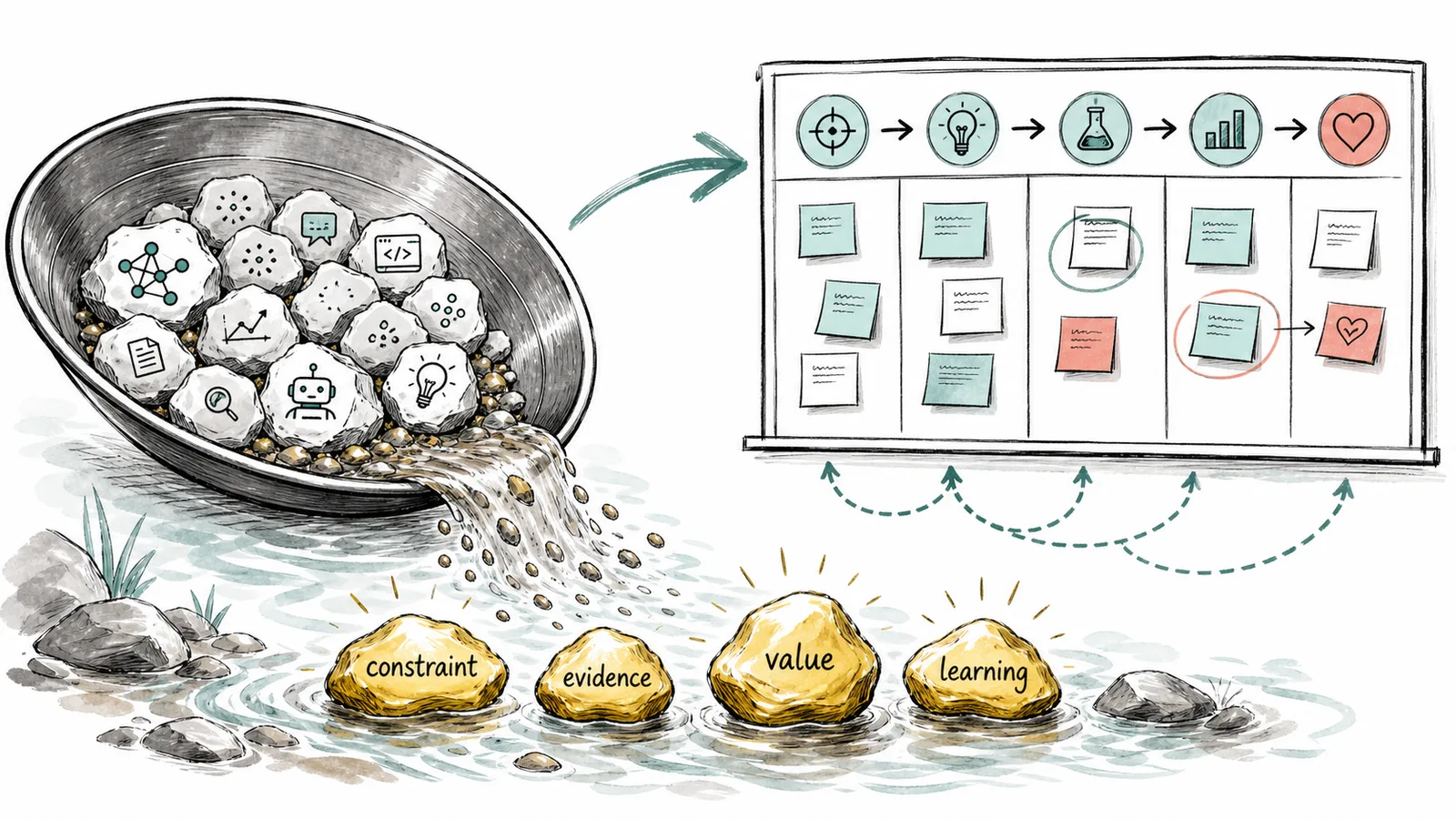
Value realization is not about building multi-year AI roadmaps or creating large, centralized governance gates. In high-uncertainty environments, certainty is built through evidence. We steer AI investments by managing a portfolio of small bets, using staged funding to release budget only when confidence indicators are met.

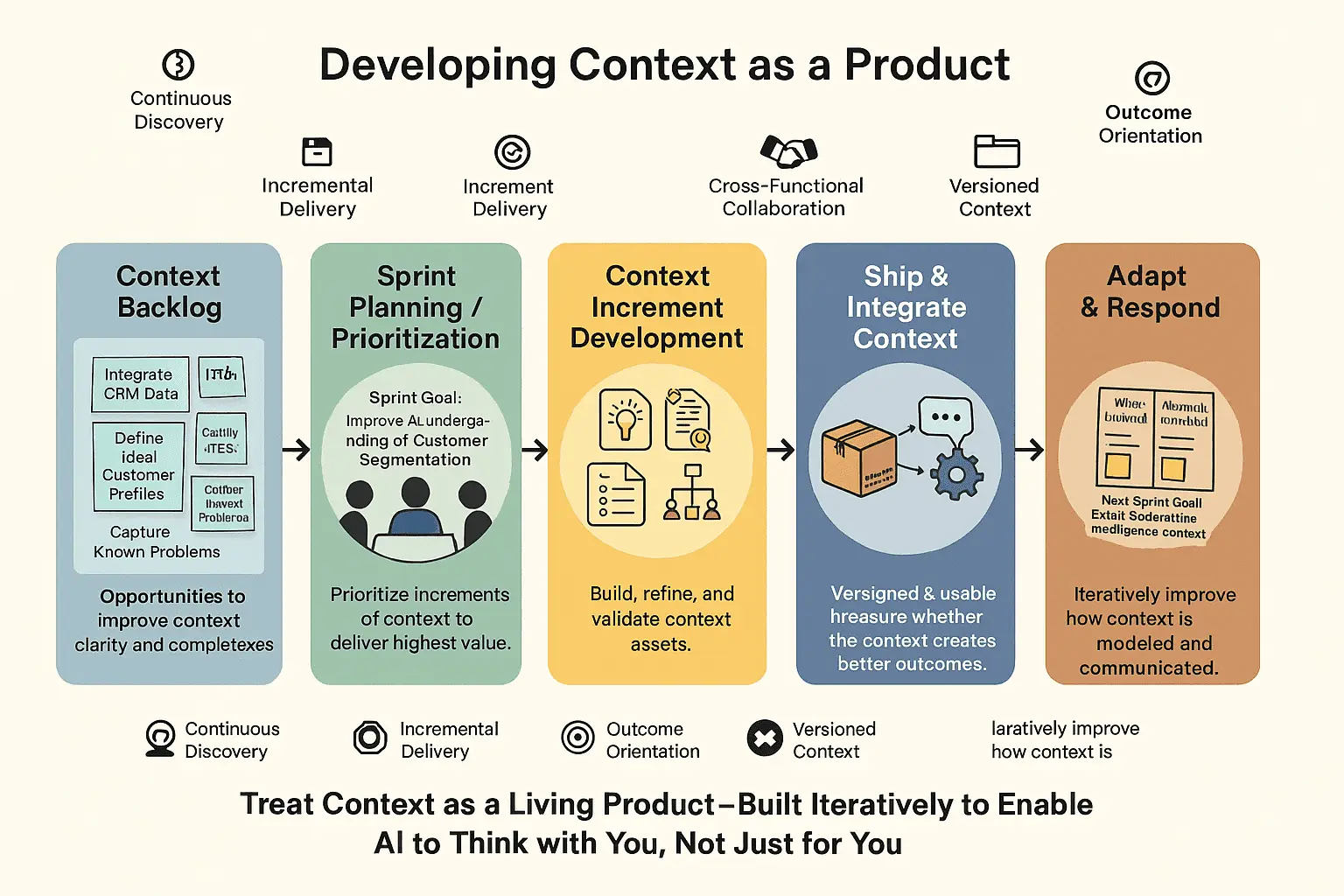
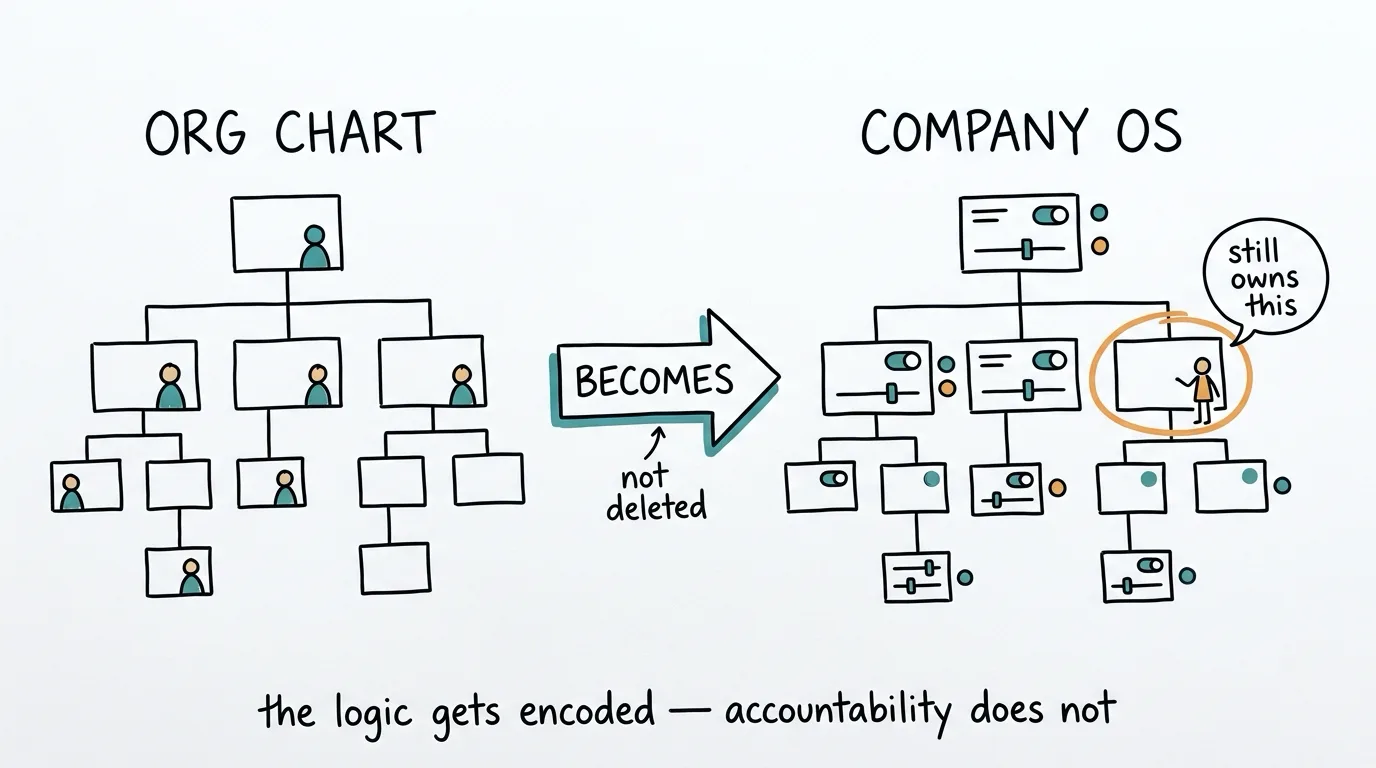
This requires an operating model change. We treat internal AI context—such as prompts, tools, and fine-tuned models—with the same discipline we apply to consumer-facing products. We establish clear ownership, build telemetry, and redesign workflows to ensure that AI capabilities are pulled where they actually resolve bottlenecks.

FAQ

Frequently asked questions about AI transformation

What is AI Theater?

AI Theater is when an organization measures AI success by activity—such as seats allocated, prompts typed, or demos built—rather than actual business outcomes. It creates the appearance of progress without driving revenue, cost savings, or cycle-time improvements.

How do you measure the business value of AI?

Measure AI value by tracking system-level outcomes: end-to-end cycle time, release frequency, change failure rates, and customer value indicators. Avoid local productivity metrics like lines of code generated, which ignore downstream review and testing bottlenecks.

Why does accelerating engineering not automatically improve business velocity?

Because value is constrained by the slowest part of the end-to-end stream. If engineering speeds up but product discovery, code reviews, deployment, or customer adoption remain slow, you simply pile up work-in-progress (WIP) and create longer queues, not faster value delivery.

Insights Database

All AI Insights & Articles

Browse my complete archive of perspectives and diagnostic articles on moving AI investments from activity to impact.