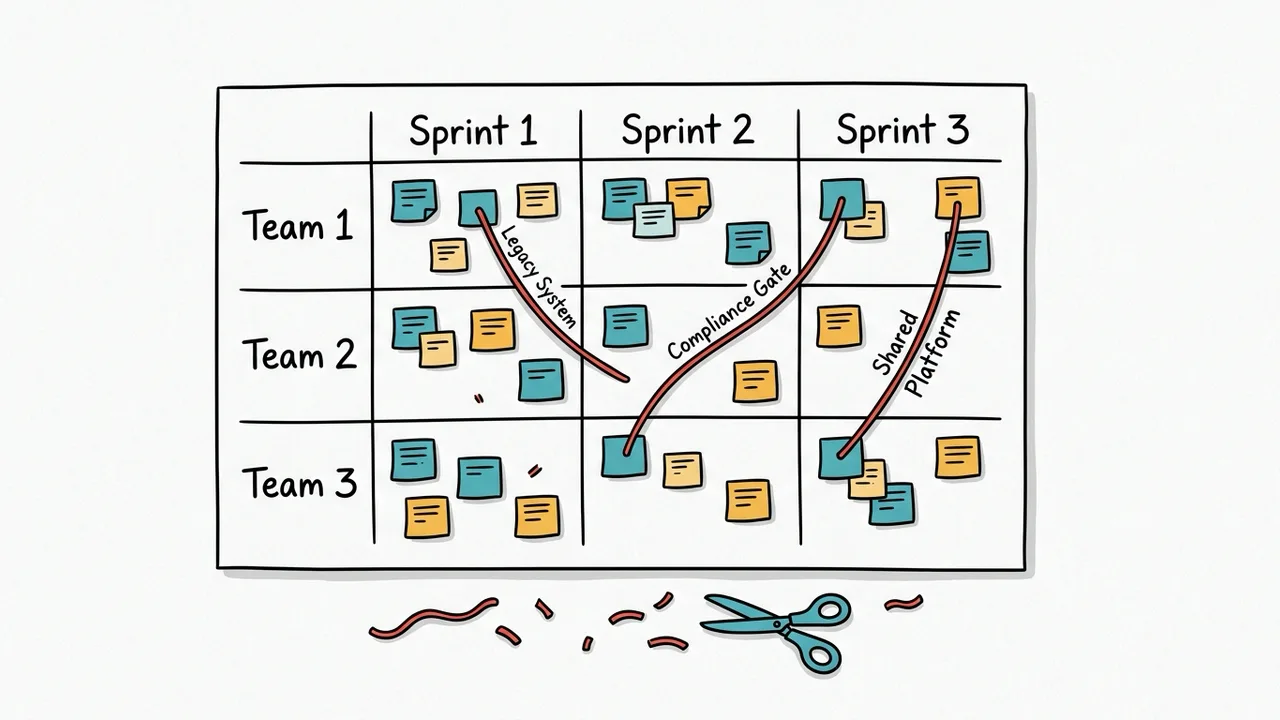
How to Customize Your SAFe for the AI Age
Most of your scaling apparatus is now optional. Your first principles are not. A companion for leaders running SAFe while adopting AI-native, spec-driven development, and trying to tell the difference.
Most of your scaling apparatus is now optional. Your first principles are not. A companion for leaders running SAFe while adopting AI-native, spec-driven development, and trying to tell the difference.
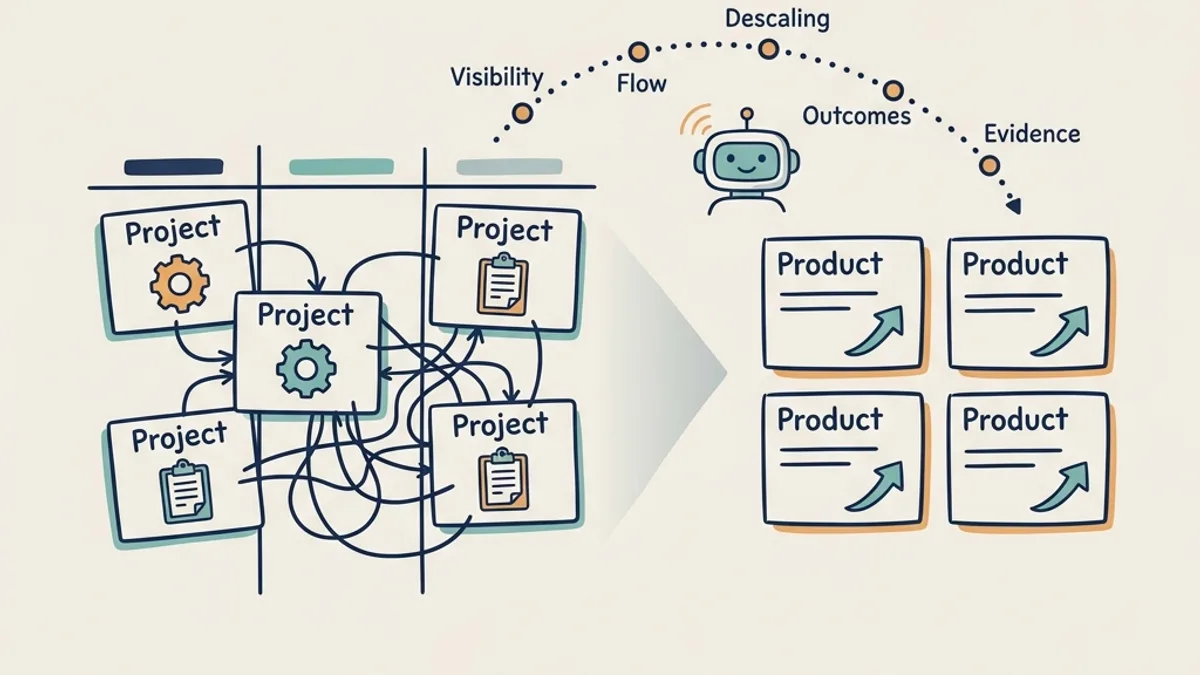
An AI coaching prompt from my "Product Orientation Through LPM" talk: pressure-test one real initiative, find the real gap, and get one experiment to run.
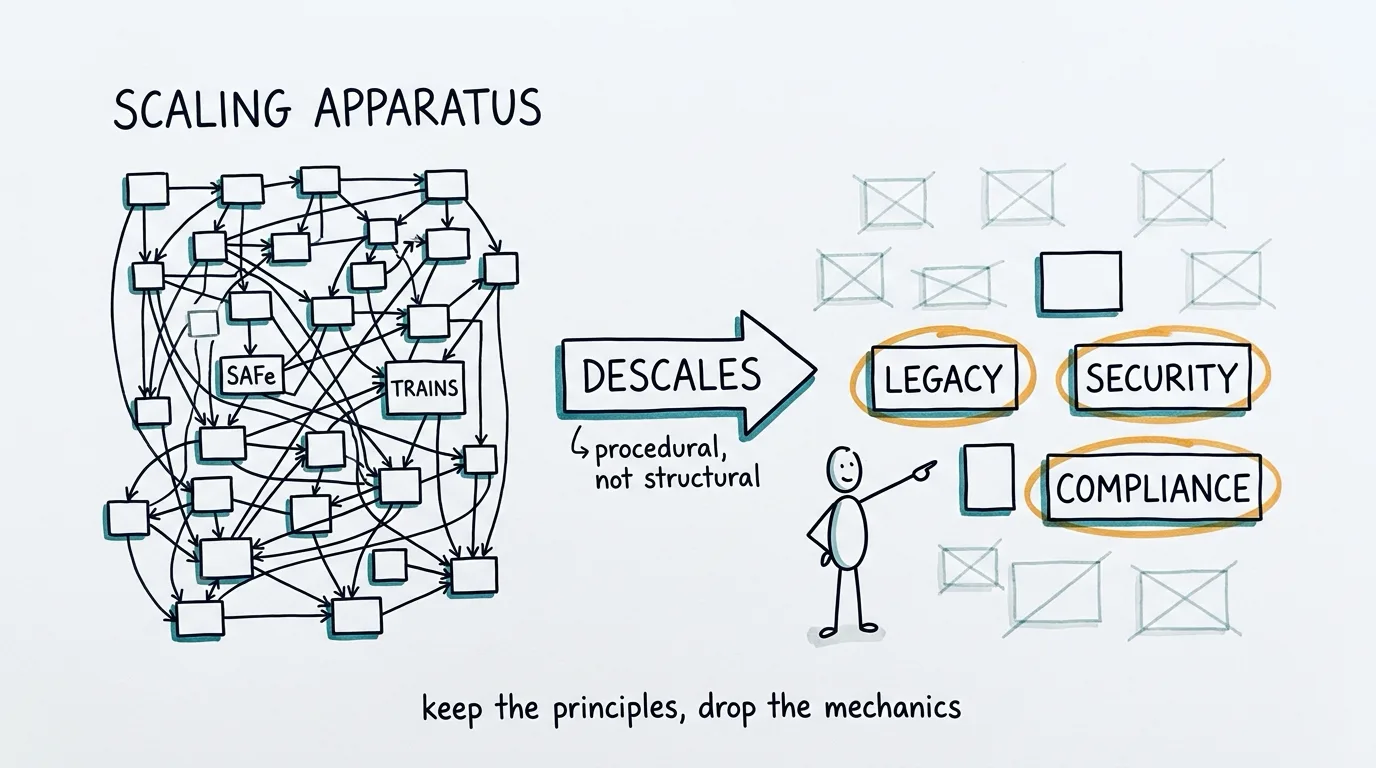
The flattening pitch assumes your teams can deliver an outcome alone. Most cannot. Agents make them faster, not necessarily independent. Here is how agents CAN help you accelerate the descaling process
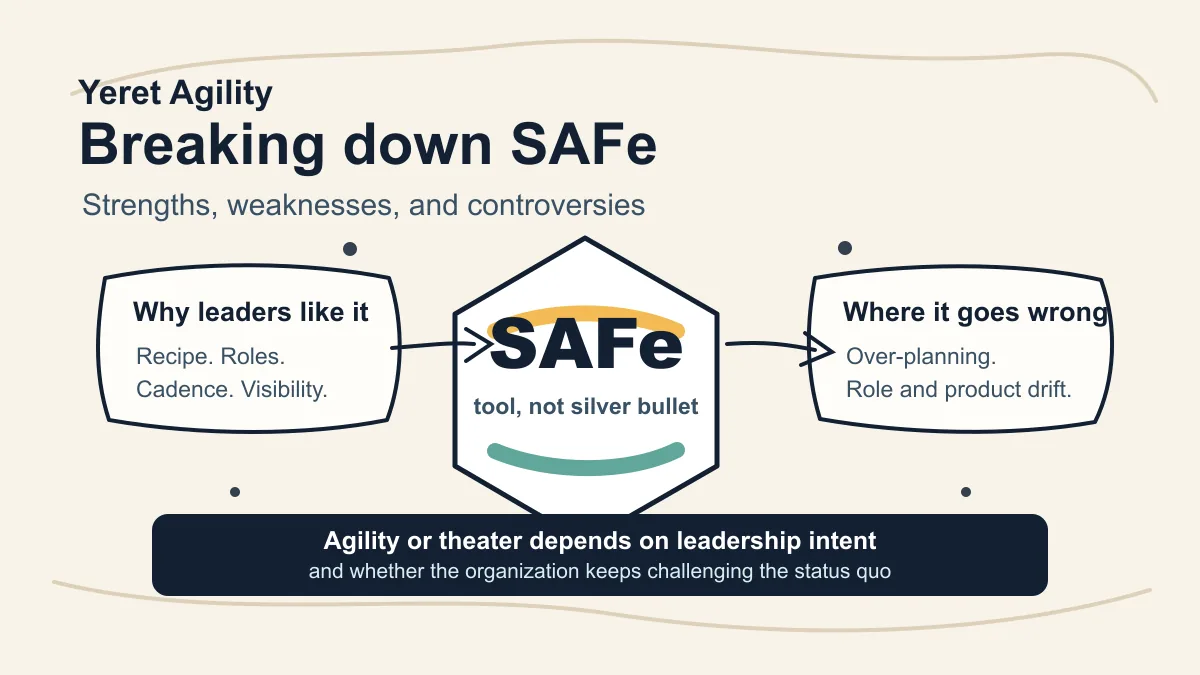
Is SAFe good? Is SAFe agile? As a SAFe Fellow and Professional Scrum Trainer, I break down SAFe's real strengths, weaknesses, and controversies using my own words from the Breaking the SAFe series.
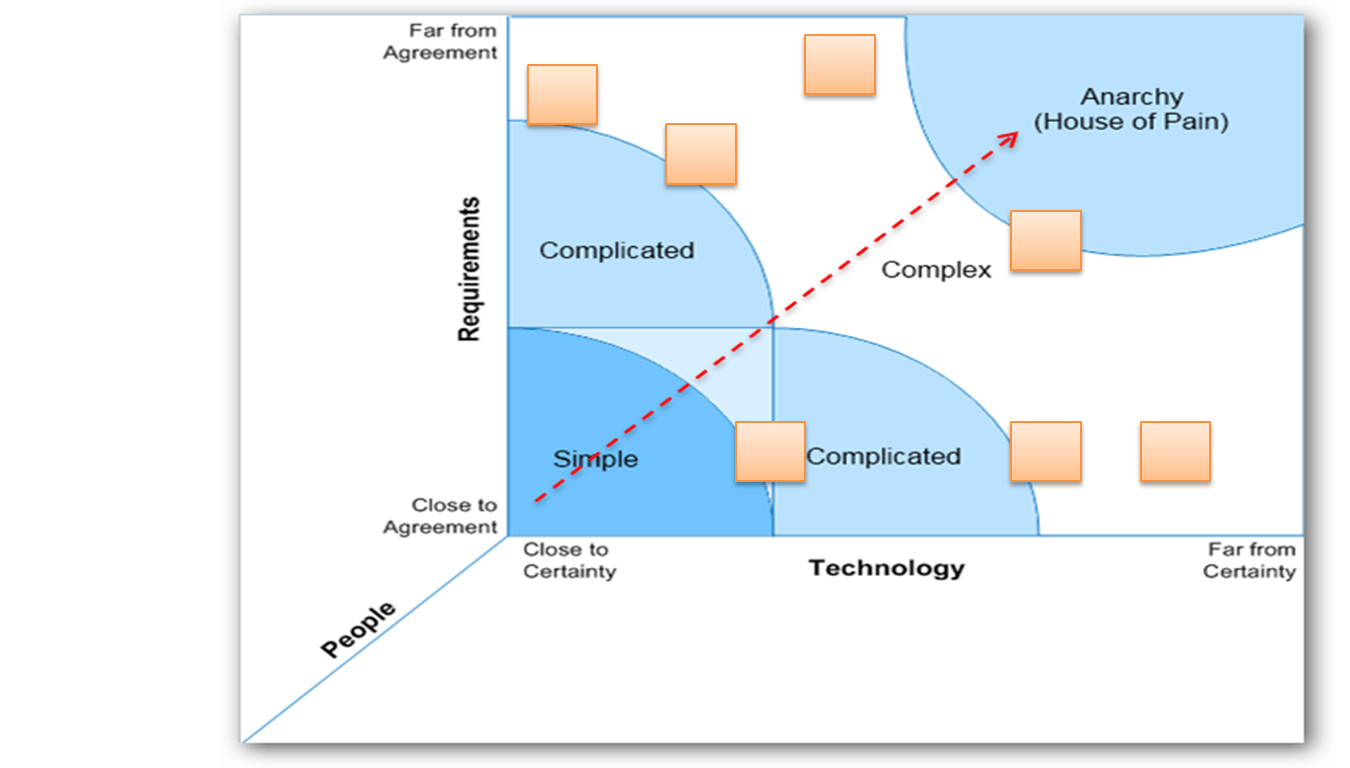
Apply the Stacey Matrix to SAFe decisions so you can match planning, coordination, and leadership approach to the real level of uncertainty.
Pull-based change management: treat change as a product, invite instead of mandate, use minimum viable change, and scale on evidence, not rollout theater.