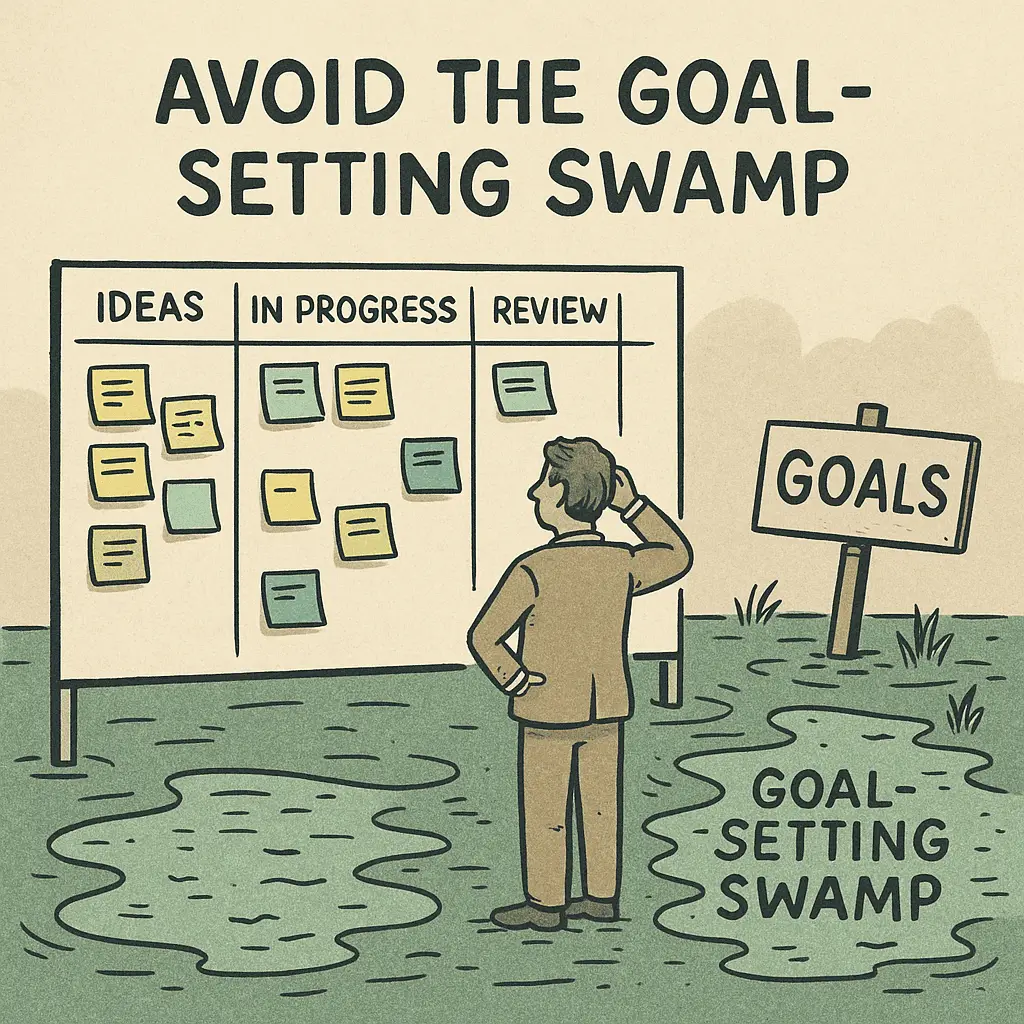
A Simple Way to Get a Grip on Your Goals
How to get clear on goals before rushing into OKRs or any goal-setting system: the exercise that separates directional intent from measurable outcomes.
Insights Topic
OKRs should be a steering system, not an administrative tax. Move from lists of tasks to ownership of business outcomes.
On this page:
OKRs have become theater in most modern organizations. Below, I map out how to return to first principles and build a lightweight weekly steering cadence that connects strategy to execution.
Start here · Cornerstone read
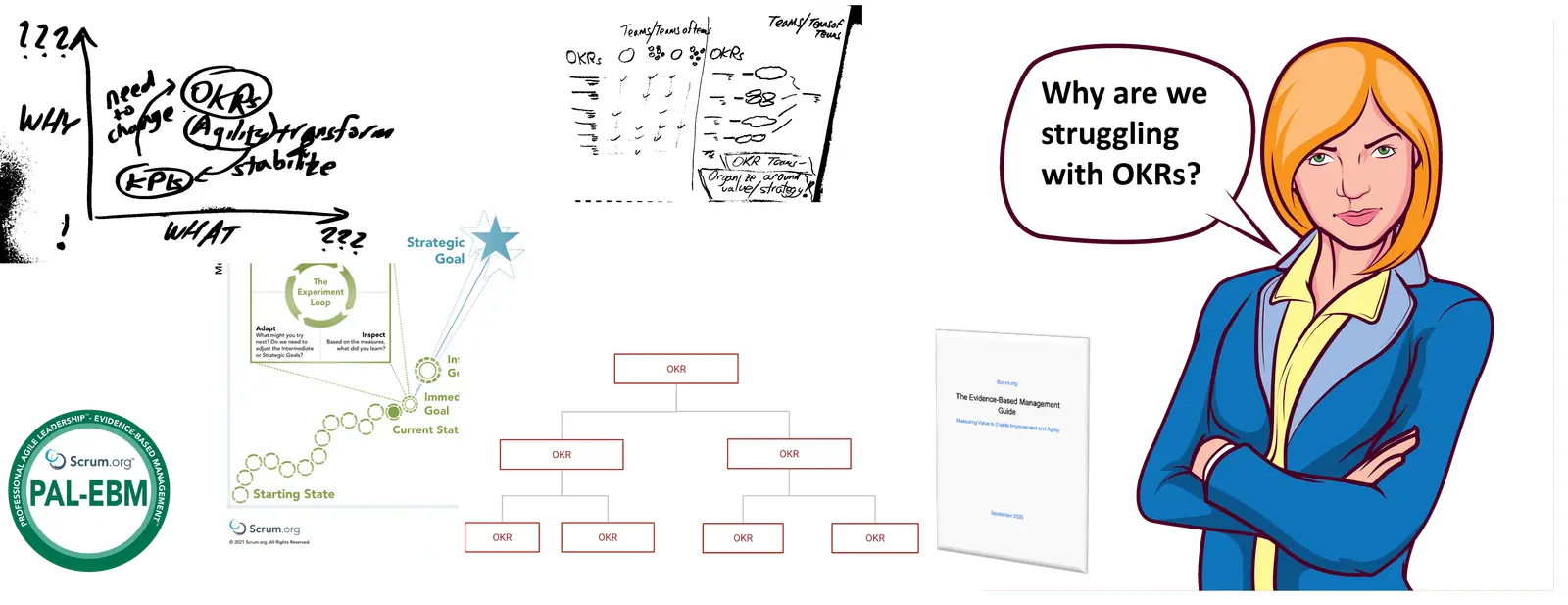
OKRs suffer from over-adoption and under-understanding. Most implementations become another alignment tax. Here's what actually makes OKRs work.
Read the full articleOKR Theater is pervasive. It happens when teams simply take their existing project plans and task lists and rename them as Key Results. This creates a heavy reporting tax without changing how the organization actually operates or evaluates success.
Fixing this requires returning to first principles. Key Results must represent measurable changes in user behavior or system performance, not the completion of project milestones. When teams track outcomes weekly, OKRs transform from an administrative burden into a genuine steering mechanism.
OKRs should serve as a decentralized steering system. Rather than micromanaging the "how," leadership defines the strategic intent and sets the boundaries. Teams are then empowered to own the outcome and figure out the best way to achieve it.
This approach bridges the critical gap between executive planning and team-level delivery. It ensures that everyone is pulling in the same direction while retaining the flexibility to adapt to new information as it emerges.
A common mistake is the "set-and-forget" pattern, where OKRs are written at the start of the quarter and ignored until grading time. This defeats the purpose of agile steering.
We use OKR Kanban systems to actively manage strategic bets. By visualizing OKRs, limiting active Work In Progress (WIP), and reviewing progress weekly, organizations can make dynamic priority shifts based on incoming data and evolving market conditions.
OKRs usually fail because they are treated as a top-down command-and-control reporting system, rather than a decentralized steering system. Teams end up tracking milestone outputs instead of actual outcome metrics.
KPIs (Key Performance Indicators) measure the ongoing health of the system (running business). OKRs (Objectives and Key Results) measure the changes you want to make to the system (growing/improving business) to move the needle on those KPIs.
Insights Database
Browse the complete archive of articles and case studies related to okrs.
How to get clear on goals before rushing into OKRs or any goal-setting system: the exercise that separates directional intent from measurable outcomes.
AI can help you spot weak OKRs: vanity metrics, output-shaped objectives, key results nobody can actually measure. A practical guide to fixing them.
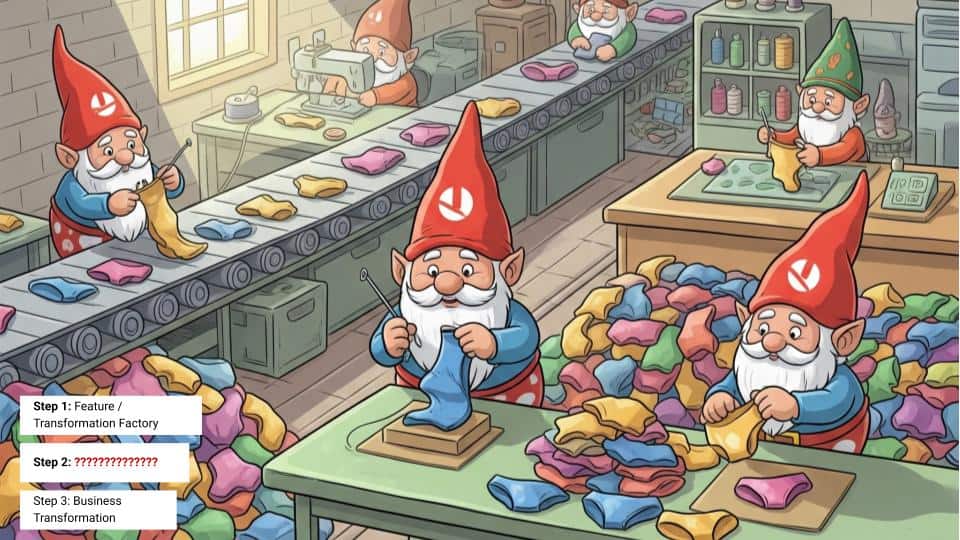
When teams follow the rituals but business impact never shows up, you're in Process Theater. How outcome mapping closes the gap between compliance and traction.
Strategic themes gathering dust like New Year's resolutions? Use the same outcome-oriented, empirical patterns from team level to break strategy theater.
When OKRs feel like a burden, it is usually how they are applied, not the framework. Practical ways to lighten OKR process while keeping aligned autonomy.
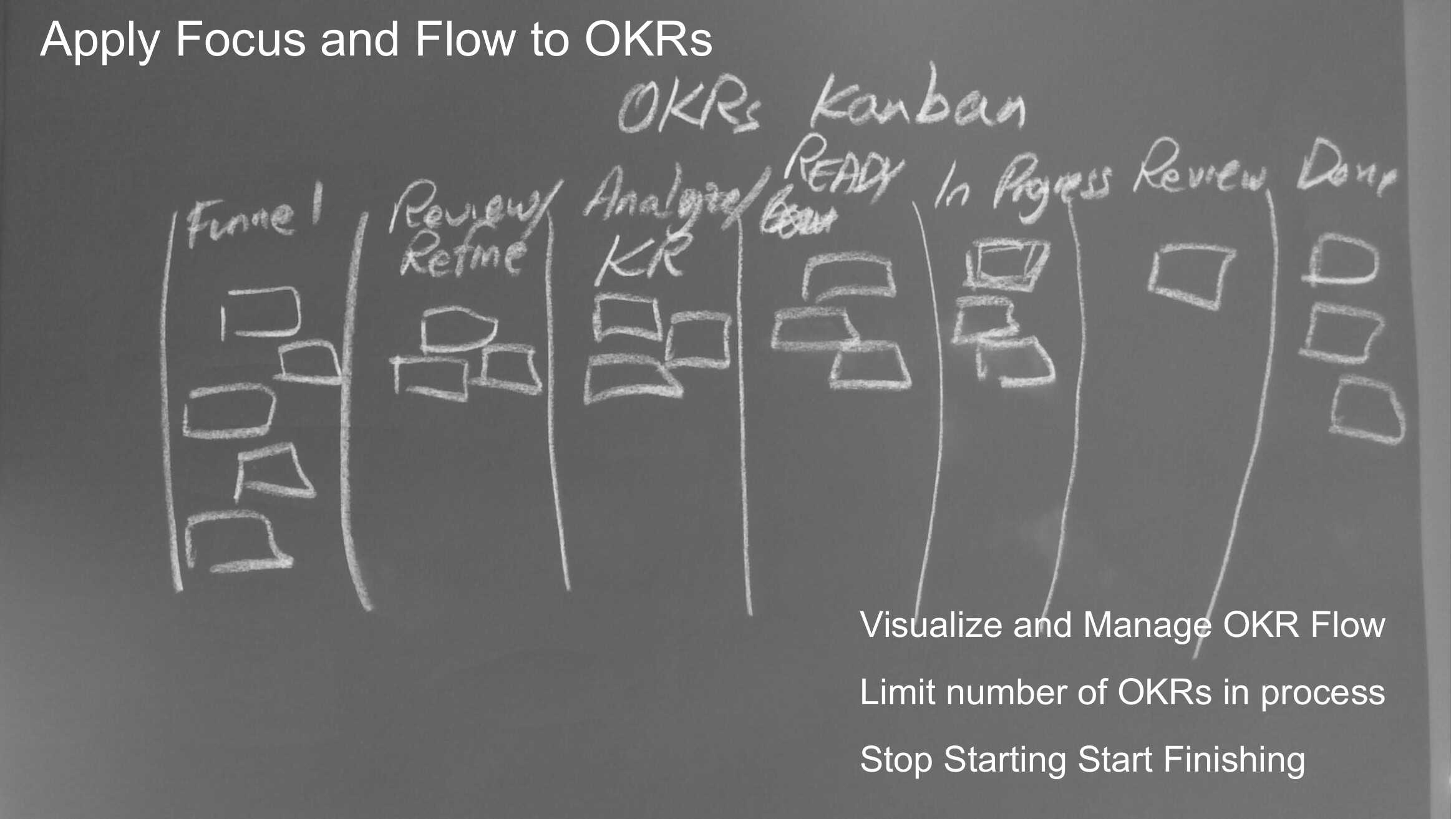
Treating OKRs as a Kanban system: visualizing strategic work, limiting WIP at the leadership level, and using Kanban cadences to review and adapt priorities.
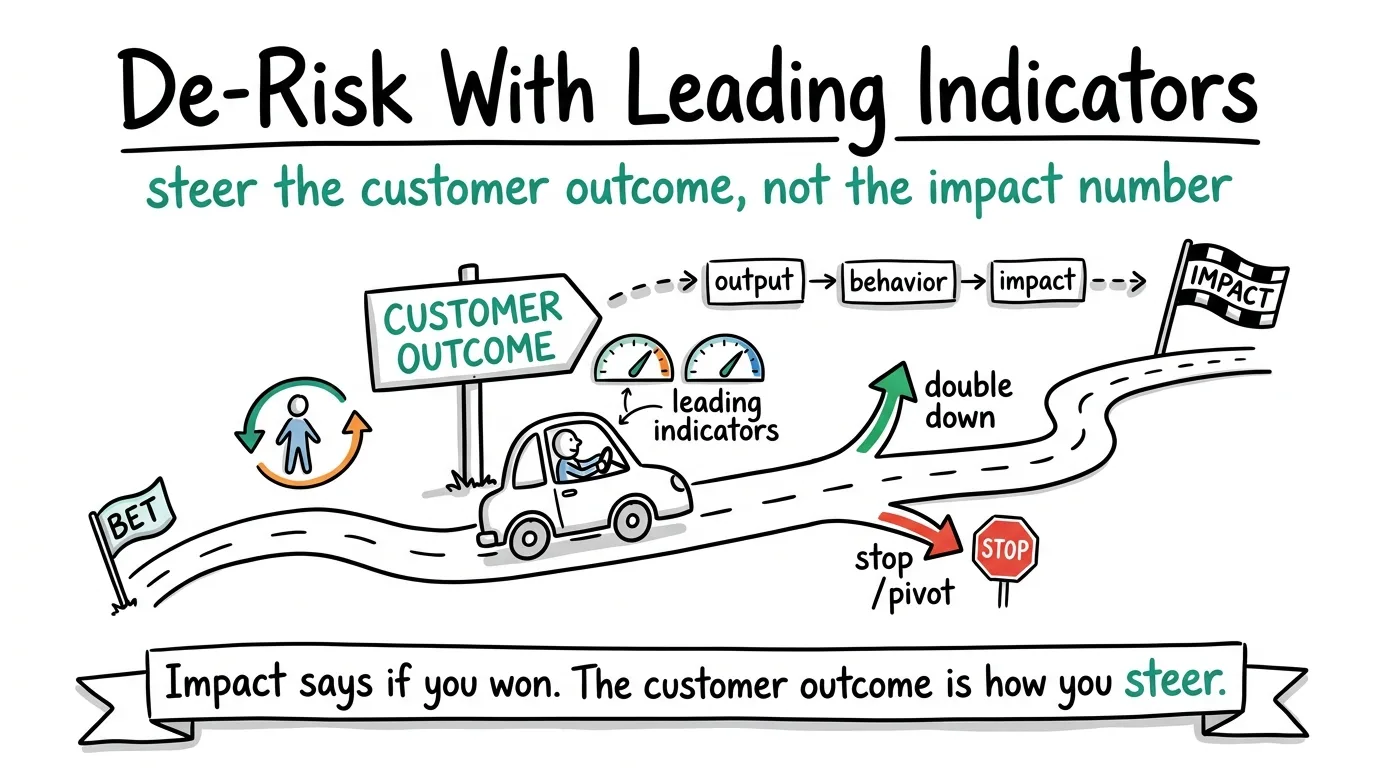
Outcome OKRs that track business impact are still lagging. Steer by the customer outcome (a change in behavior) using leading indicators instead.
Inclusive culture is good. Inclusive goals are not. How Even Over statements force the trade-off conversations your OKRs need to have real teeth.
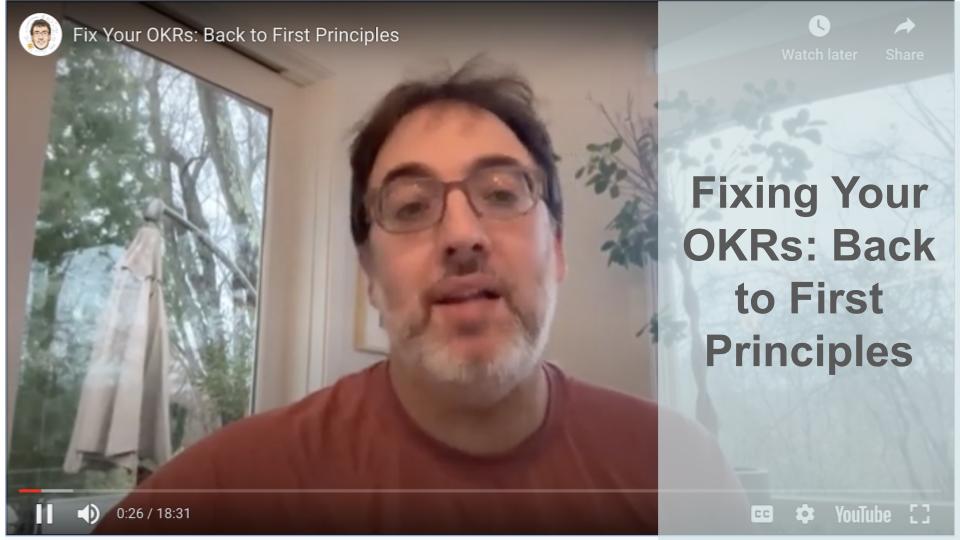
How do you fix OKRs that have lost the plot? This session resets OKRs around business outcomes, focus, and real steering instead of reporting theater.
When scaleup leaders say OKRs are broken but can't find anything better, the problem is usually misapplication. Fixing OKRs is how founder mode scales.
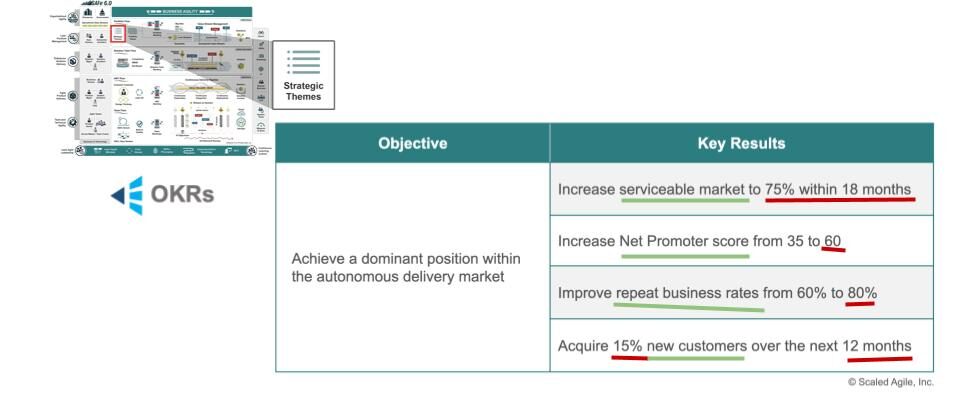
SAFe Strategic Themes are not OKRs, and treating them like OKRs creates confusion. When to use gradable Key Results vs directional strategic themes in SAFe.
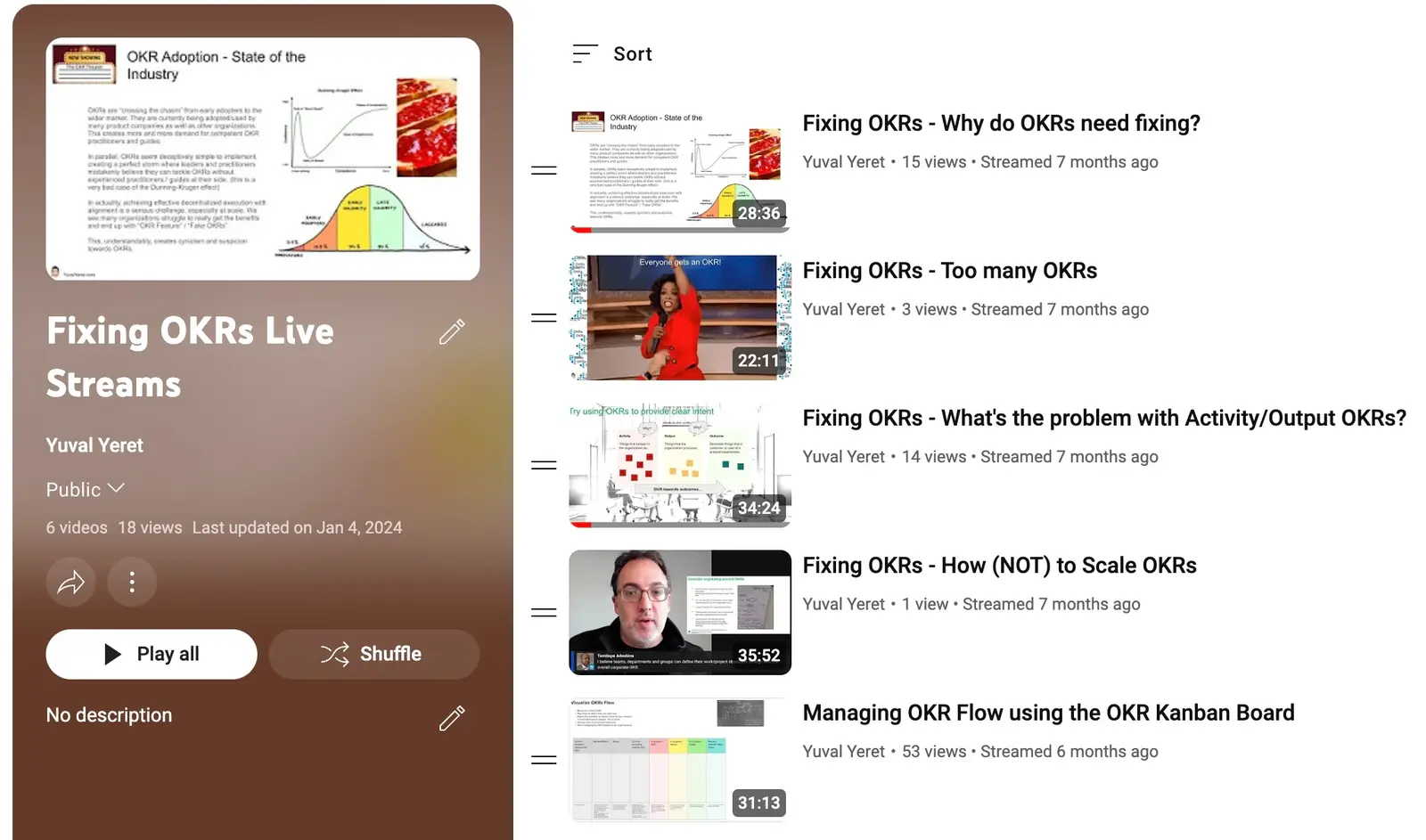
A live stream series on diagnosing and fixing broken OKRs: goal-setting pitfalls, cascade traps, and reconnecting OKRs to real strategic outcomes.

OKRs become the new silver bullet until implementation goes wrong. Common anti-patterns: activity-based key results, siloed OKRs, relabeled project lists.
How do OKRs and Scrum work together? This session shows how goals, inspection, and delivery reinforce each other without turning OKRs into reporting theater.
The connection between business agility, OKRs, and private equity: a podcast interview on how PE portfolio companies use OKRs to get real traction.
OKRs have become theater in most organizations: another alignment tax. Why they work when they work, how to diagnose what's broken, and how to reset.
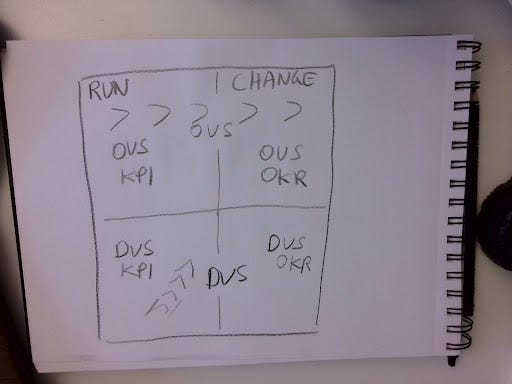
OKRs, KPIs, Operational Value Streams, and Development Value Streams in SAFe: how they connect, where people confuse them, and how to align them effectively.
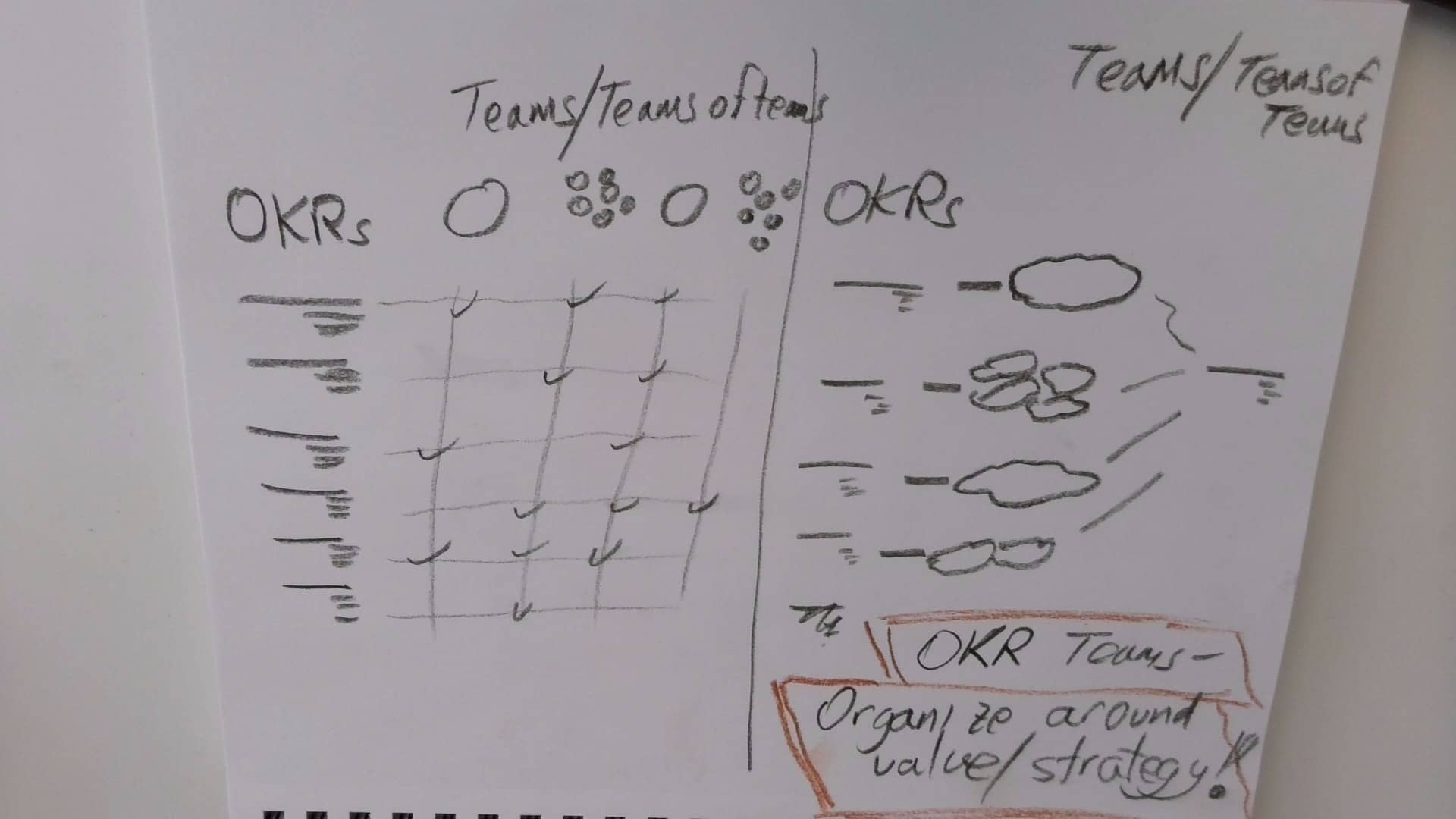
OKRs and Product Goals are alignment tools, but they operate at different levels. How to use them together from portfolio to team without double-counting.
OKR theater is when OKRs become tasks, key results become outputs, and the whole thing turns into admin. How Scrum's inspect-and-adapt loop fixes it.
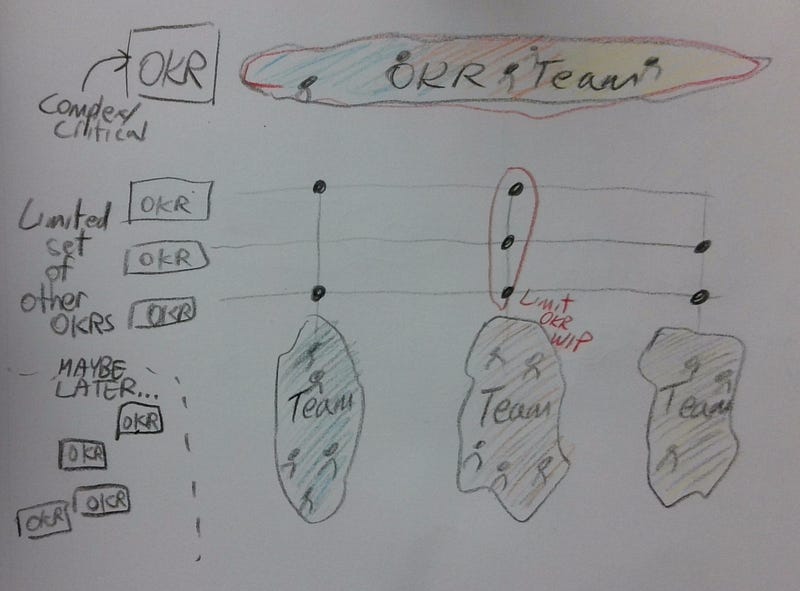
How to align Scrum team topology to strategy using OKRs and Product Goals: how teams should be structured and what they should actually focus on.
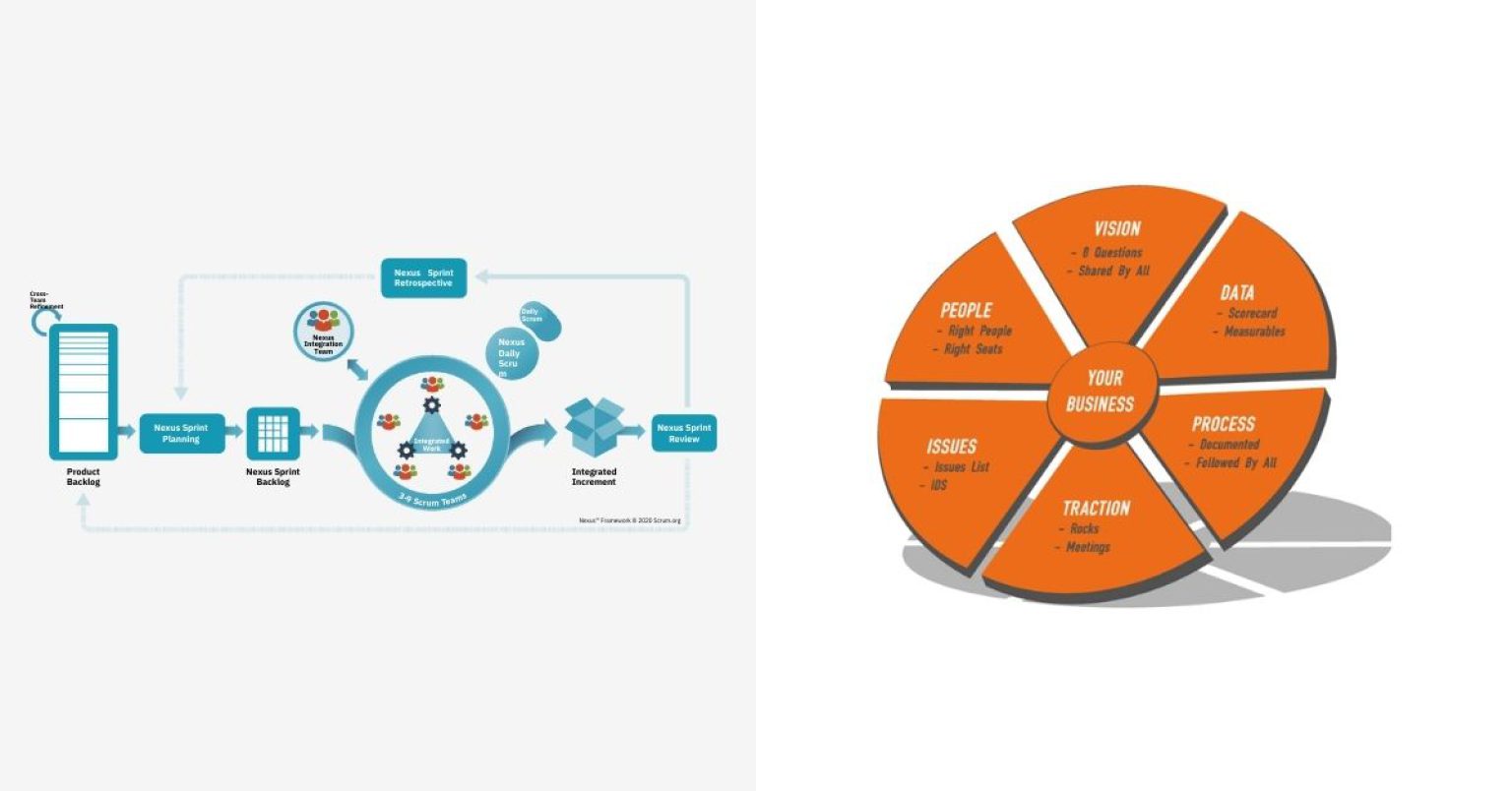
EOS/Traction and Agile: two operating systems for running a business. How they compare, where they complement each other, and what each gets right.