· Agile
Uncomfortable Truths: Agile's Vanity vs Outcomes
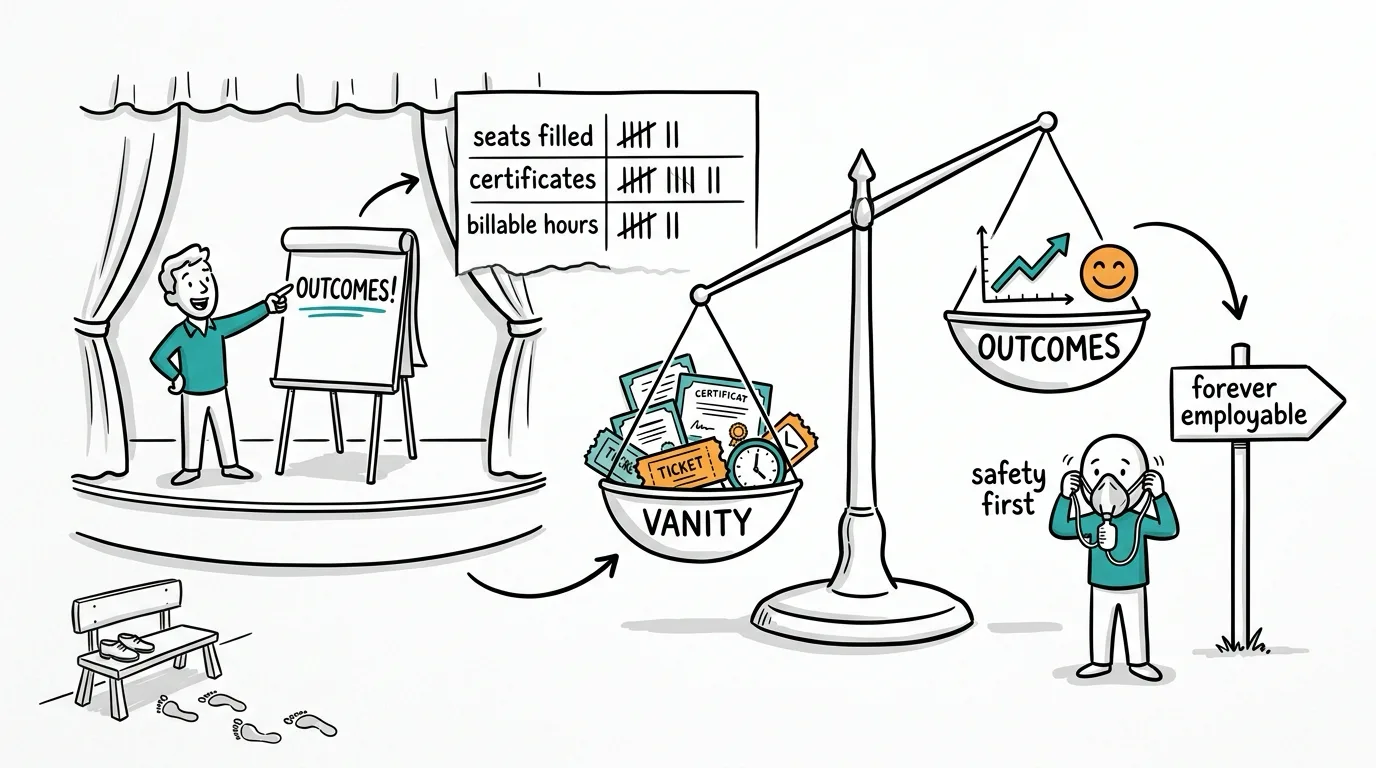
The agile industry teaches outcomes over outputs, then measures itself in certifications and butts on seats. Why that is economics, not character.
Insights Topic
Agile rituals are not agile outcomes. Shift from process compliance to evidence-based organizational flow.
On this page:
Agile transformations frequently stall or backslide because organizations copy-paste framework mechanics instead of solving core systemic constraints. Below, I explore how to rescue stalled agile systems.
Start here · Cornerstone read
Agile transformations stall, backslide, or produce compliance without outcomes. Diagnosing and recovering from agile that never actually landed.
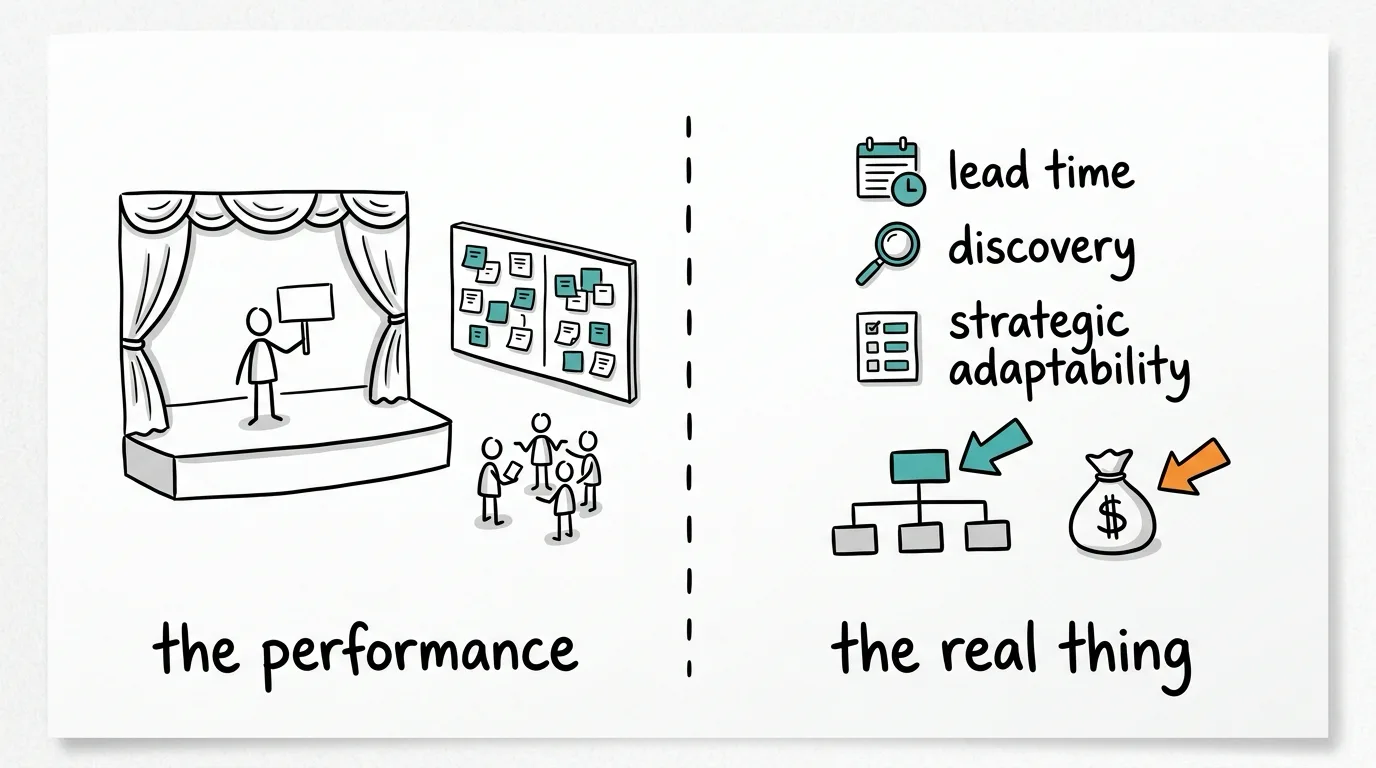
Read the full articleCompliance without agility is incredibly common. You will see teams diligently running daily standups and working in two-week sprints, but nothing really moves faster. The underlying mechanics of the organization remain untouched.
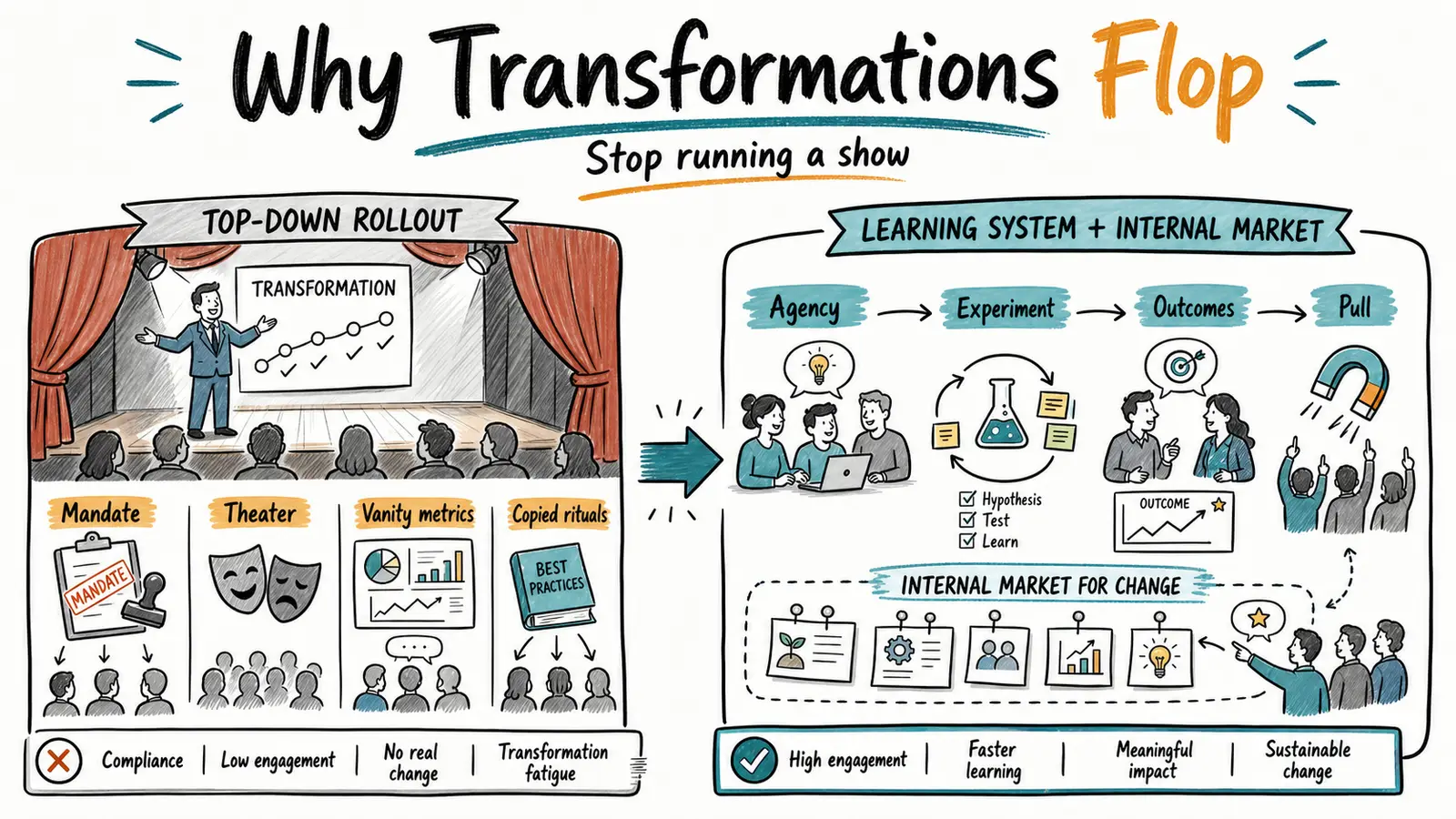
If legacy project-based funding, siloed departmental structures, and top-down command systems are left intact, introducing agile ceremonies just creates friction. It becomes Agile Theater: the appearance of adaptability without any of the actual benefits.
To regain traction, you have to stop pushing the framework playbook and start focusing on end-to-end flow efficiency. Stop trying to train everyone simultaneously and instead look for the biggest constraint in the value stream.
We launch highly focused 90-day experiments to solve these specific operational constraints. By proving immediate, tangible value in a localized area, you rebuild trust and create a pull-based demand for agility across the rest of the organization.
Agile Theater is the practice of going through agile ceremonies (daily standups, sprints, retrospectives) while retaining legacy project management, siloed funding, and top-down command structures that prevent actual adaptability.
Stop pushing the framework. Run a diagnostic on your end-to-end flow to find the single biggest constraint (e.g. decision delays or environment setup). Fix that constraint through a 90-day experiment to prove value, then repeat.
Insights Database
Browse the complete archive of articles and case studies related to fixing your agility.
The agile industry teaches outcomes over outputs, then measures itself in certifications and butts on seats. Why that is economics, not character.
Business agility is not Scrum for your sales team. Jesper Boeg and I dig into why leadership standups miss it, and the two signals that show it is real.
A fancy watch tells time. An Apple Watch changed behavior. Same with Agile, OKRs, and SAFe: they either transform how you work or become theater.
The real cost of cross-functional initiatives is coordination tax. How Gillette cut it by organizing focused virtual teams around outcomes, and how you can.
Feature factories are a milestone, not a destination. Why organizations get stuck shipping features, and what it takes to get to outcomes.
Expensive problems in product development (large batches, handoffs, queue buildup, and coordination overhead) and the principles that address each.
When the language of agile transformation creates resistance, the most effective change work is invisible. How to embed agility without the label.
Agile demand outstripped supply and the movement lost its soul. What went wrong, and a pragmatic path forward: through principles, not theater.
Before status, accountability, and conflict resolution, the daily meeting has to warm up the social fabric. That is what a two-word check-in is for.
Sometimes people just don't want more synchronous meetings. Improving the daily standup isn't always the answer: evolve the ceremony to fit the people in it.
They formed agile teams. They track stories in JIRA. They do three questions daily. And nothing meaningful changed. Agile theater, not product work.
When scaleup leaders say OKRs are broken but can't find anything better, the problem is usually misapplication. Fixing OKRs is how founder mode scales.
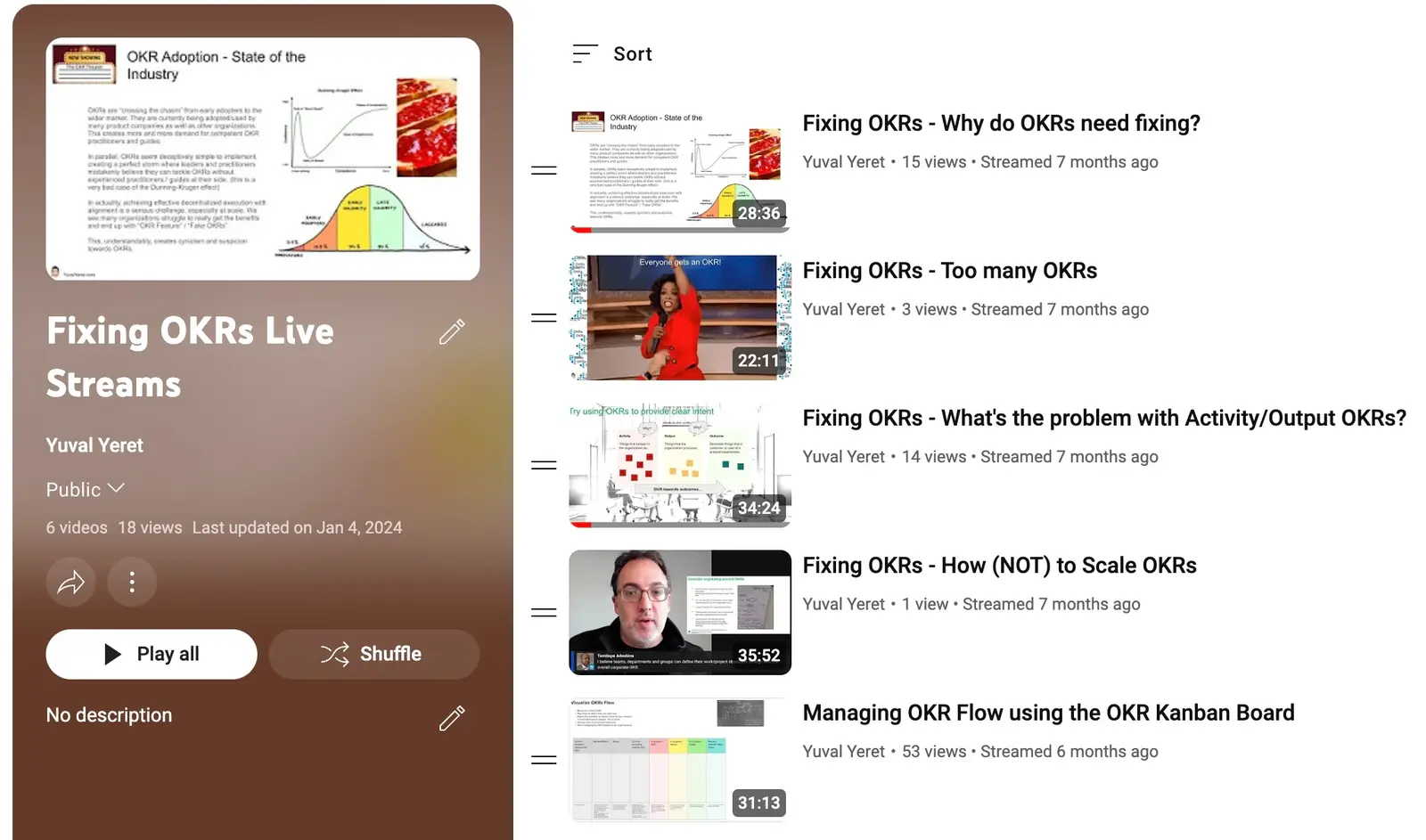
A live stream series on diagnosing and fixing broken OKRs: goal-setting pitfalls, cascade traps, and reconnecting OKRs to real strategic outcomes.

Layoffs of Scrum Masters and Agile Coaches don't signal agile nirvana: they signal a reckoning. What's actually happening, and what to do about it.
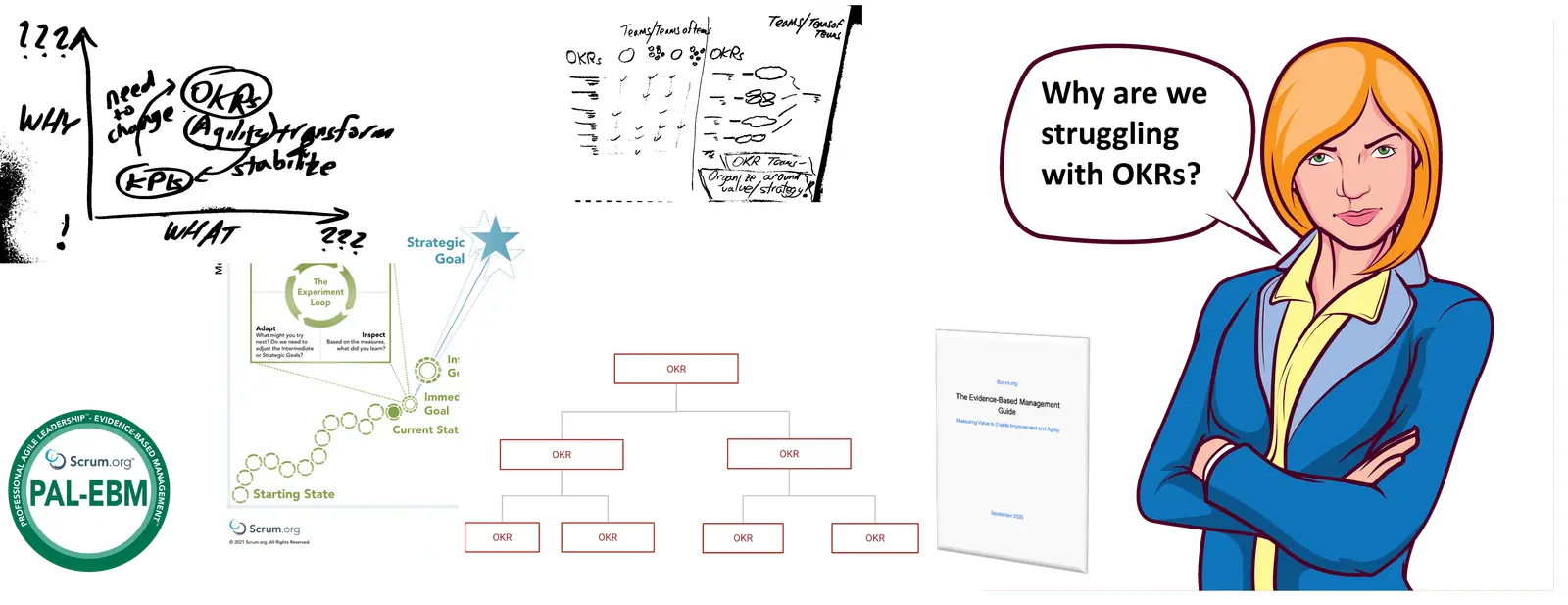
OKRs have become theater in most organizations: another alignment tax. Why they work when they work, how to diagnose what's broken, and how to reset.
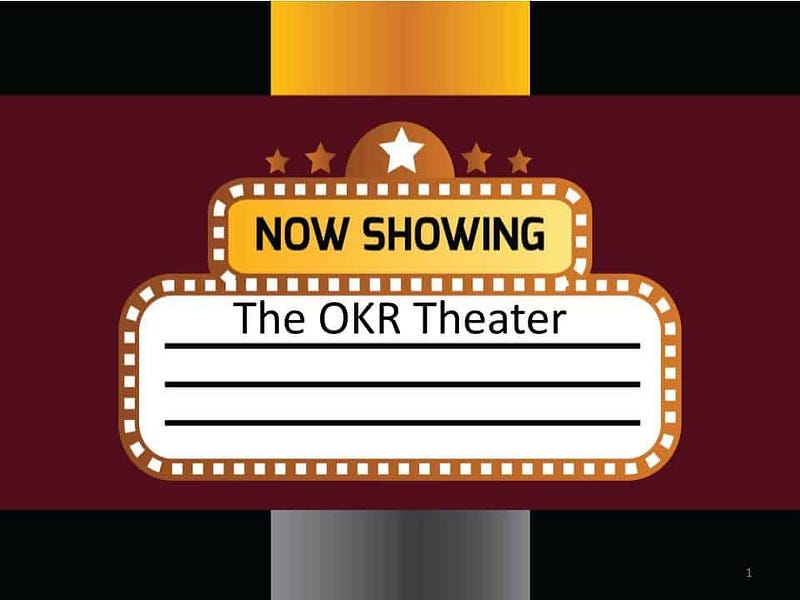
OKR theater is when OKRs become tasks, key results become outputs, and the whole thing turns into admin. How Scrum's inspect-and-adapt loop fixes it.
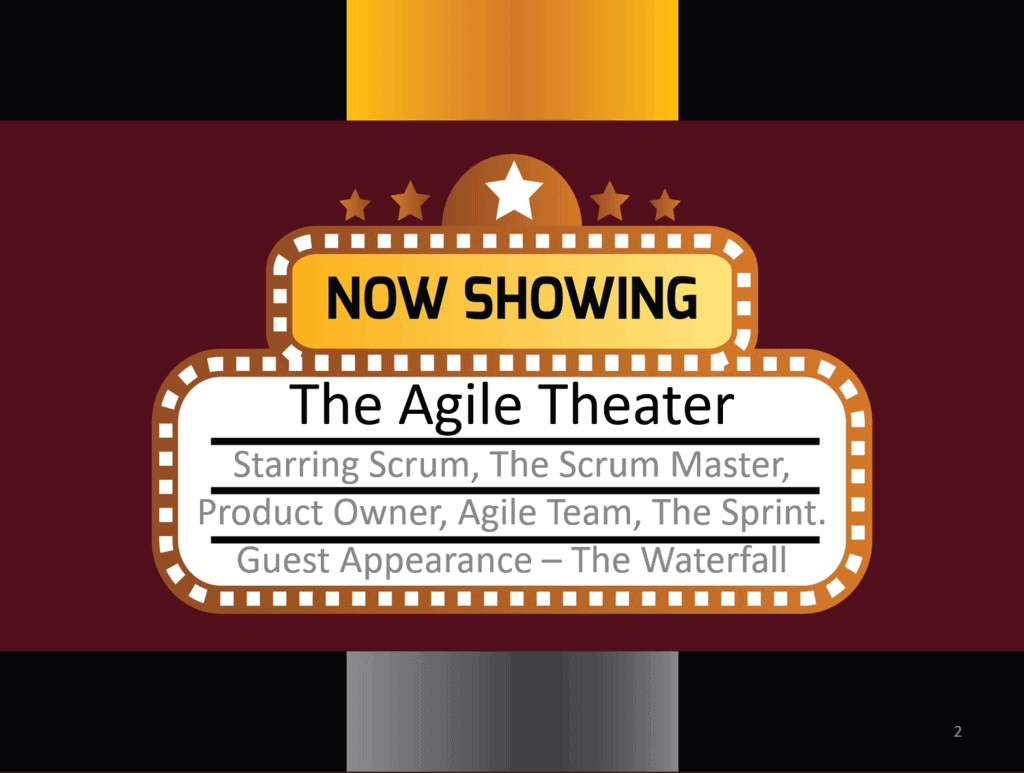
What Agile Theater looks like in practice: shallow adoption that delivers compliance without capability. Signs you're performing agility, not practicing it.
Agile Theater (going through the motions without the substance) is everywhere. Time to demand real agility instead of agile-flavored project management.