Insights Topic

Agentic Development Lifecycle

Generating work is nearly free now. Deciding, reviewing, and finishing are not. The lifecycle has to be rebuilt around what is actually scarce.

This is the delivery side of my AI work: what has to change in how product and engineering teams actually operate once an agent can produce a week of code in an afternoon. If your question is which AI bets are worth funding in the first place, that is the companion topic below.

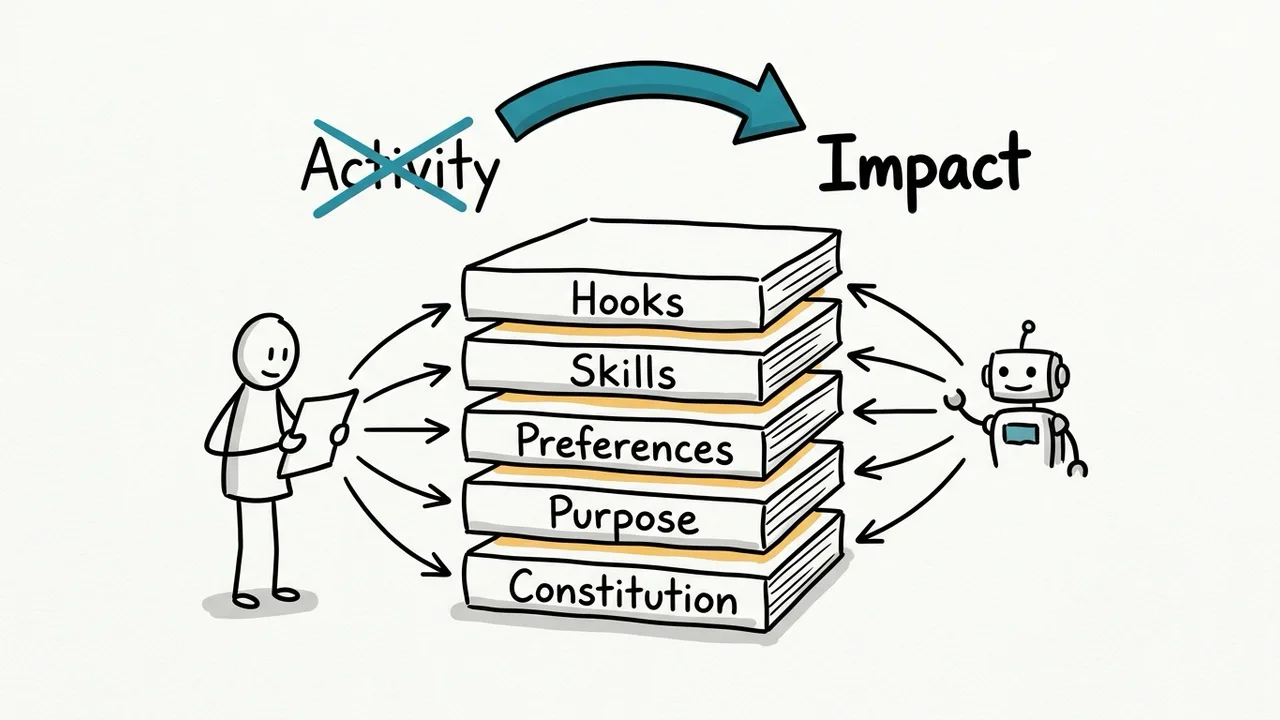
Companion topic AI Activity to Impact The leadership side of the same problem: aiming AI at a real business constraint, funding it in stages, and steering the bets as a portfolio.
What an AI-Native Engineering Operating Model Actually Looks Like

Start here · Cornerstone read

What an AI-Native Engineering Operating Model Actually Looks Like

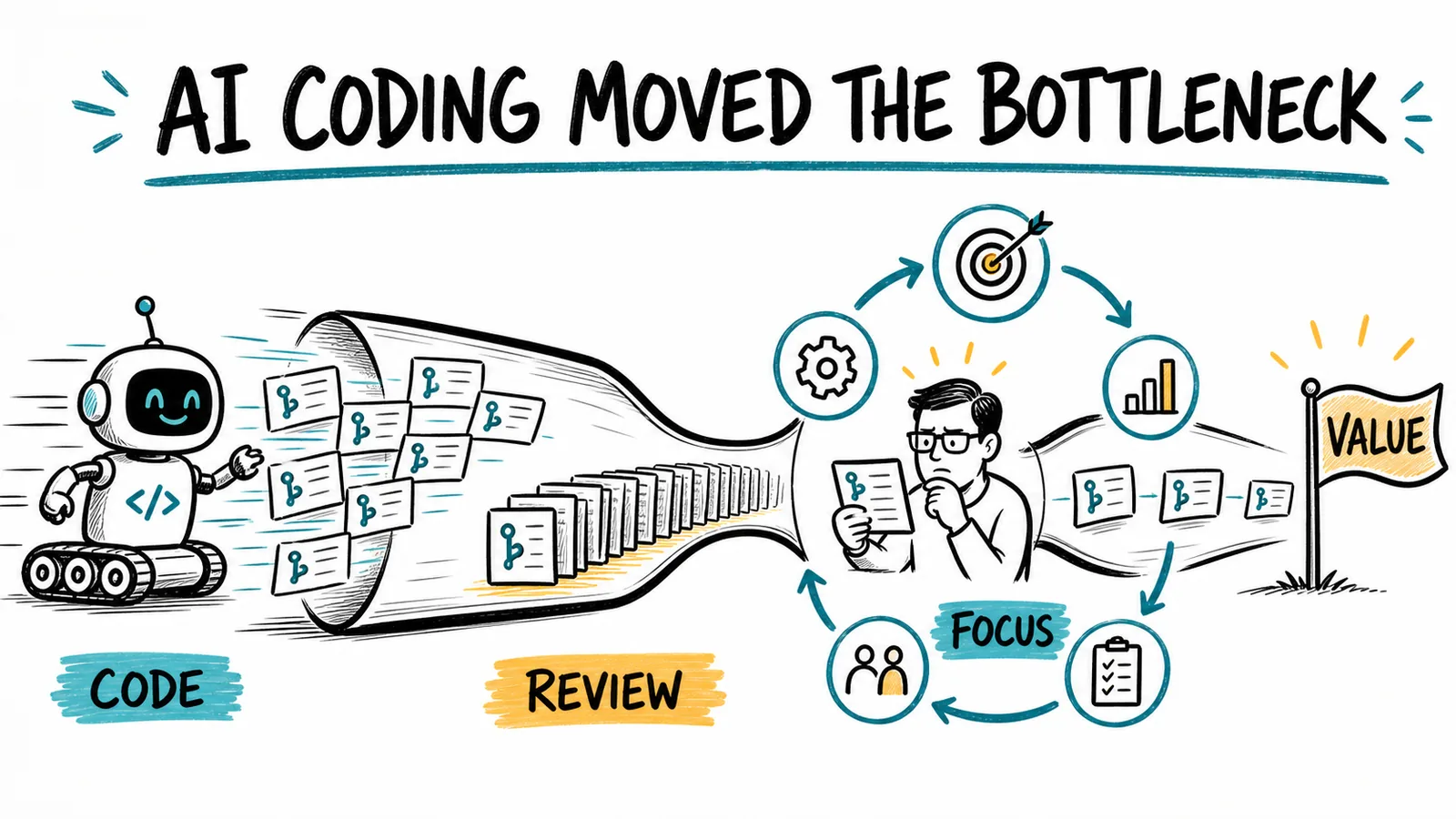
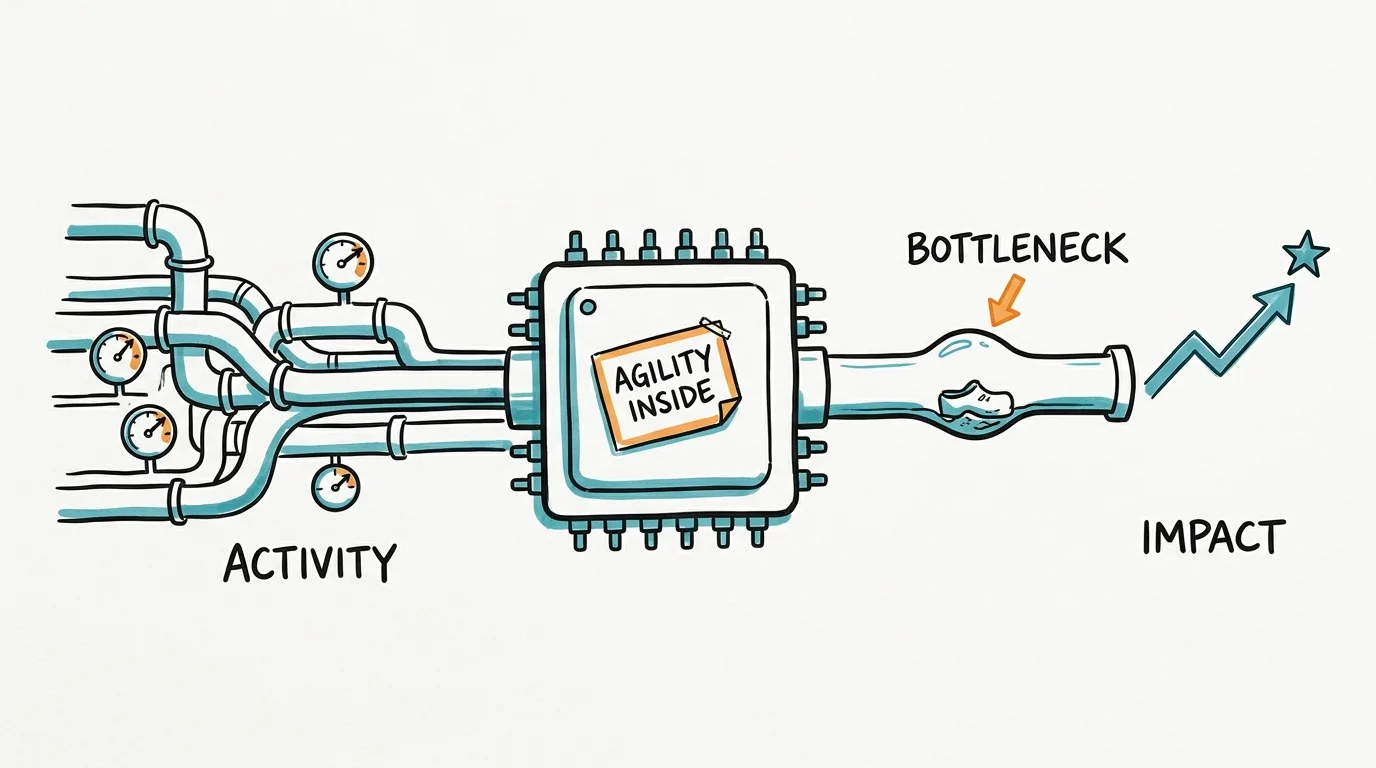
Agents write code faster than ever, and the bottleneck moved to human decision latency and review capacity. The operating system that closes that gap.

Read the full article

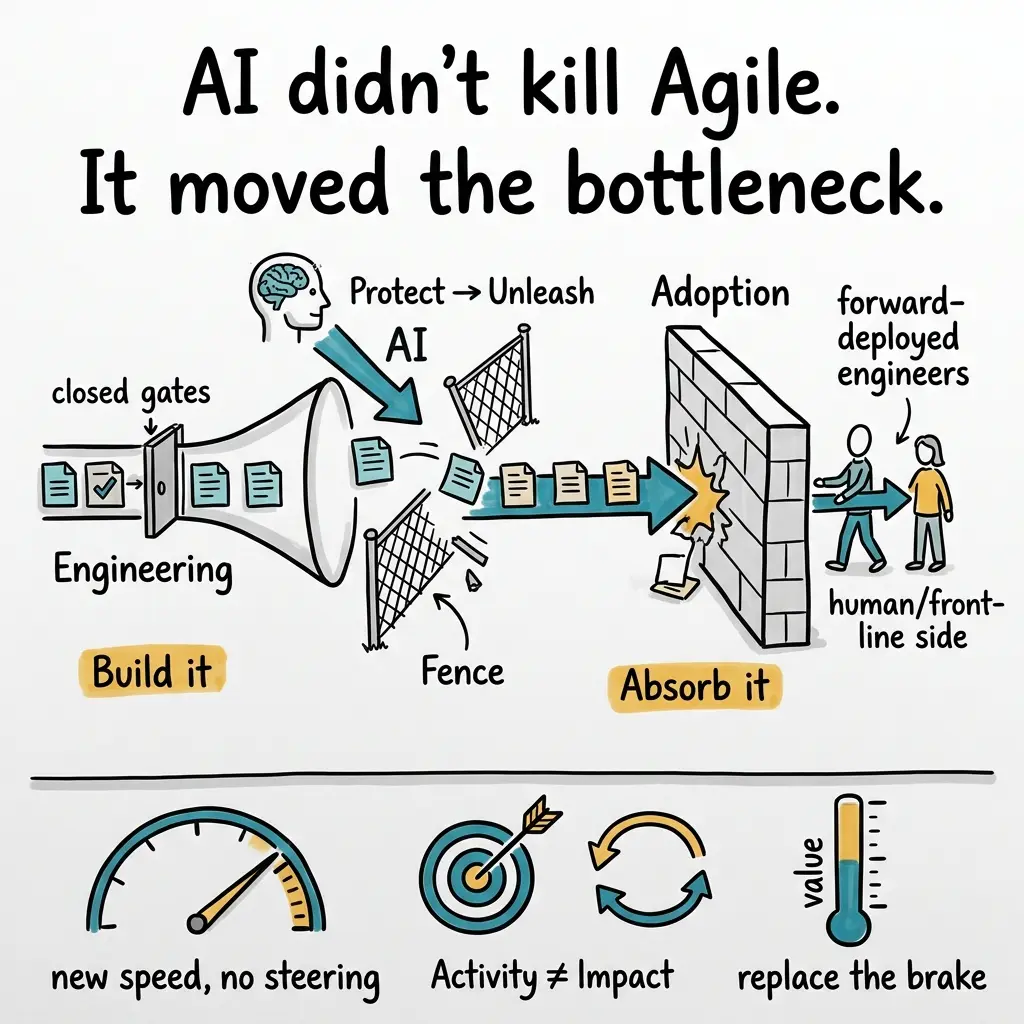
The Bottleneck Moved

If agents write the code in minutes, why does the work still take weeks?

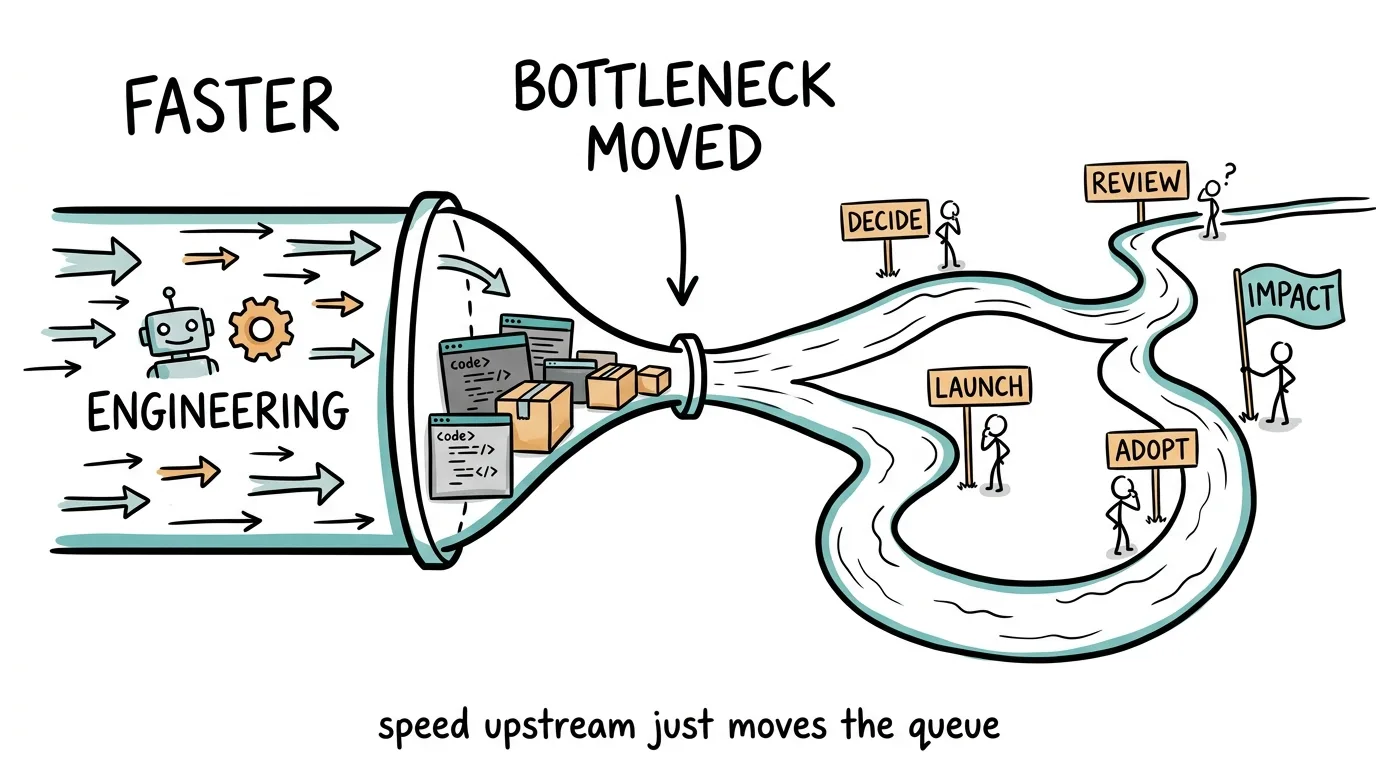
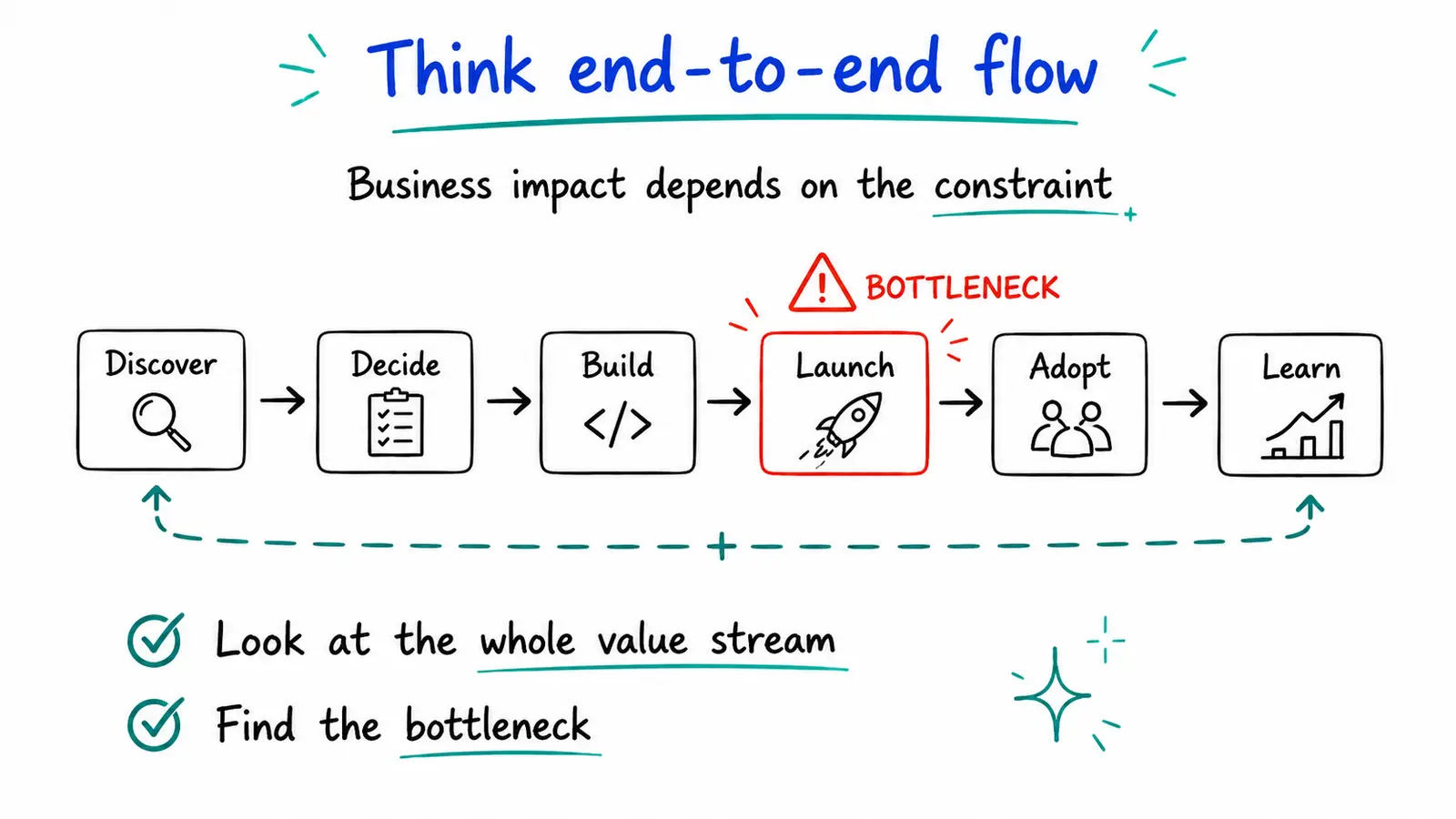
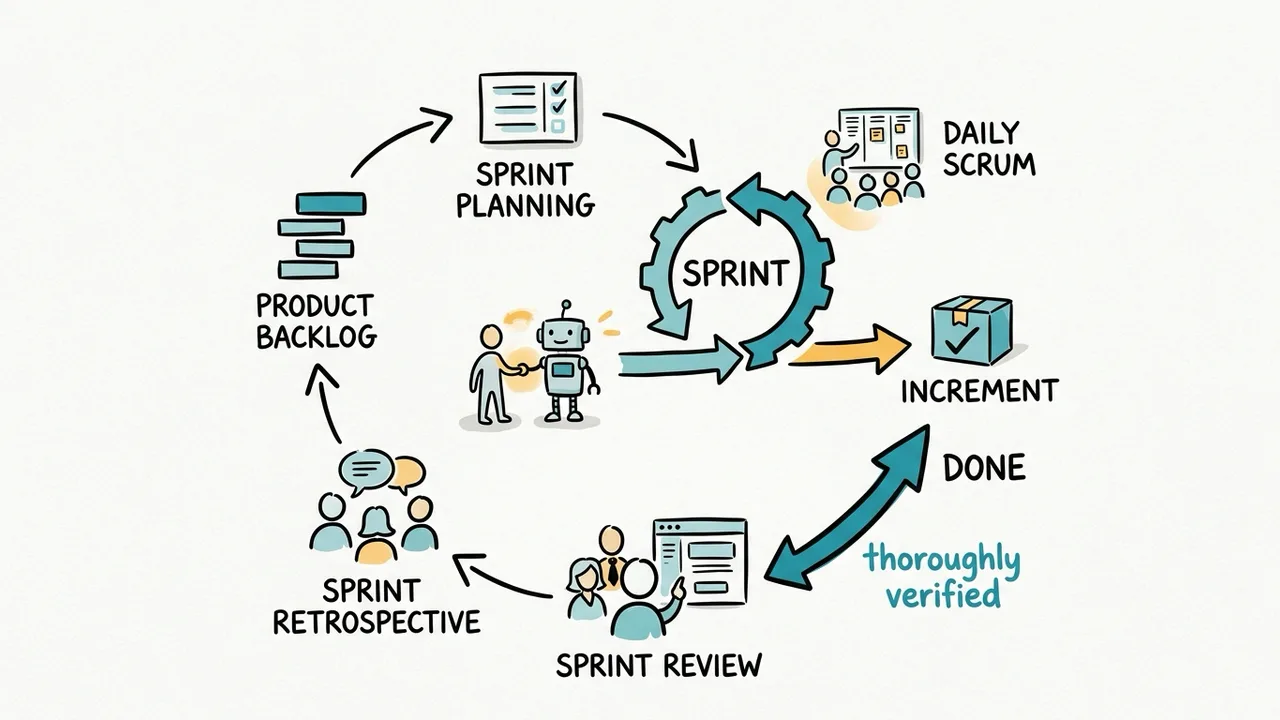
Coding was the constraint for a long time, so we built the whole lifecycle around protecting it. Agents removed that constraint and it moved somewhere else: deciding what is worth building, reviewing what came back, integrating it, and getting somebody to actually use it. None of those got faster on their own.

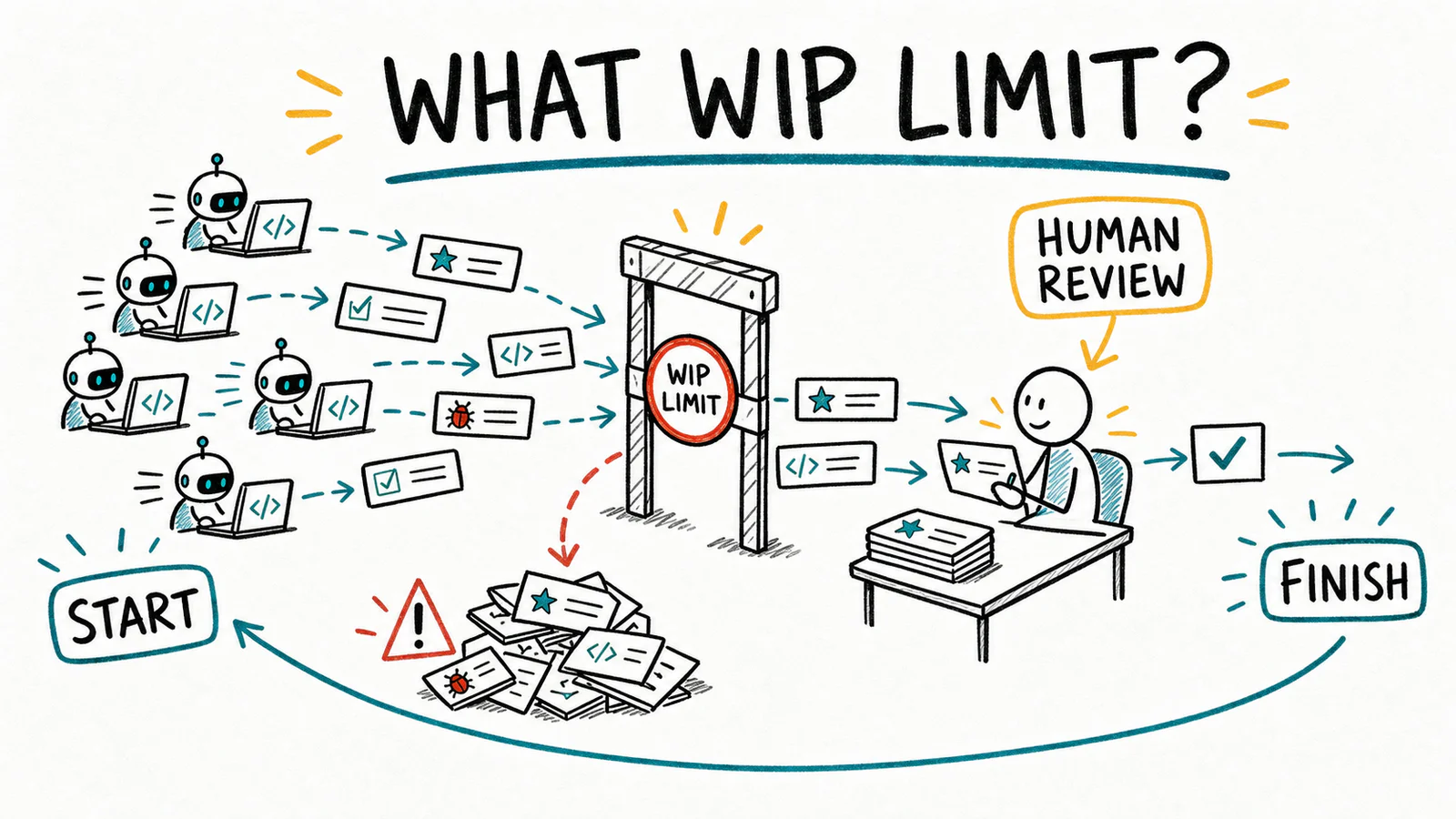
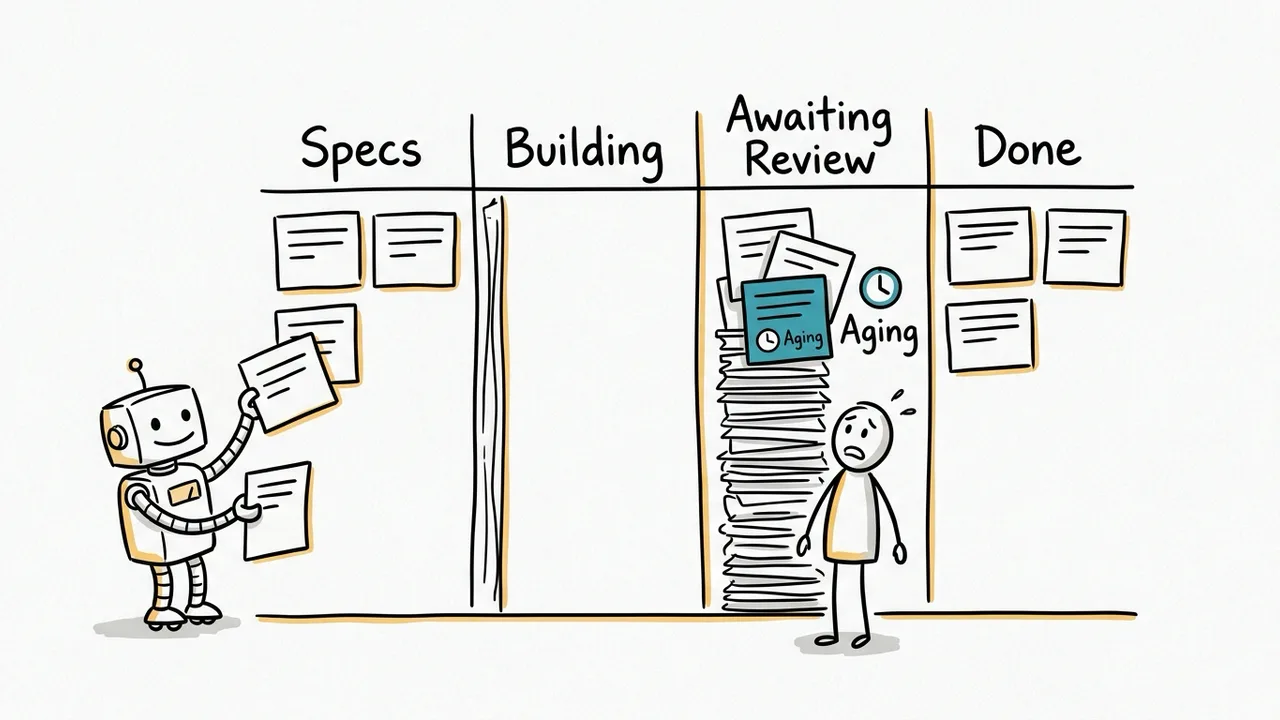
In practice that looks like a team generating more than it can finish. Pull requests pile up, review turns into rubber-stamping or into a wall, and unreleased work quietly accumulates. Faster generation into an unchanged downstream is just a bigger queue.

Spec-Driven Development

How do you steer coding agents without sliding back into waterfall?

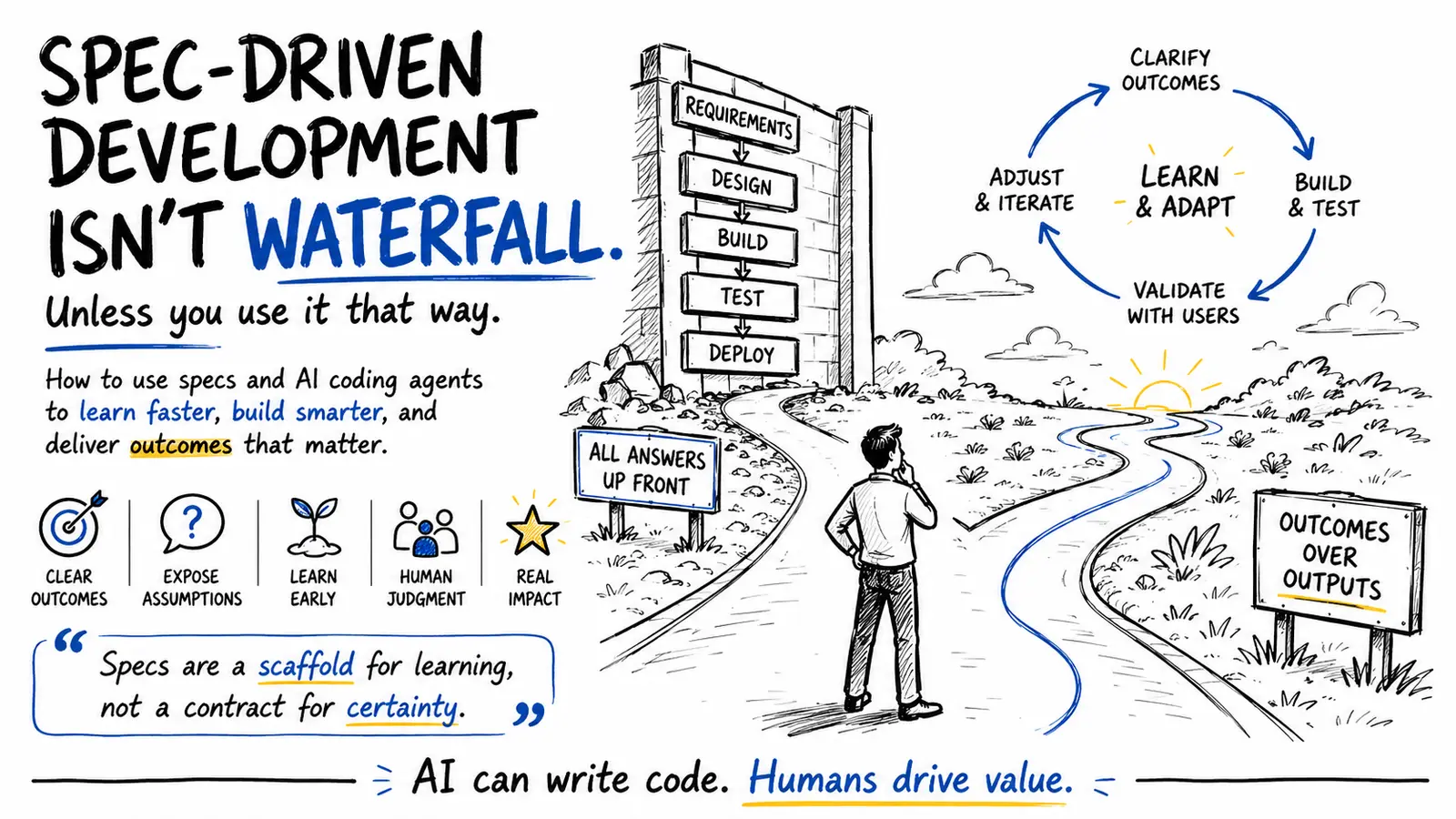
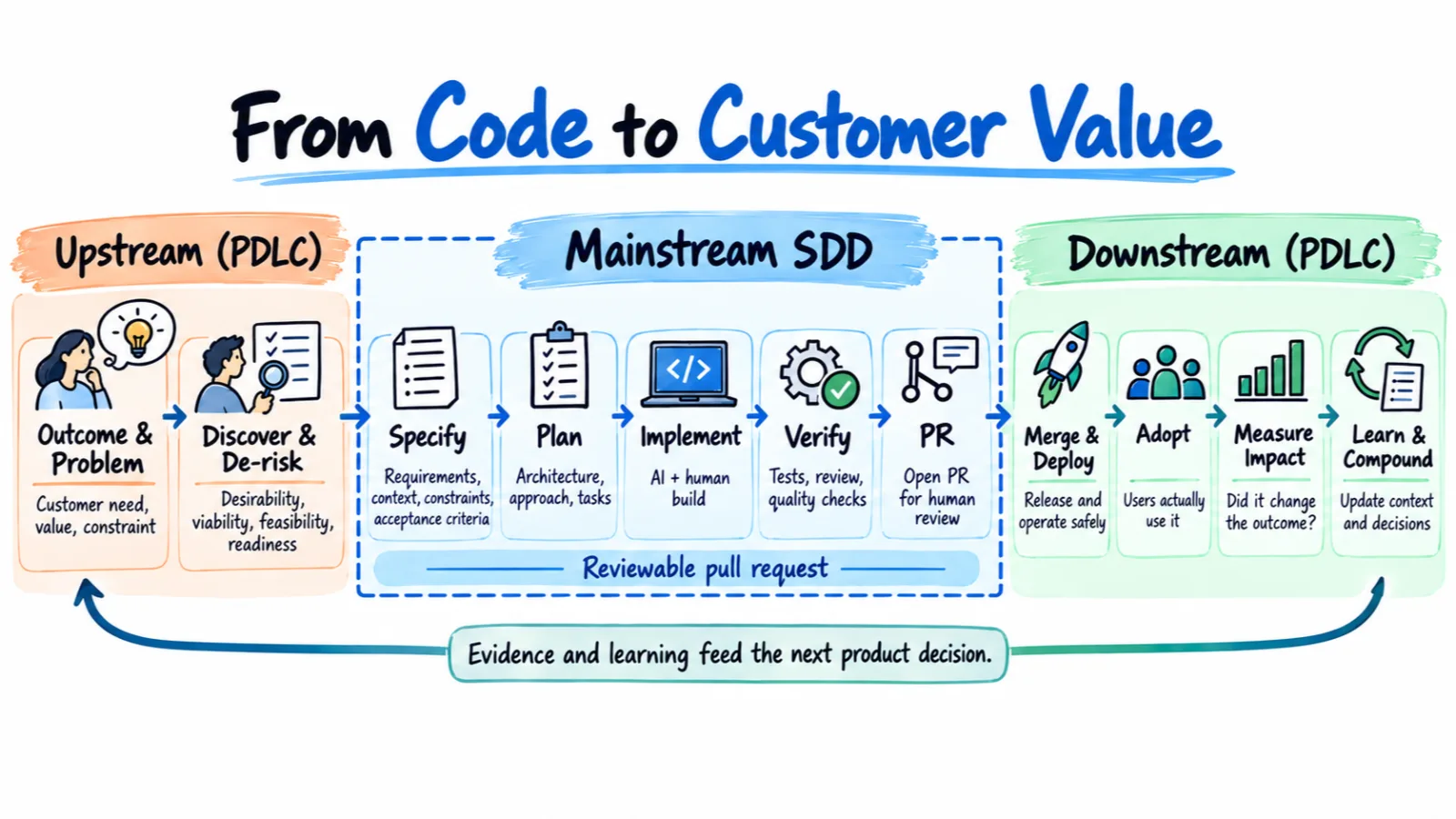
When code is nearly free, a vague spec does not slow you down. It gets built instantly and wrong. So the thinking moves upstream. Writing the spec first is not a return to requirements documents; it is choosing a higher-level language to work in, one a human can review before a thousand lines exist.

The difference between spec-driven development and waterfall with more tokens is whether the spec generates learning. Write it once, sign it, hand it down, and you have rebuilt the old failure at speed. Write it to make a bet reviewable and let what comes back change it, and you have moved judgment to where it is cheap.

Agent Context as a Product

Who owns the prompts, configs, and context your agents run on?

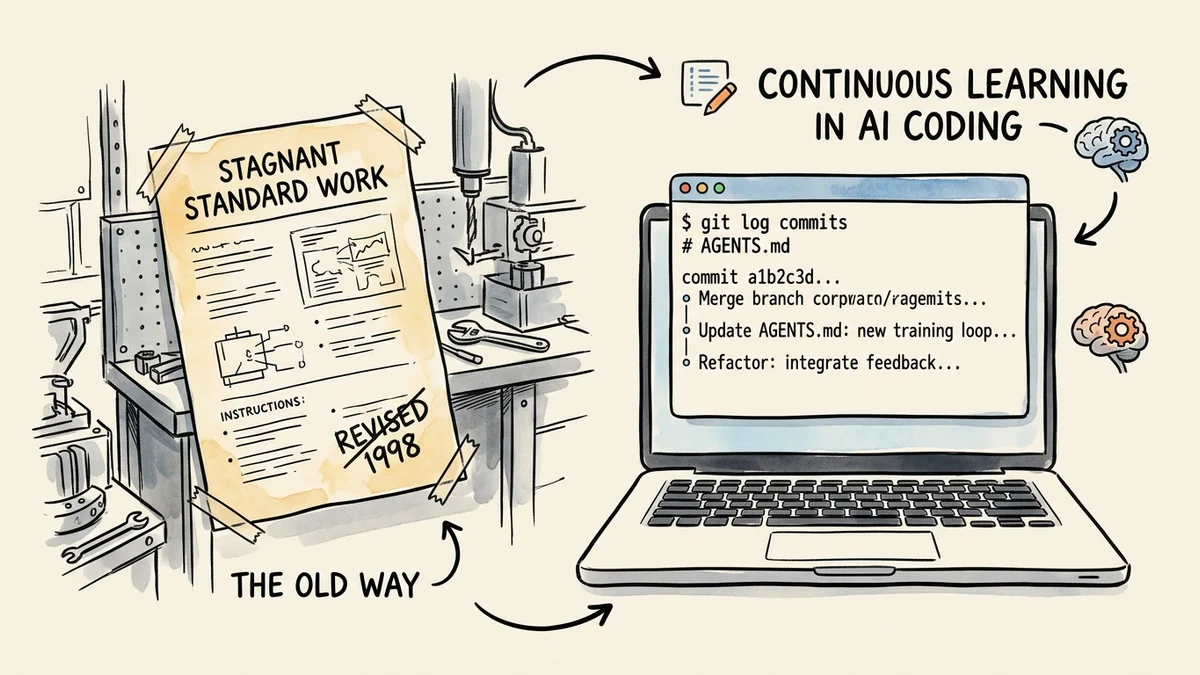
The system prompts, knowledge bases, tool configurations, and agent instructions your teams depend on are not setup. They are a product: discovered, versioned, improved, and occasionally wrong in ways that cost you a week. Treated as one-time setup, they rot quietly.

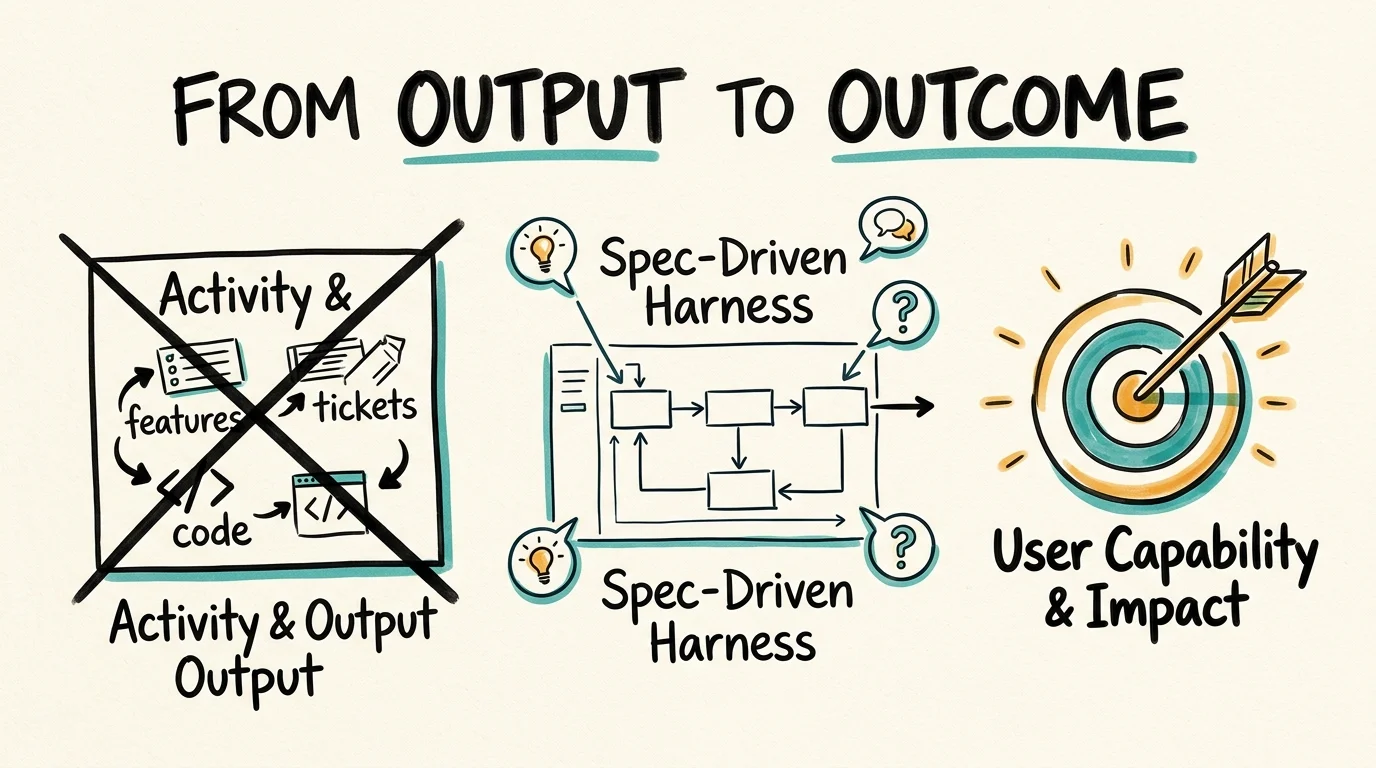
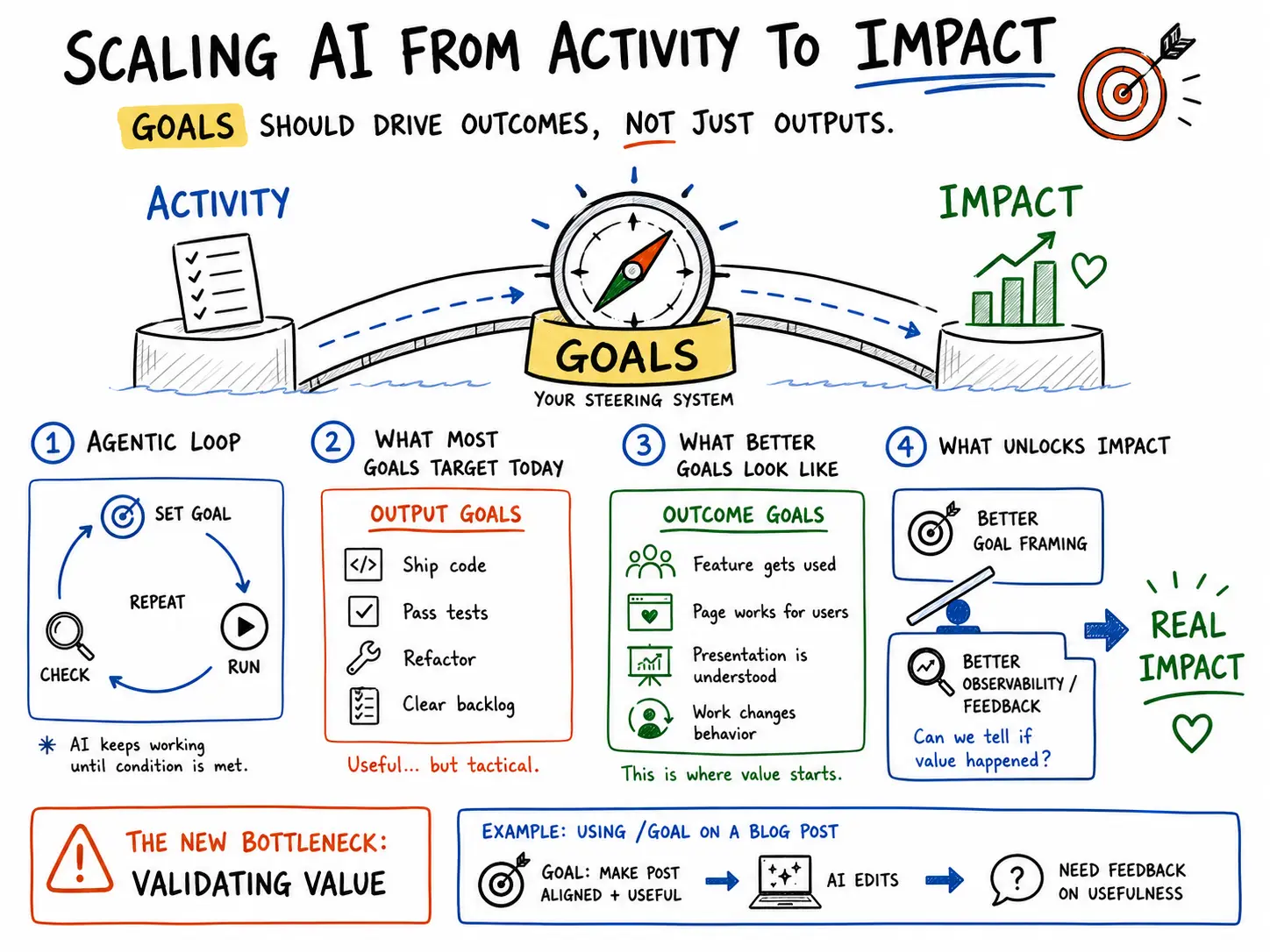
A Lean sensei could tell whether an organization was still improving by looking at how recently the standard work had been updated. Your agent config is that document, so check the date on it. And when you tell an agent what done means, notice whether you described an output or an outcome, because it will run straight at whatever you said.

Flow at Agent Speed

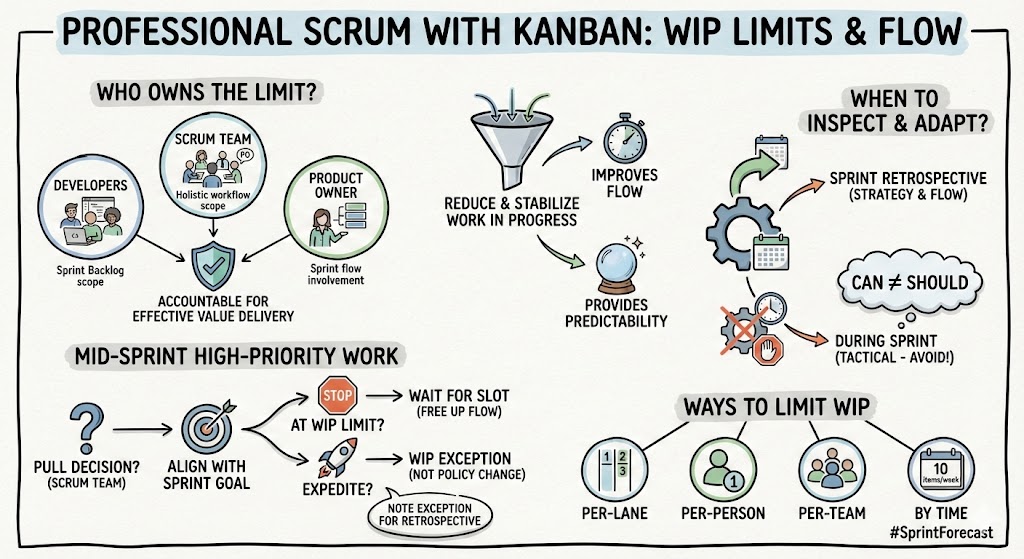
Do flow metrics and WIP limits still mean anything when agents generate the work?

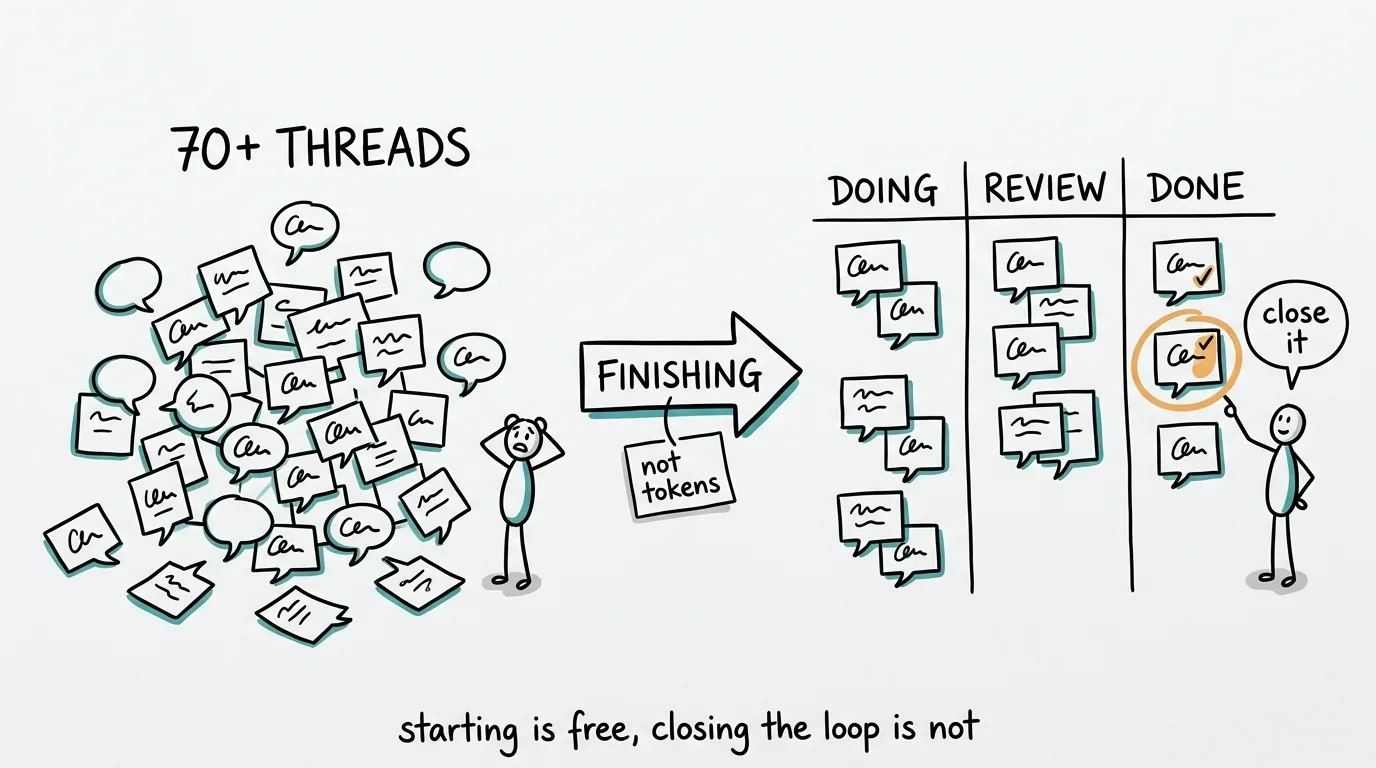
More than before, and for a specific reason: agents made starting nearly free while finishing stayed expensive. That is the exact condition WIP limits exist for. Work item age, cycle time, and throughput are still the honest signals, and they get more useful, not less, as the arrival rate climbs.

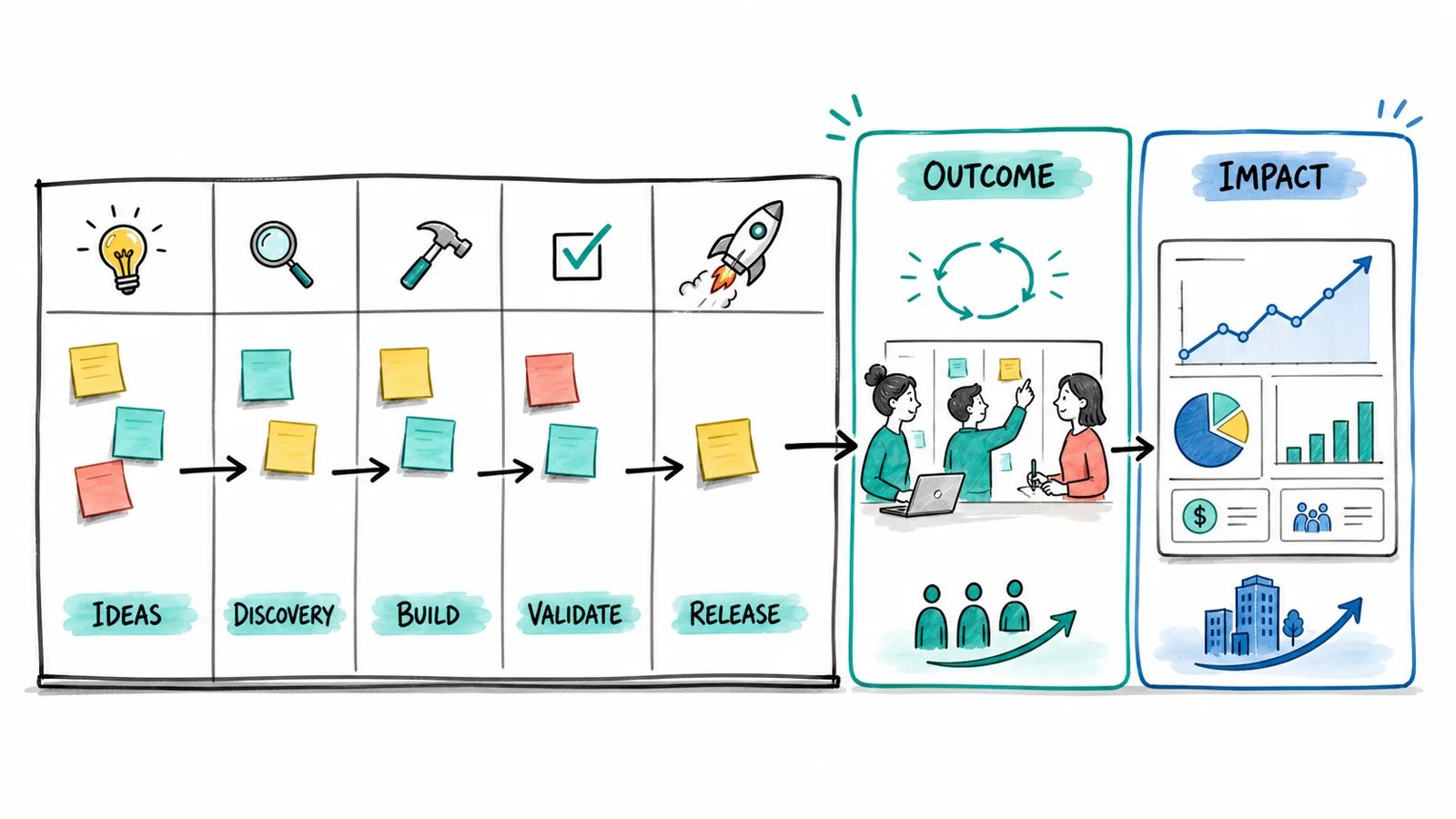
The other thing worth fixing is where the board ends. Most boards stop at deployed, which was defensible when deploying was the hard part. It is not anymore. If the board ends before somebody’s behavior changed, it is measuring the easy half.

Teams and Frameworks in the AI Age

What happens to Scrum, Kanban, and scaling frameworks when teams get smaller?

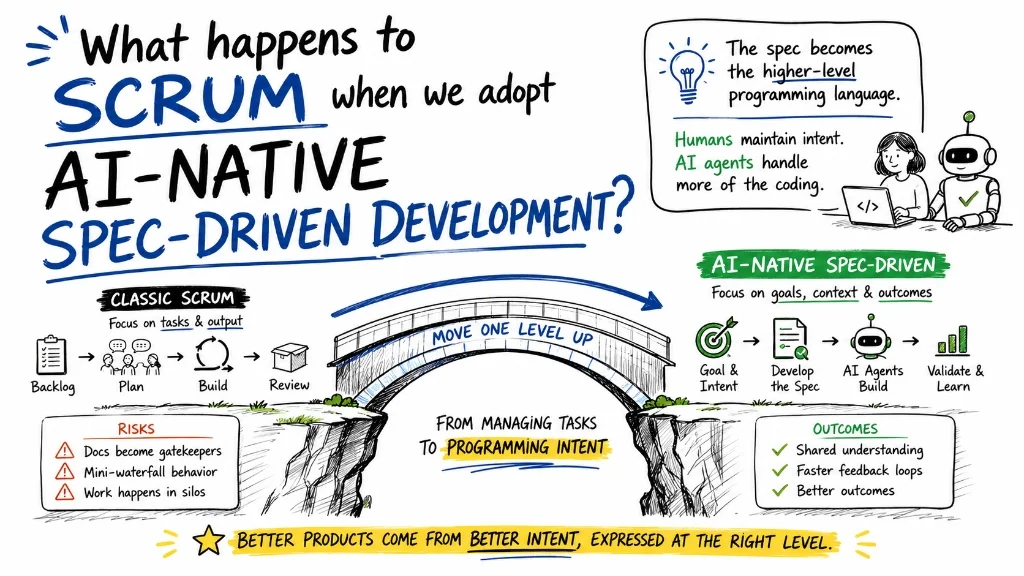
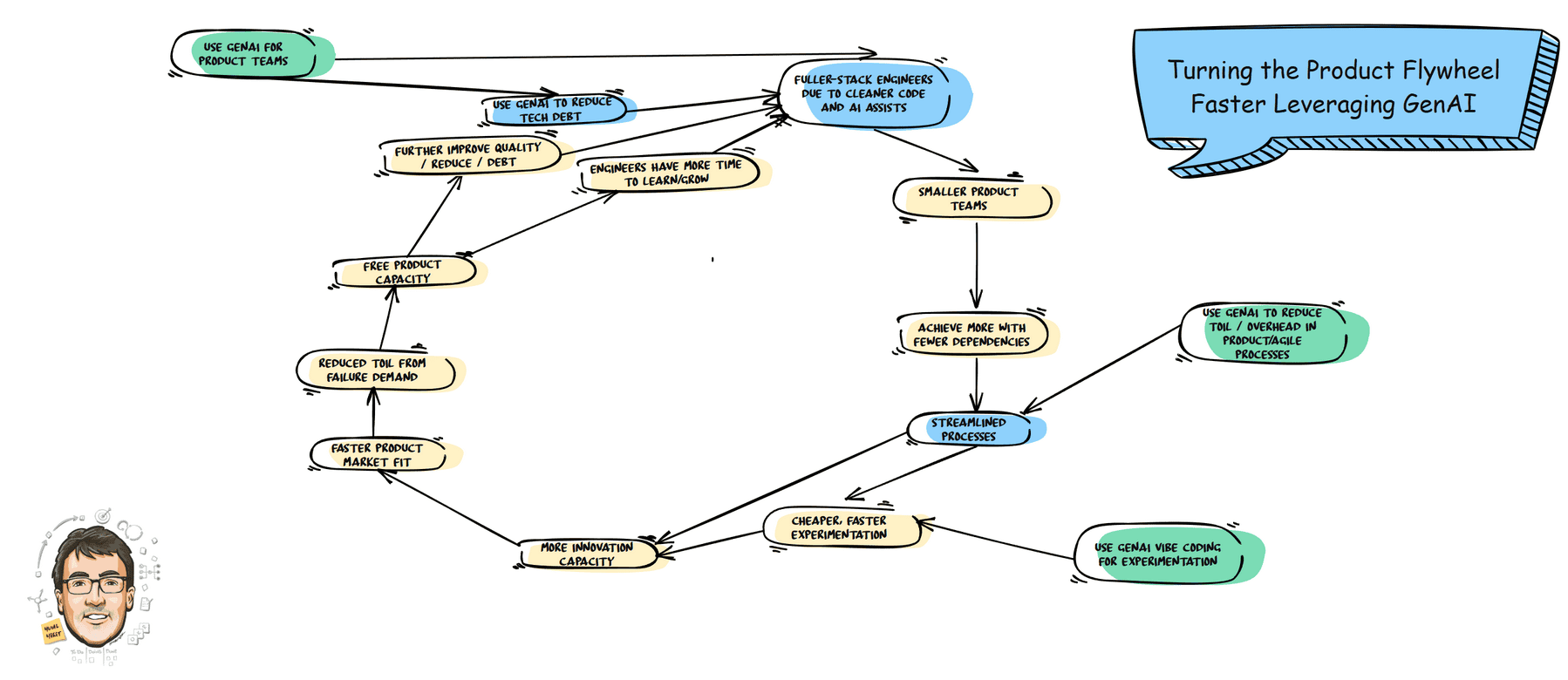
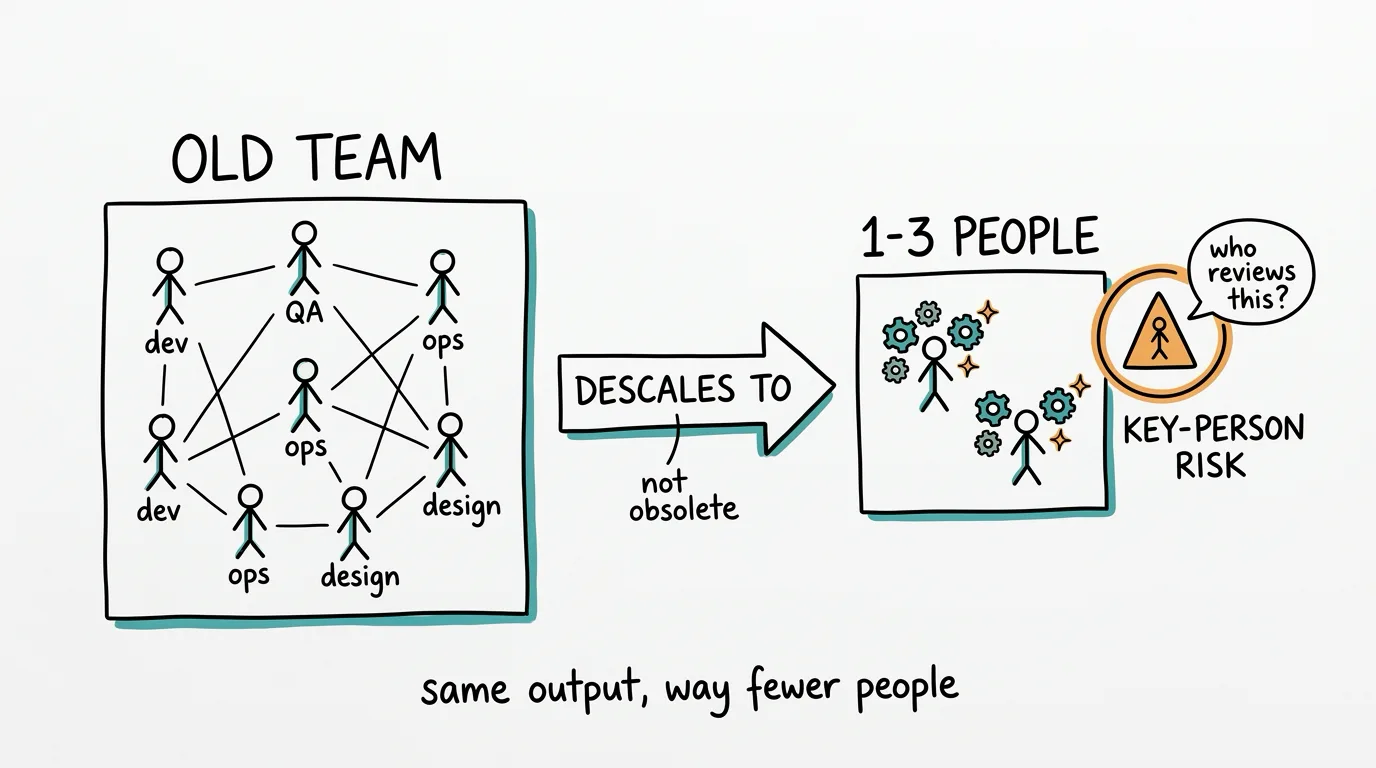
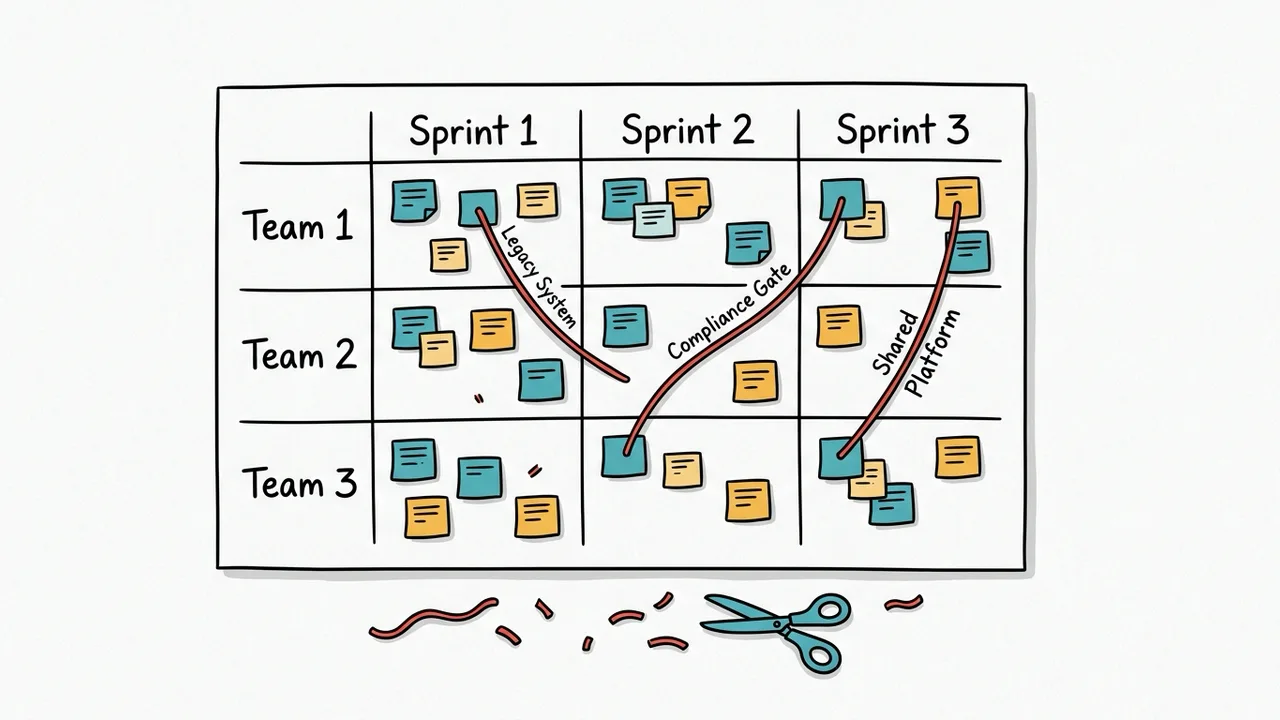
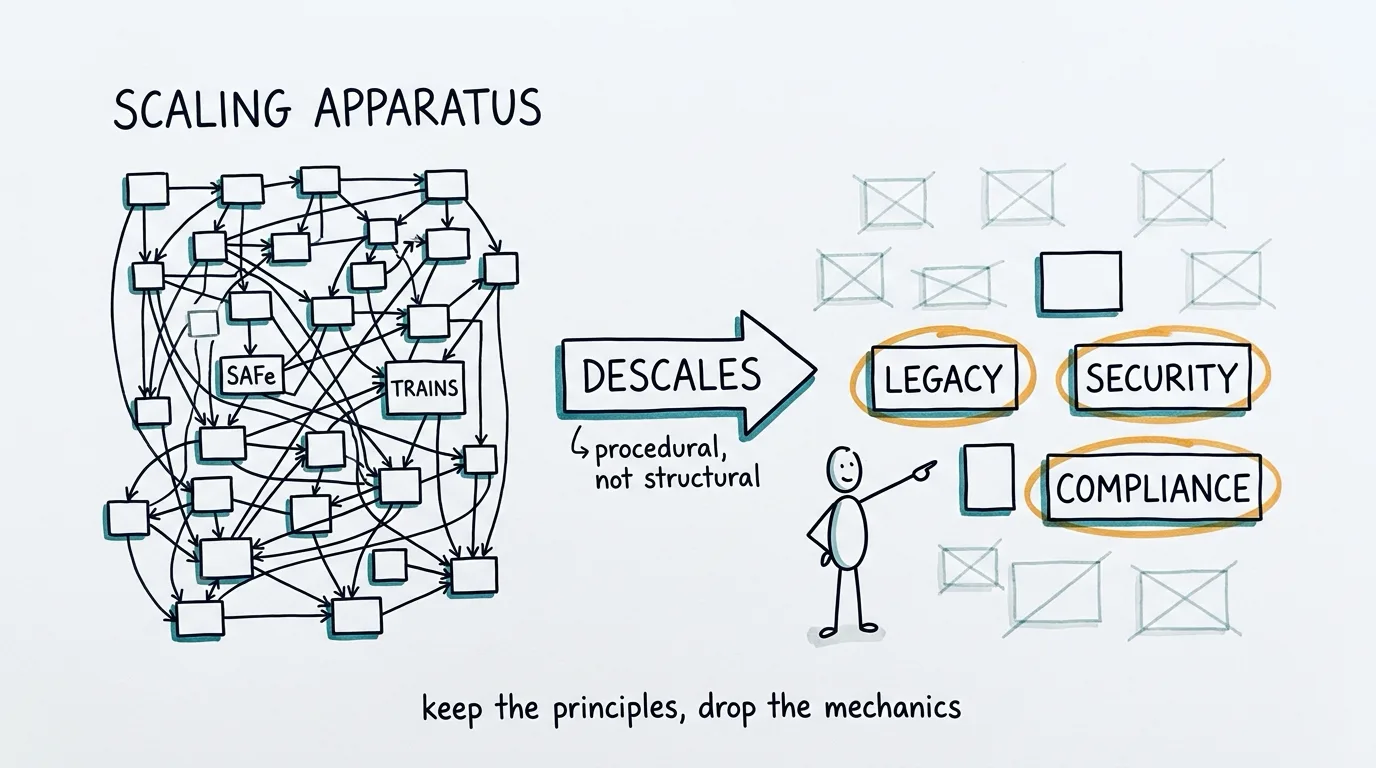
Scrum teams are not becoming obsolete. They are getting smaller, from cross-functional squads to one to three people who can cover a whole slice. That descaling is the interesting part, because a lot of organizational machinery existed only to coordinate between people who now sit inside the same small team.

Which means a good deal of your scaling apparatus is genuinely optional now, and your first principles are not. Flow, WIP, small batches, and real feedback still decide the outcome. The ceremony built to manage dependencies that no longer exist is what you get to put down.

FAQ

Frequently asked questions

What is the agentic development lifecycle?

It is a product and engineering lifecycle built for AI-assisted work, where specification, review, validation, and deployment keep pace with much faster code generation. The point is to manage the whole flow from intent to outcome rather than optimizing the coding step that is no longer the constraint.

Is spec-driven development just waterfall with more tokens?

Only if you use it that way. Waterfall writes the spec once, signs it, and hands it down. Spec-driven development writes the spec to make a bet reviewable before code exists, and expects what comes back to change it. The test is whether the spec is generating learning or suppressing it.

Why did code review become the bottleneck?

AI raised the arrival rate of pull requests without raising review capacity, and AI-generated diffs are larger and harder to reason about. The answer is not telling reviewers to go faster. It is making changes smaller and more reviewable, and moving judgment upstream into the spec so review is not the first time a human sees the intent.

Do we still need Scrum, Kanban, or SAFe if agents write the code?

You need the first principles (flow, WIP limits, small batches, fast feedback) more than before. You need much less of the coordination apparatus, because smaller teams absorb dependencies that previously needed ceremony to manage. Customize the framework down to what is still doing work rather than abandoning or preserving it wholesale.

Insights Database

All Agentic Development Lifecycle Articles

Browse the complete archive of articles and case studies related to agentic development lifecycle.