Scaling Product Organizations with Portfolio Agility
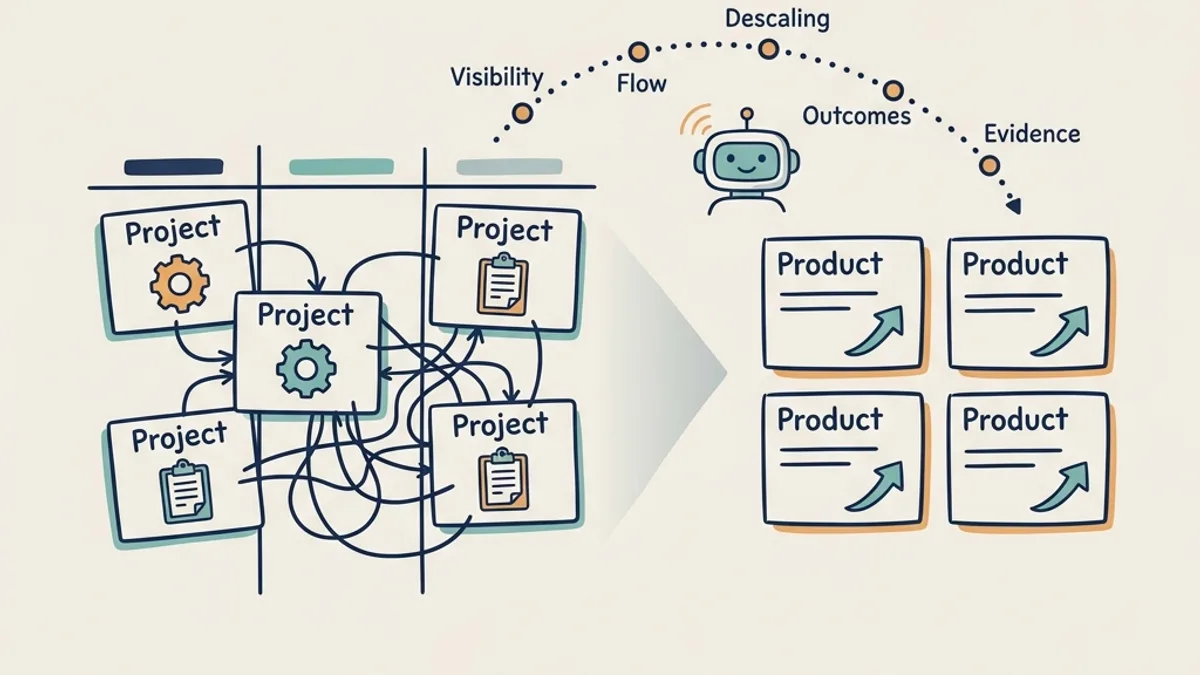
A work-in-progress minibook on using portfolio agility to help multi-product organizations see work clearly, improve flow, descale around outcomes, and steer strategic investments with evidence.
Insights Topic
Every team is busy, yet major initiatives are late. Take control of your strategic portfolio by limiting WIP and managing flow.
On this page:
When organizations manage too many active strategic initiatives, context-switching overhead slows everyone down. Below, I share how to apply WIP limits and lean budgeting to strategic portfolios.
Start here · Cornerstone read
Portfolio Kanban, lean budgeting, and investment flow — eliminating the overhead of managing work about work while keeping strategic alignment real.
Read the full articleA portfolio board without limits is just an expensive status report. When leadership pushes too many initiatives into the system, the coordination tax explodes, and everything grinds to a halt. The key is treating the portfolio as a queuing system.
By applying strict WIP limits at the portfolio level, organizations are forced to make tough prioritization decisions. Teams pull new initiatives only when capacity actually opens up, ensuring that work flows smoothly from idea to execution.
Annual budgeting locks teams into rigid, year-long plans based on assumptions that are usually wrong by the second quarter. This blocks flexibility and prevents the organization from responding to new data or market shifts.
We descale this overhead by shifting to persistent funding organized around cross-functional product areas or value streams. This approach minimizes project-chartering bureaucracy and allows for responsive, continuous backlog adjustments based on real economic evidence.
Because when portfolio WIP is too high, the coordination tax increases, teams are flooded with dependencies, and context-switching slows everything down. Limiting portfolio WIP increases end-to-end throughput.
Lean budgeting is the practice of funding durable value streams and cross-functional product groups rather than short-lived projects. Funding is managed dynamically through lightweight reviews as confidence increases.
Insights Database
Browse the complete archive of articles and case studies related to leaner portfolio management.
A work-in-progress minibook on using portfolio agility to help multi-product organizations see work clearly, improve flow, descale around outcomes, and steer strategic investments with evidence.
A follow-up AI coaching prompt for anyone who sat through my "Product Orientation Through LPM" talk — pressure-test one real initiative, find the real gap, and get one experiment to run in the next few weeks.
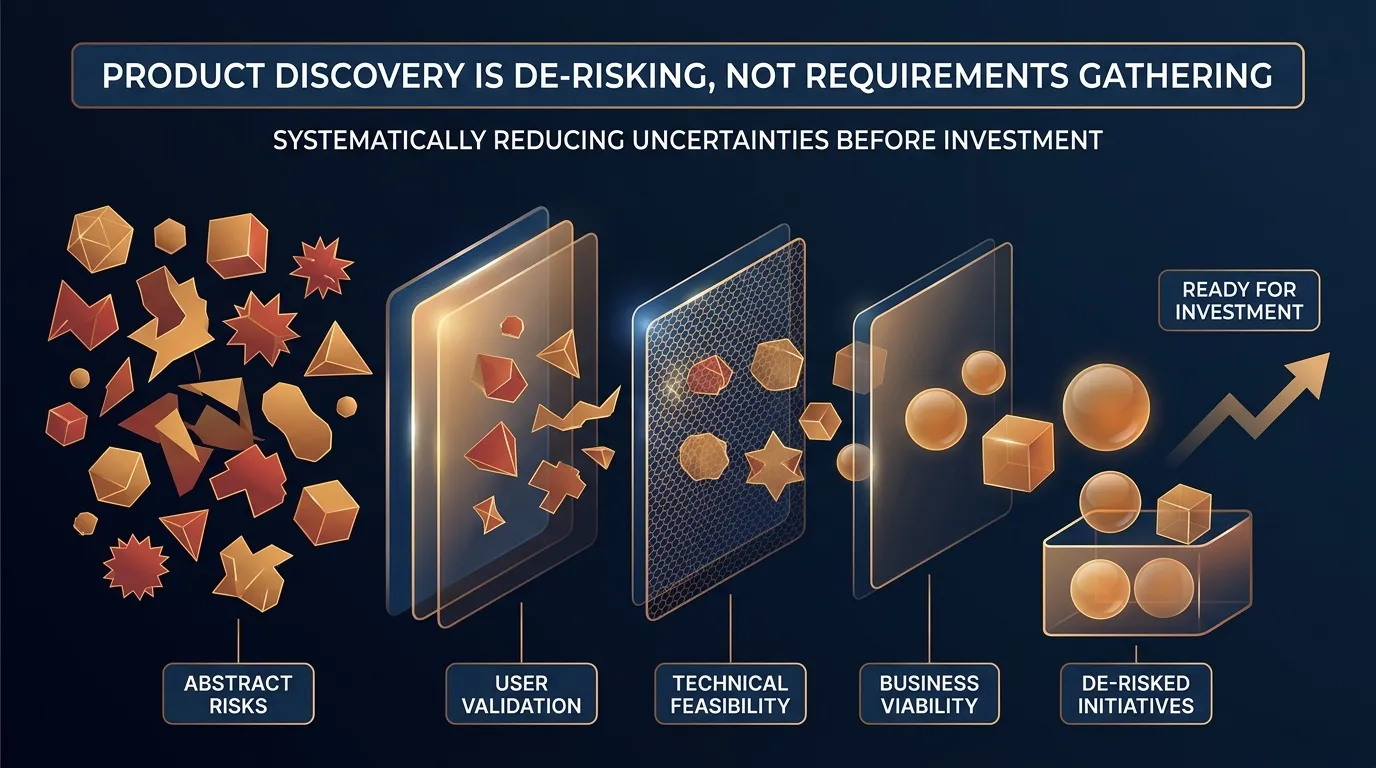
Most organizations are great at executing projects and weak at realizing the value of their software investments. The fix isn't more discovery — it's reframing discovery as de-risking. Here's the thinking, the decision rule (Investment Conviction = Desirability × Viability × Feasibility), and an interactive tool to try it on your own initiative.
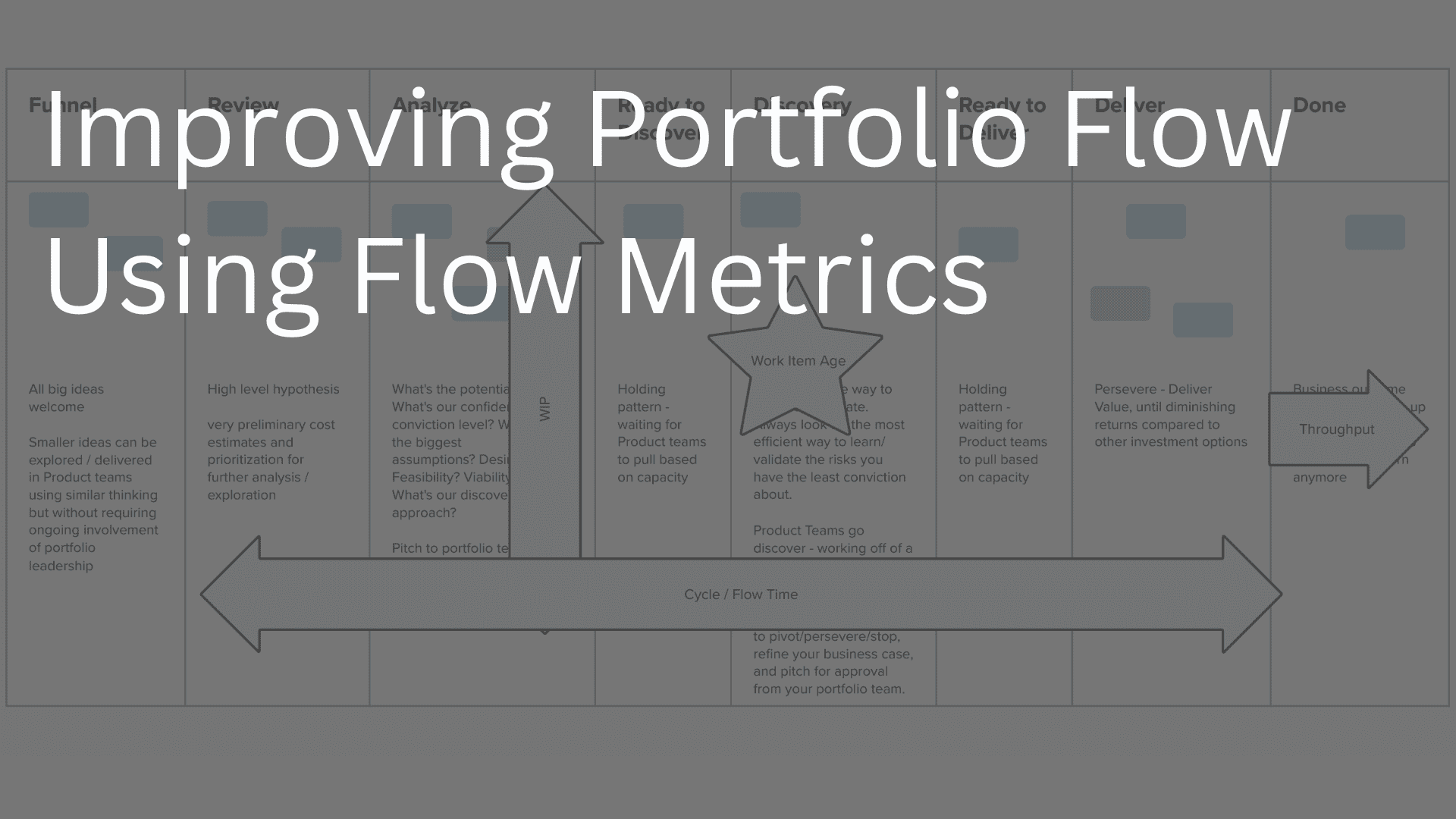
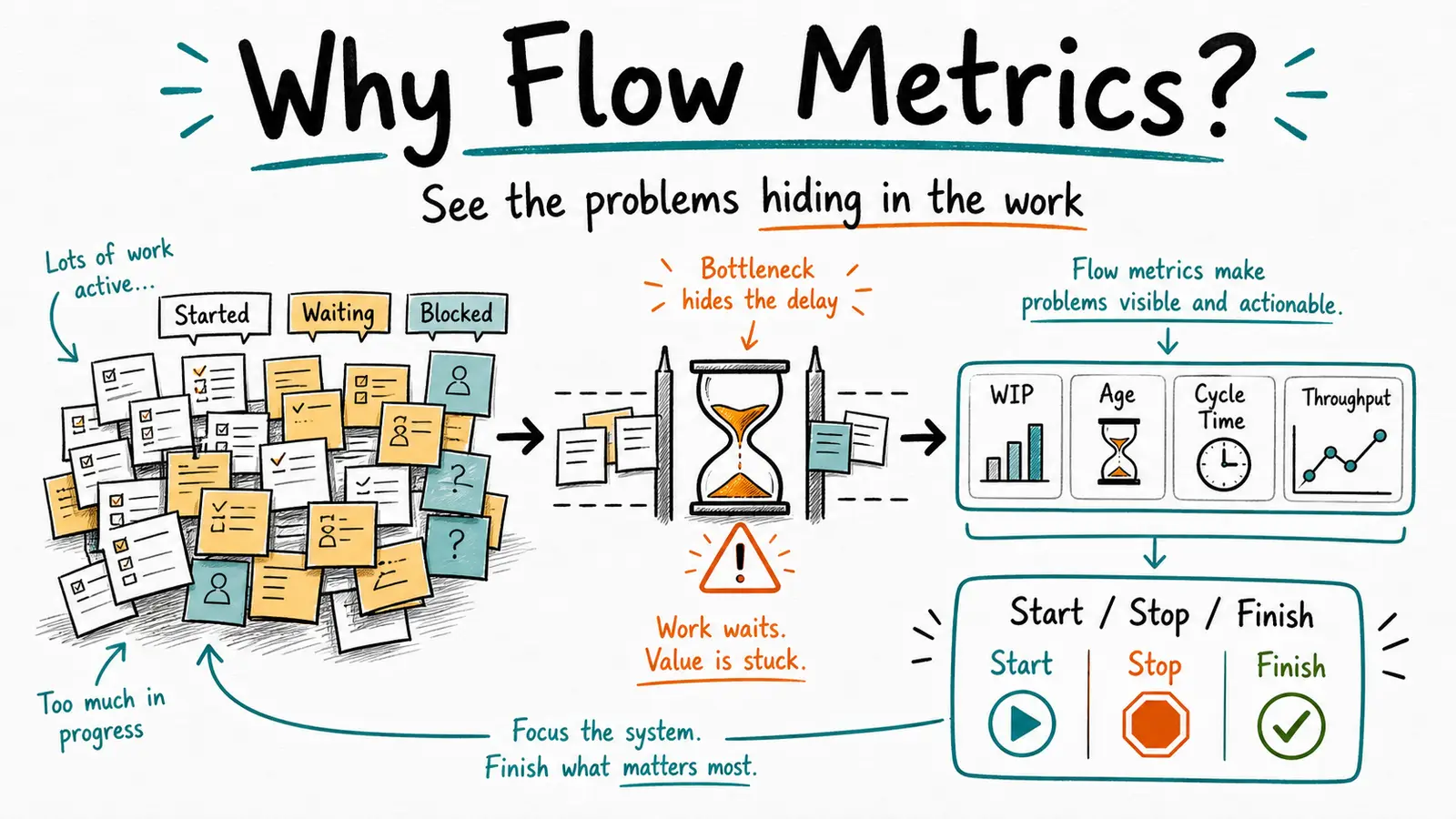
Flow metrics are not useful because metrics are good. They are useful when important work is slow, blockers show up late, forecasts are fragile, and leaders need a better way to decide what to start, stop, finish, or fix.
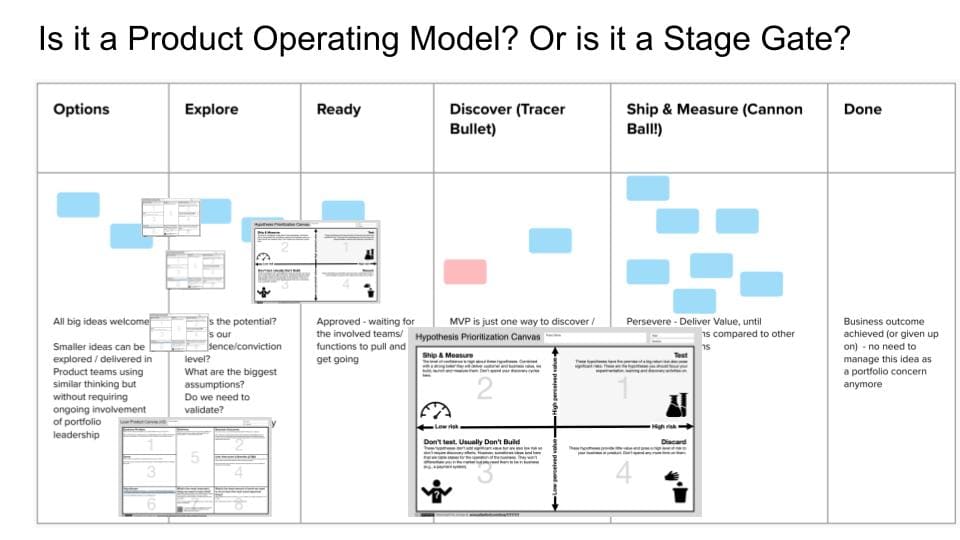
Many organizations claim to adopt a Product Operating Model but retain stage-gate thinking under the surface. How to tell the difference and what to do about it.
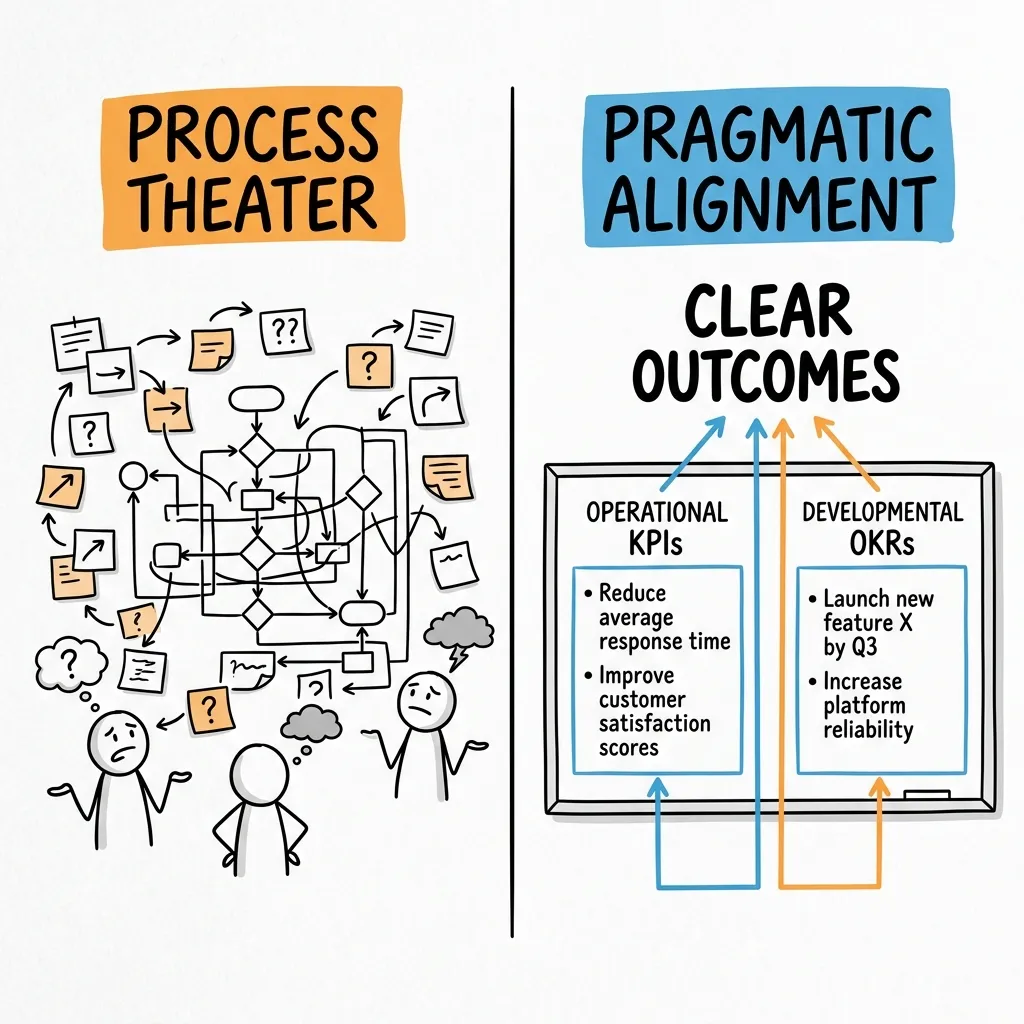
Quarterly big room OKR planning is often dismissed as process theater. Here is a pragmatic, outcome-oriented approach to align teams, manage dependencies, and set realistic goals.
Strategic themes gathering dust like unused New Year's resolutions? How to apply the same outcome-oriented, empirical patterns used at the team and portfolio level to break strategy theater at the enterprise level.
Organizational traction and portfolio agility are the same path. Why leaders pursuing either goal inevitably arrive at the need to manage a portfolio of investments with flow-based thinking.
A practical framework for selecting initiative owners in a product-oriented organization: why ownership is about Why and What more than How, and how to avoid the accountability vacuum on cross-product work.
The project-to-product shift starts at the team level but only truly lands when the portfolio follows. A roadmap for making it happen at the funding and governance level.
When a stable product team is misaligned with strategic priorities: how to evaluate flexibility needs, protect empowerment principles, and make the minimum effective structural adjustments without undermining team flow.
What to do when business initiatives pre-commit product teams to specific outputs before the portfolio model can weigh in. Practical strategies for avoiding rubber-stamping and enabling genuine product empowerment.
Practical criteria for designing Agile Release Trains (ARTs): how to group teams around value streams, localize dependencies, and avoid the common mistake of creating ARTs that mirror your org chart.
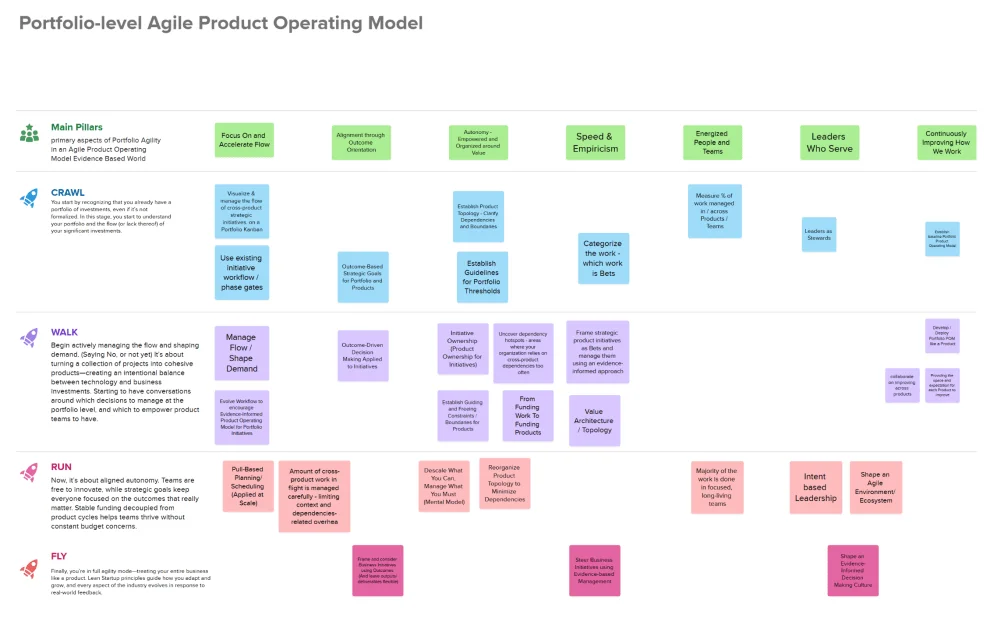
Why comprehensive blueprints for agile portfolio transformations fail — and why a trail map approach (visualize flow, shape flow, organize, steer with evidence) works better in practice.
Why cross-product initiatives fail under classic program management — and what it looks like when initiative owners act with real product ownership accountability in a product-oriented operating model.
Single-team agility is table stakes. Multi-product portfolio-level practices — value stream management, lean budgeting, portfolio Kanban — are where the leverage hides.
What product-oriented portfolio leadership actually looks like: aligning vision with outcomes, empowering value streams, and managing focus and flow at the portfolio level without micromanaging delivery.
Before improving portfolio agility, you need an honest read on where you actually are. A practical assessment framework for product portfolios — covering funding, flow, autonomy, and outcome-orientation.
The most powerful portfolio simplification move: organizing around products instead of projects. How product-oriented portfolio management reduces complexity at scale.
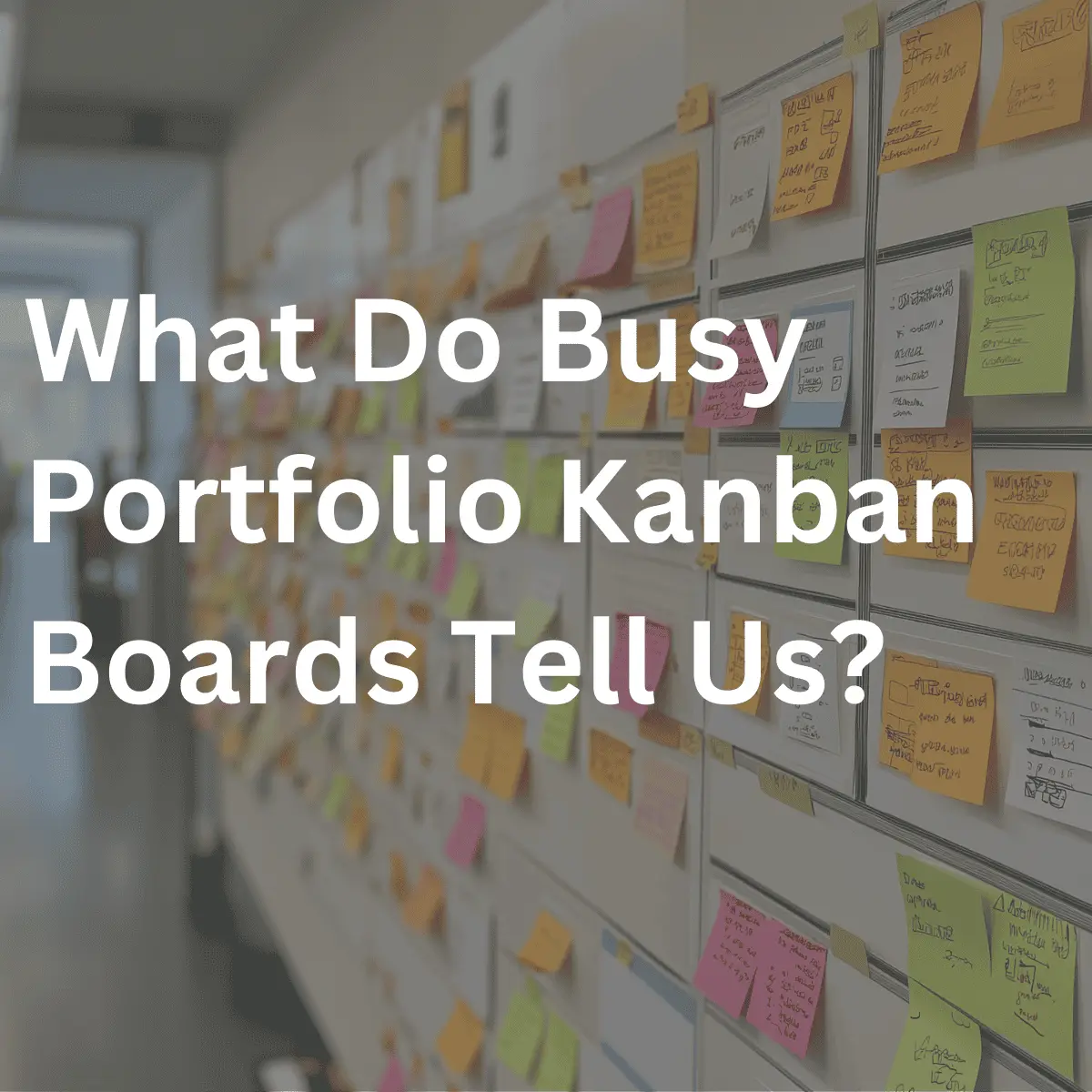
A packed Portfolio Kanban signals centralized decision-making and an iron spaghetti portfolio. How to use your portfolio board to diagnose — and fix — the structural causes of slow portfolio flow.
Flow metrics — cycle time, throughput, WIP, aging — aren't just for team-level Kanban. How to apply them at the portfolio level to visualize investment flow and make smarter prioritization decisions.
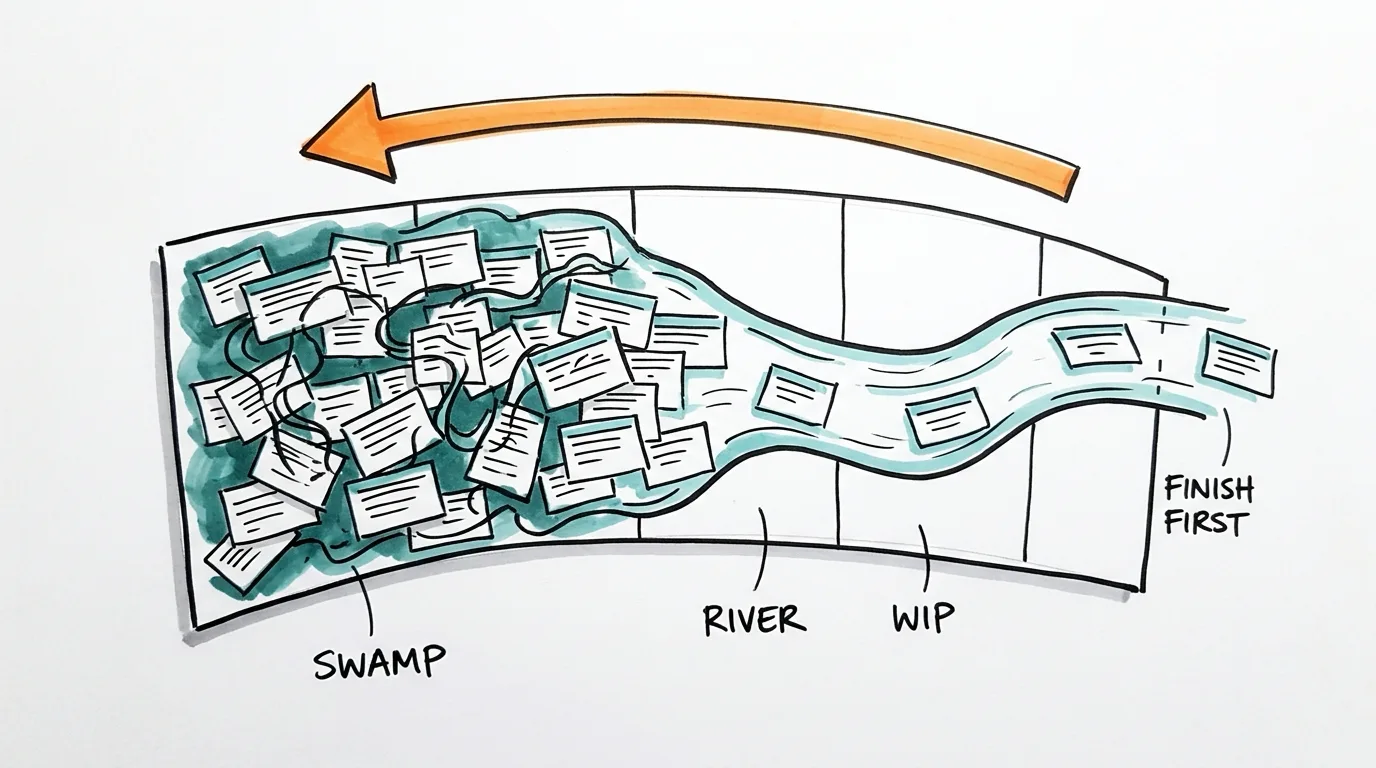
A Portfolio Kanban is just a traffic visualization until you actively manage it. Here's what right-to-left portfolio review looks like — and how it catalyzes strategic conversations without forcing them.
‘What goes on a Portfolio Kanban card? Breaking down the information needs for portfolio-level work items — value proposition, investment hypothesis, and flow-based prioritization signals.’
You can't improve what you can't see. How a Portfolio Kanban board reveals what's actually flowing — and what's stuck — at the portfolio level, and what to do once you can finally see it.
Apply product thinking to the portfolio transformation itself: iterative rollout, validated learning, and outcome-oriented milestones instead of waterfall transformation plans.
Starting your Lean Portfolio Management journey: organizing around value streams, shifting from project to product funding, and building the muscles for portfolio-level agility.
You don't need to be a specialist in every framework when you understand the underlying patterns. How fractal thinking lets you zoom in and out across Kanban, OKRs, SAFe, and Portfolio Agility with the same mental model.
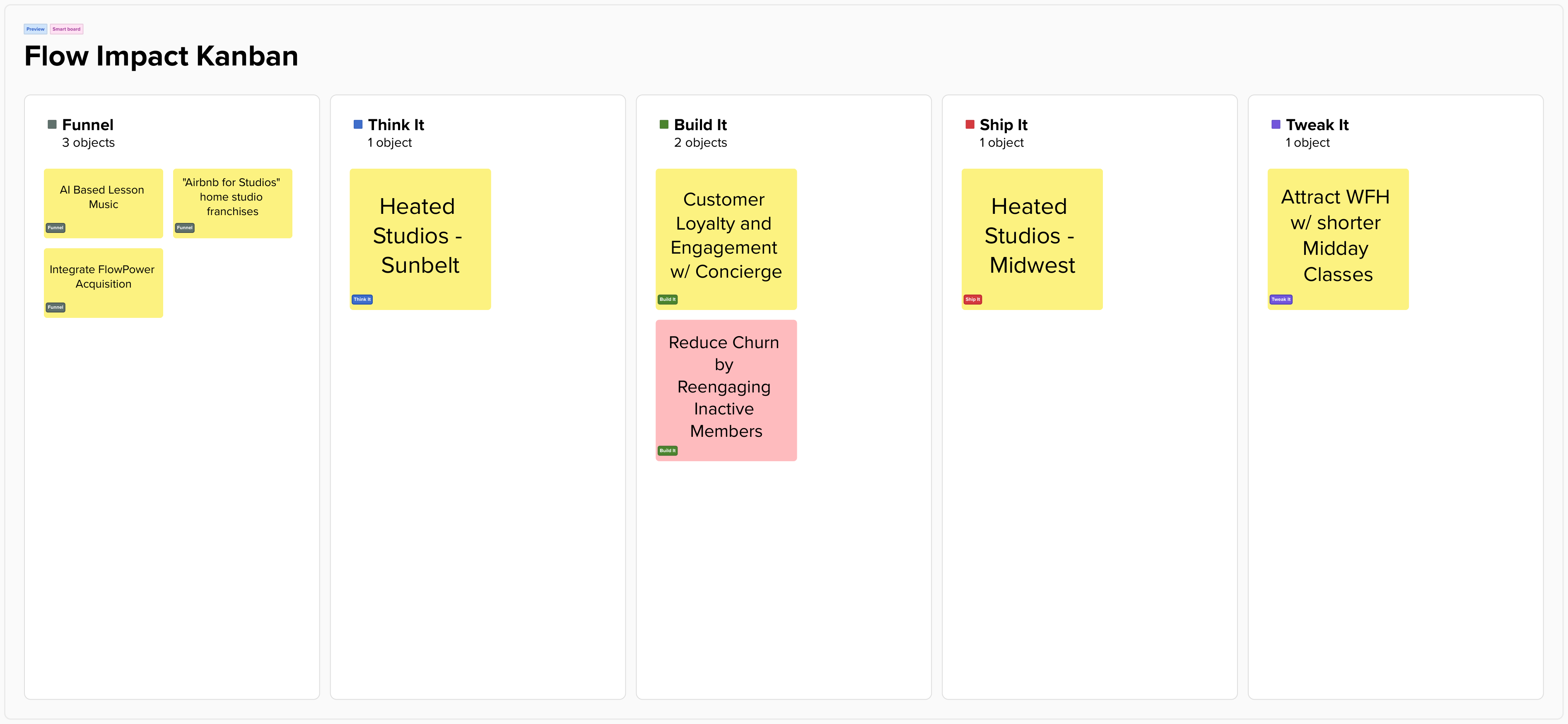
A practical fable for running business initiatives as evidence-based bets using a right-to-left Think/Build/Ship/Tweak flow.
Revisiting my 2011 Lean Kanban Benelux talk on commitments, flow energy, routing, and predictability, with practical guidance for today's product and portfolio environments.