Organizing Around OKRs and Managing OKR Flow
improving focus and alignment by organizing around okrs and managing okr flowOKRs and Product Goals are alignment tools, but they operate at different levels. How to use them together from portfolio to team without double-counting.
 Click image to open full size
 Today, I wanted to share two quick observations about OKRs.
Too many teams working on each strategic OKR
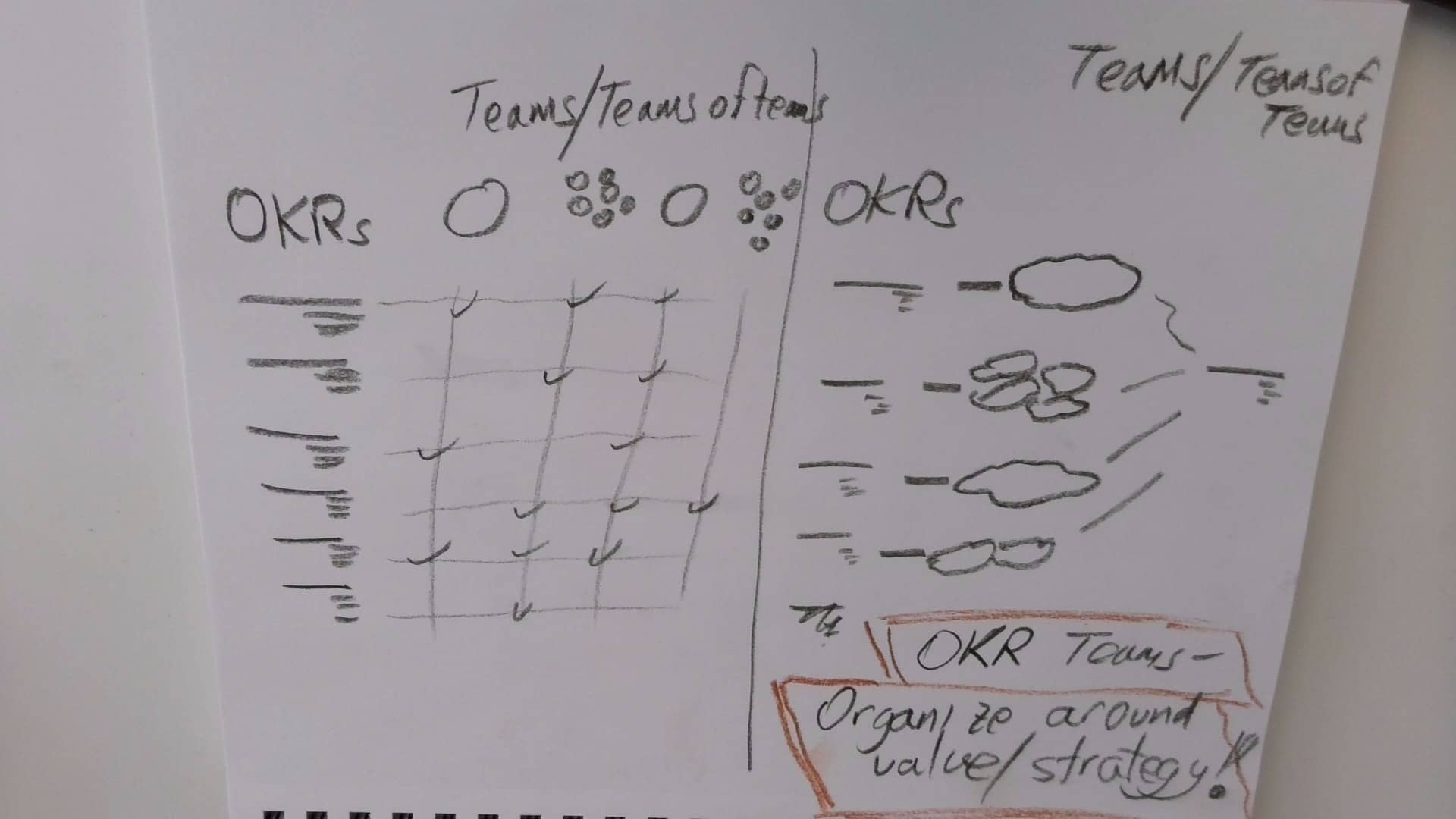
 I encounter many organizations that use OKRs. Too many of them have this crazy matrix where the high-level OKRs - the ones that aim to achieve the organization’s strategy - map to too many teams and functions in the organization. This creates pressure to cascade the OKRs, create sub-OKRs, or add other techniques that eventually create a larger distance between the OKRs at the team level and the strategic OKRs. This at least creates transparency around who is involved in executing each aspect of the strategy, but we can and should do better.
One key thing that unlocks agility and value is to “Organize around Value”. Scrum talks about each team having ONE Product Goal they focus on. SAFe has a specific principle around “Organizing around value”.
If you’re using OKRs, one question to ask yourself is: what is the relationship between OKRs and teams or teams of teams? If most OKRs require a multitude of teams across the organization or portfolio to achieve them, you will need a lot of coordination.
Try reorganizing into a value stream network, topology, or team structure that aligns with your OKRs. Each team or team of teams should be able to focus, and there should be clearer accountability around which team or group owns a specific high-level OKR.
Yes, you can find OKR and agile management tools that let you deal with complex networks of cascading OKRs. But simpler is usually better.
Too many OKRs
Another symptom I’m seeing way too often is too many OKRs. Some of that is related to the OKR matrix I mentioned above. Some of it is just plain old push versus pull and classic wishful thinking at all levels.
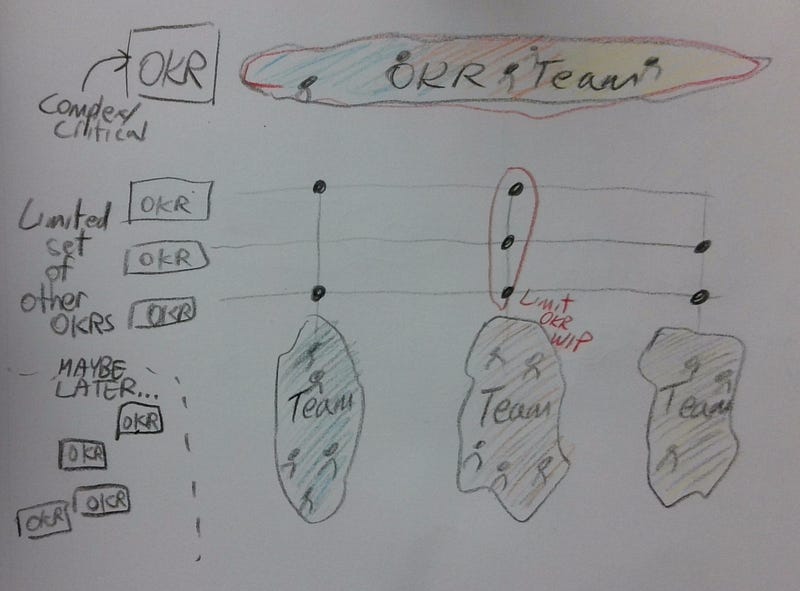
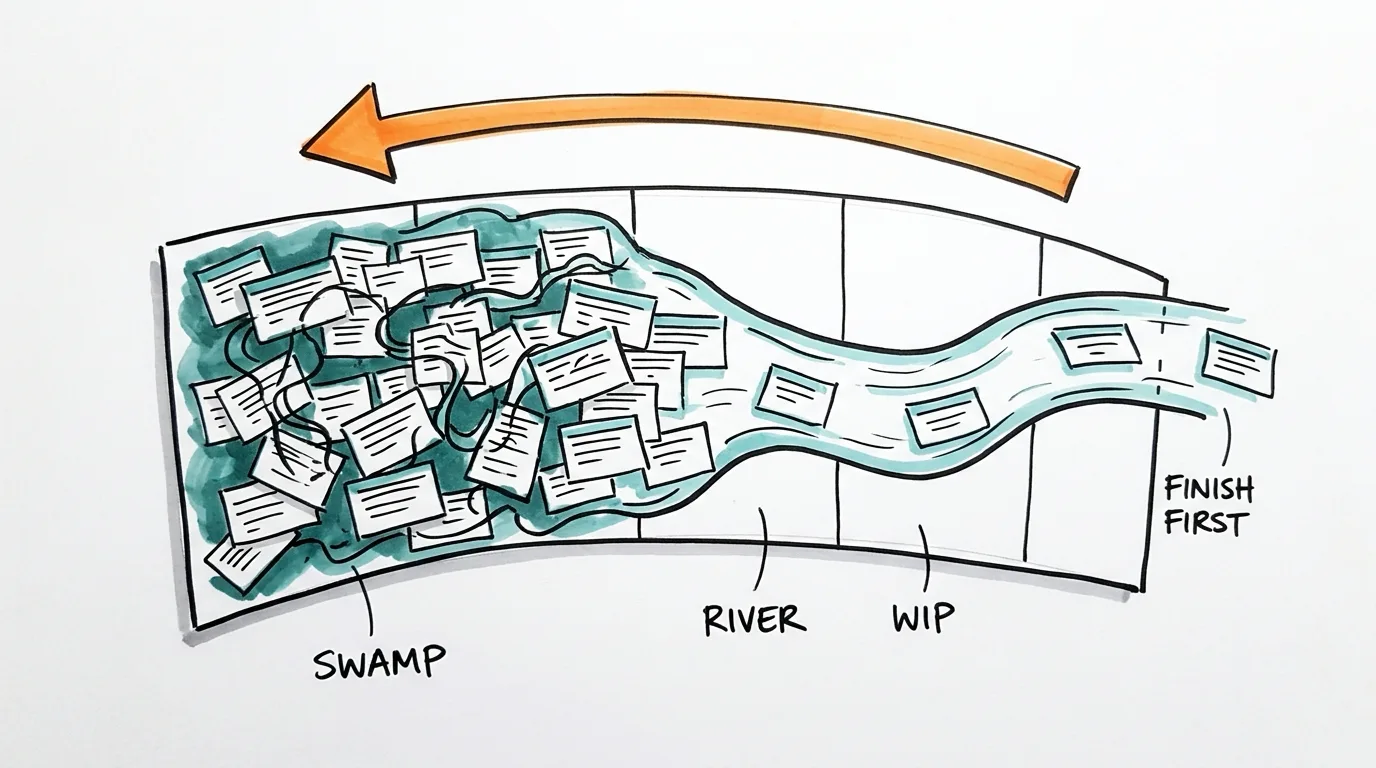
Maybe we should visualize the flow of OKRs through the funnel of considering them, prioritizing or refining them, committing to them, working on them, reviewing them, and achieving them. How about limiting and reducing the number of OKRs in progress across the organization at any point in time? The alignment that OKRs promise relies on focus, not trying to boil the ocean.
Next, let’s manage the flow of OKRs proactively. Maybe we use some metrics like OKR cycle time, throughput, WIP, and aging. Let’s inspect the flow from time to time. We might learn a few things. We might even adapt the way these OKRs flow and how we’re managing them.
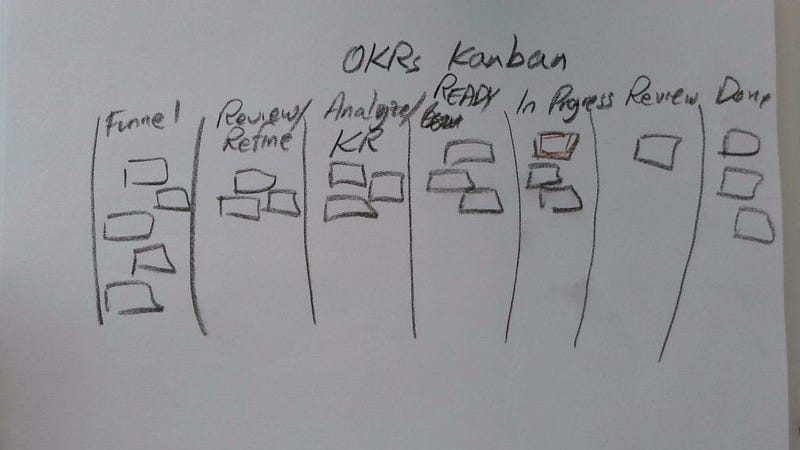 How many of you are using Kanban or flow practices to improve how your organization uses OKRs to align strategy and execution?
Do you see how similar this is to a portfolio Kanban? It might be one useful next step for organizations trying to make OKRs less performative and more operational.
Practical thinking on turning AI pilots, adoption, and portfolio work into business impact - by finding the constraint, changing the work, and proving value as you go.
Yuval Yeret helps product and tech leaders move from agile theater to evidence-informed delivery. Work with Yuval →
- 01 Fix Your OKRs - Back to First Principles 11 min
- 02 OKR Implementation Tips 6 min
- 03 Organizing around Outcomes with OKRs and Scrum 7 min