Developing Your AI Context as a Product
developing your ai context as a productAI context (system prompts, knowledge bases, tool configs) is a product you keep discovering and improving. Product thinking applied to AI enablement.
 Click image to open full size
 Your AI context is part of the product
People keep saying “context is king” in AI. It is a useful phrase, but it can make context sound like a one-time setup activity: gather the right docs, connect the right data sources, write a better system prompt, and move on.
That is not how useful AI context behaves. Your context is closer to a product. It has users, jobs, constraints, quality problems, adoption problems, and a backlog. If you improve it deliberately, people get better answers with less prompting expertise. If you neglect it, every AI initiative starts rediscovering the same background knowledge.
Many teams focus on the data side of context: what is in the CRM, collaboration tools, ERP, codebase, ticketing system, or vertical products. That matters. But context is also intent. What are we trying to achieve? What tradeoffs do we care about? Which customers, constraints, operating principles, and current problems should the AI understand?
Some of this can be pulled from systems. Some of it needs to be shaped. Even as context windows grow, there is still value in deciding what deserves emphasis. When I give AI clear context about my ideal customers, the problems I am focused on, and the opportunities I see in my own business, I get more useful output even without fancy prompting.
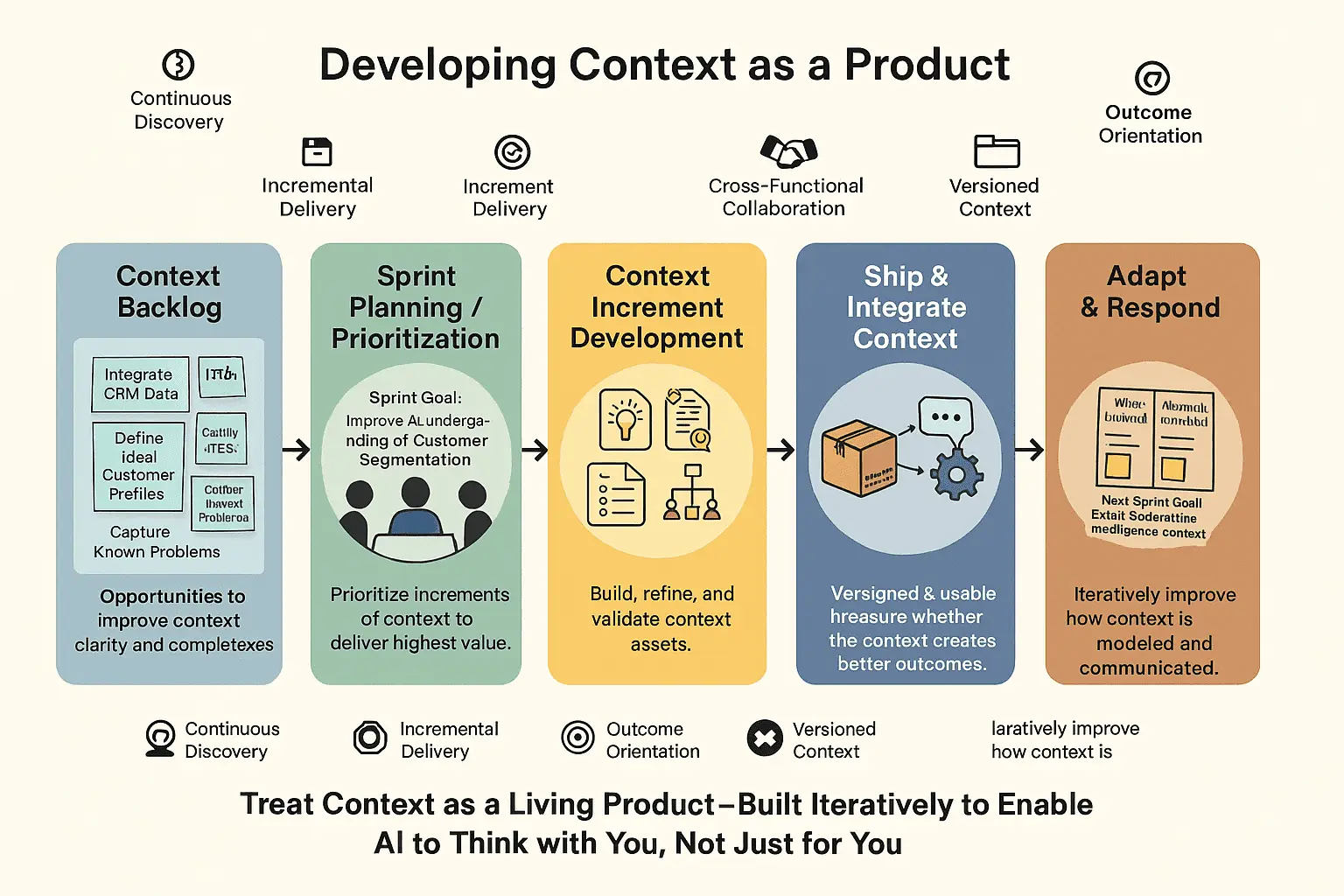
That is why I think AI context needs product ownership. Who is responsible for its product strategy? What is the current product goal? What would make the next increment of context meaningfully better for the people using it?
A context backlog might include connecting another source, cleaning up stale knowledge, adding customer jobs-to-be-done, clarifying personas, encoding OKRs, documenting current constraints, or training people on how to use the context well. The team would ship improvements, sense whether they helped, and respond based on usage and outcomes.
If you are serious about AI transformation, do not treat context as plumbing. Treat it as one of the products you are developing.
Practical thinking on turning AI pilots, adoption, and portfolio work into business impact - by finding the constraint, changing the work, and proving value as you go.
Yuval Yeret helps product and tech leaders move from agile theater to evidence-informed delivery. Work with Yuval →