Navigating The GenAI Storm
navigating the genai stormGenAI is a classic VUCA challenge: high uncertainty, fast-moving, multi-disciplinary. How to steer AI investments without drowning in the hype.
 Click image to open full size
 Start With The Constraint, Not The Model
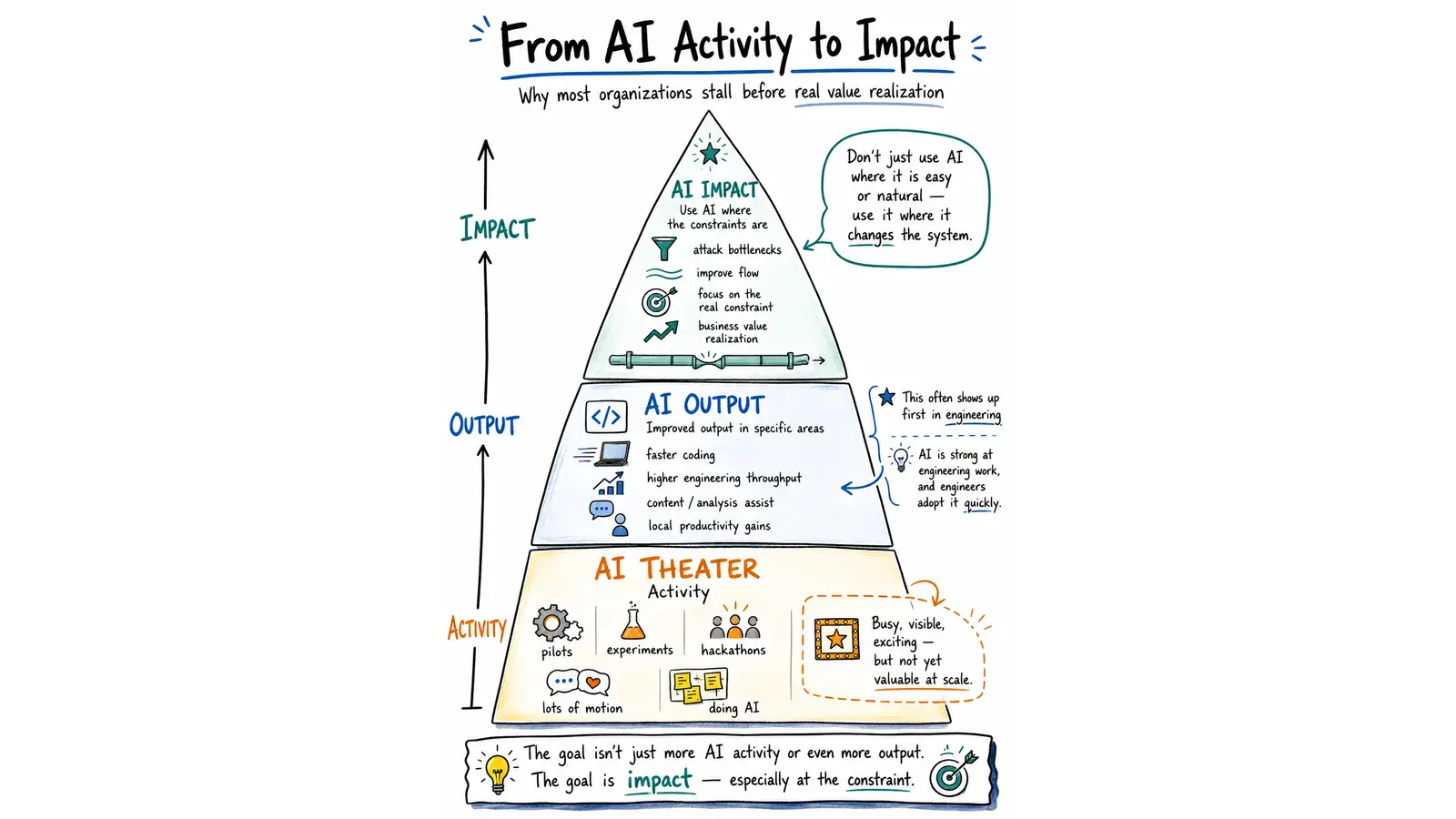
The useful GenAI question is not “where can we use it?” You can use it almost anywhere. The better question is where your company is actually constrained: building better products, operating more efficiently, closing more of the right deals, reducing churn, or helping people make better decisions faster.
A company’s GenAI transformation is a classic VUCA problem: volatile, uncertain, complex, and ambiguous. That means the operating model matters as much as the technology. You need small bets, fast feedback, multidisciplinary teams, and enough discipline to stop spraying AI across the organization just because the demos are exciting.
Use Product Thinking On The Company Itself
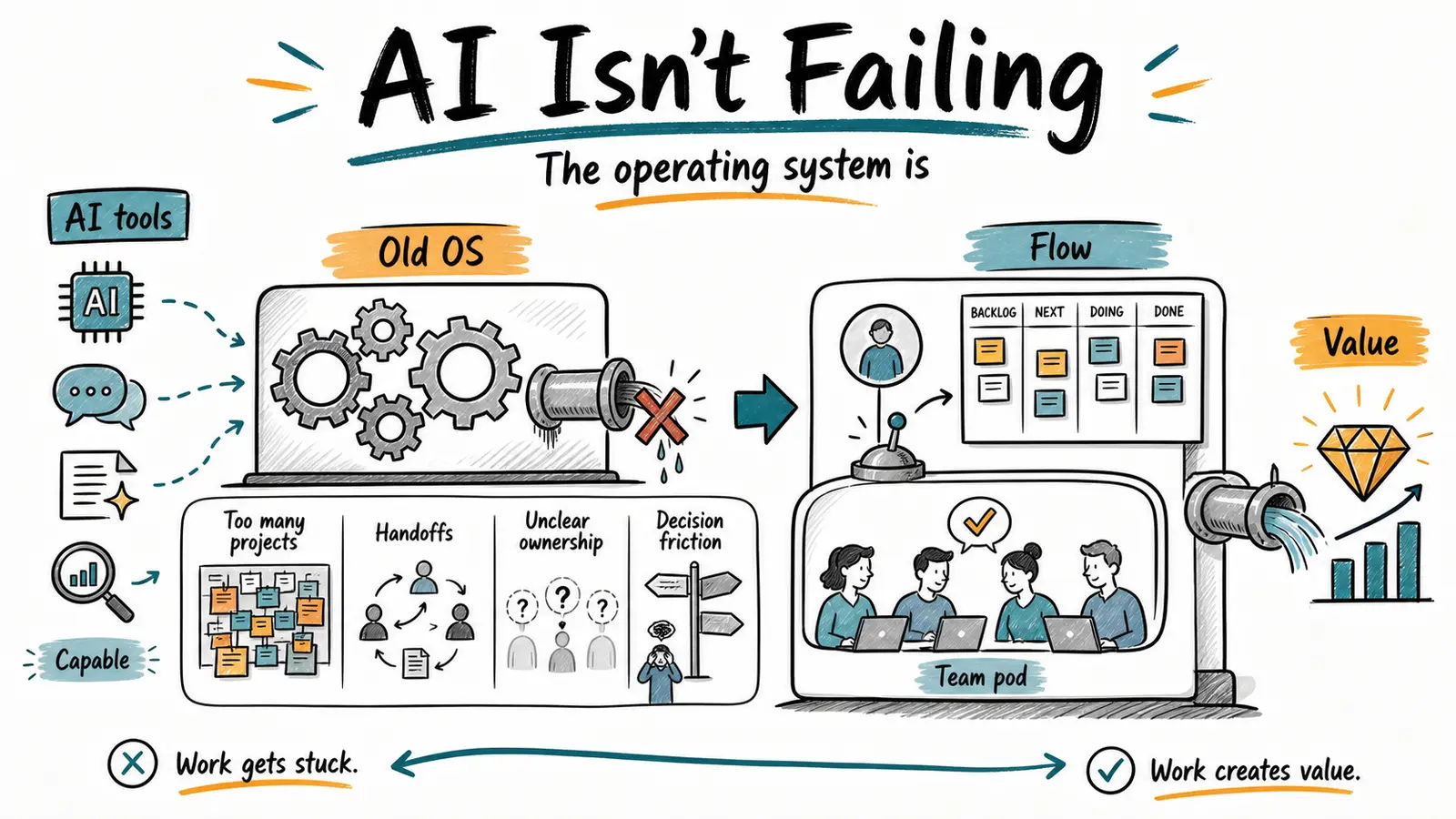
The pattern I trust is simple: identify the jobs to be done, functions, and key processes that are constraining the company. Apply the old-fashioned process-improvement work first. Make the current system visible. Remove obvious waste. Clarify the decision points. Stabilize the workflow enough that you know what problem AI would actually help solve.
Only then ask how GenAI can reduce effort, shorten feedback, improve judgment, or help people do the work differently. That is product thinking applied to the company itself. You are not just building a product with GenAI. You are evolving the company’s operating system.
Here is a deliberately meta example. Can GenAI help make agile or Scrum more efficient? Sure. But do not start by asking how GenAI can improve sprint estimates. Start by asking whether sprint-level estimates are still doing useful work. If the team is spending too much time tasking and estimating, maybe the first move is smaller behavior- or example-driven stories, clearer acceptance criteria, and less ceremony around prediction.
After you try that for a bit, GenAI might help slice work, draft examples, check acceptance criteria, or summarize review feedback. Now the tool is aimed at a real friction point instead of automating a questionable habit.
Same thing with OKRs. Can GenAI help craft or grade OKRs? Yes. But if your OKRs are already output lists, status-report theater, or a way to avoid hard prioritization, AI will mostly help you create bad OKRs faster. Fix the OKR operating model first. Then use AI to reduce the effort of writing, reviewing, stress-testing, and learning from them.
The First Move
If you are navigating the GenAI storm, start with one constrained business loop. Name the outcome that is stuck, the people involved, the work waiting in queues, and the evidence that would tell you the situation improved. Then decide whether AI is the right lever.
That is less flashy than a hundred pilots. It is also much more likely to turn AI activity into business impact.
Practical thinking on turning AI pilots, adoption, and portfolio work into business impact - by finding the constraint, changing the work, and proving value as you go.
Yuval Yeret helps product and tech leaders move from agile theater to evidence-informed delivery. Work with Yuval →