Organizational Traction: Speed Without Slipping
accelerating without losing grip the power of organizational tractionOrganizational traction separates companies that execute well from those that just generate activity. What it means, how to measure it, why agility helps.
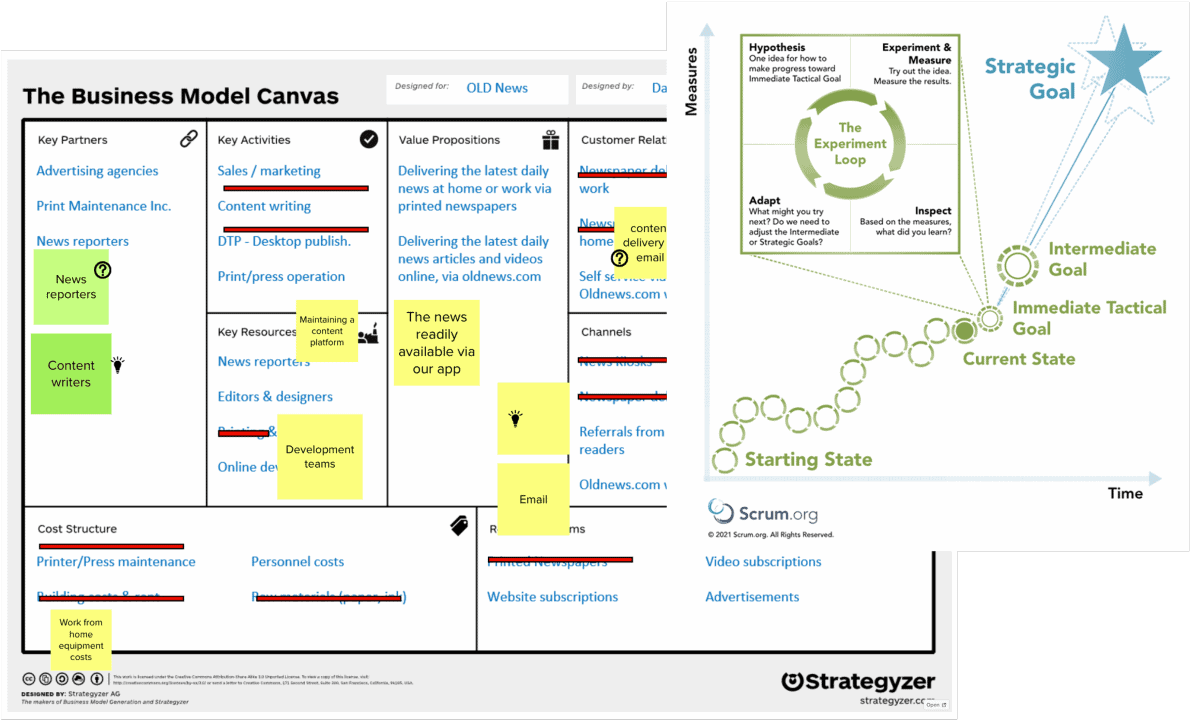
 Click image to open full size
 Activity Is Not Traction
A CEO asked me last week why I use the term Organizational Traction. The inspiration comes partly from Traction: Get a Grip on Your Business, Gino Wickman’s book introducing EOS. But the word has become useful to me beyond EOS because it captures something leaders recognize quickly: the difference between motion and grip.
You can have a strategic vision, a serious planning process, a full portfolio, and a lot of hard-working people, and still not be moving toward the outcome that matters. That is the organizational version of full gas in neutral. The engine is loud. The tires are spinning. The business is not actually getting where it meant to go.
What Traction Feels Like
Traction is not activity. It is not even output. It is evidence that the organization is moving in the right direction at a useful speed, without losing control. Sometimes the problem is mud: too many priorities, unclear ownership, and work that cannot get enough grip to move. Sometimes the problem is a tight corner: leaders accelerate before the operating system can handle the change. Sometimes the tires are simply wrong for the terrain.
Company operating systems like EOS, OKRs, Scaling Up, Scrum, and Kanban are supposed to improve traction. They give leaders ways to focus, align, inspect, and adapt. But they only help if they are used to create evidence of movement, not just more meetings, dashboards, and vocabulary.
I started using traction instead of progress in my work with product organizations and company leadership teams because it is a better fit for the shift from projects to products and from activity to outcomes. Progress can still sound like “we completed the plan.” Traction asks whether the work is changing the system in the direction we intended.
The Question To Ask
If you are using EOS, Scaling Up, OKRs, Scrum, or another operating system, the question is not whether the framework is installed. The question is whether it helps you maintain and improve traction. Can you see the few strategic outcomes that matter? Can you tell whether they are moving? Can leaders adapt before the organization loses grip?
If you want to dive deeper, I discuss a few of these company operating systems in the Mastering Organizational Traction email course. If you are already using one of them and it is not creating enough grip, let’s discuss.
A free email series on building an organization that reliably converts strategy into outcomes: without the coordination overhead.
Yuval Yeret helps product and tech leaders move from agile theater to evidence-informed delivery. Work with Yuval →
- 01 Scaling Founder Mode 3 min
- 02 Company as a Product 7 min
- 03 How Agility and EBM Lift Private Equity Returns 10 min