Organizational Traction w/ an OKRs Kanban
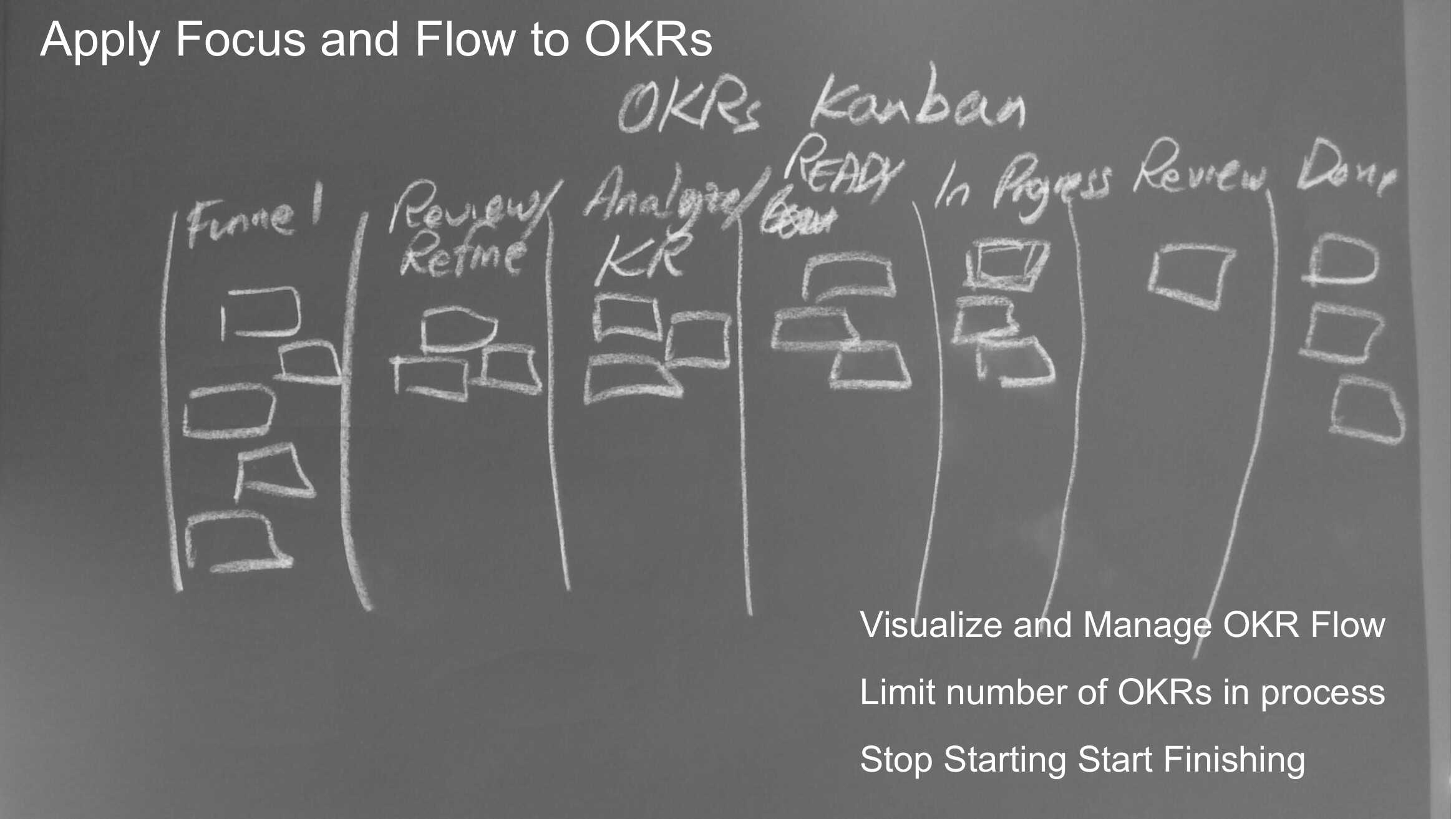
Treating OKRs as a Kanban system: visualizing strategic work, limiting WIP at the leadership level, and using Kanban cadences to review and adapt strategic priorities.
 Click image to open full size
 OKRs Need Flow, Not Just Measurement
What gets measured gets managed. But setting OKRs is not enough. The flow and traction of OKRs need to be managed as well. Otherwise, leaders end up with a swamp: too many objectives in motion, unclear ownership, stale updates, and a quarterly grading ritual that tells everyone what already went wrong.
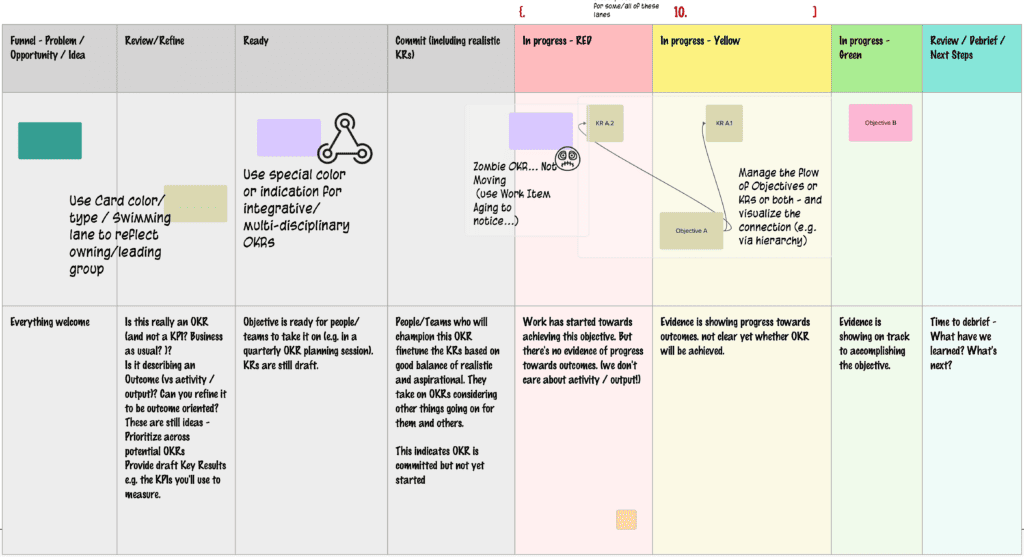
An OKR Kanban makes that system visible. It helps leadership teams see which objectives are being considered, which are committed, which are actually moving, and which are stuck. The point is not to create another reporting board. The point is to create a place where strategic work can be inspected and adapted while there is still time to do something about it.
Here is an example:
Patterns That Help
Here are some of my favorite patterns for managing OKR flow using Kanban:
-
Use one OKR Kanban board. It is okay, and often preferable, to see OKRs from multiple departments, teams, or groups on the same board. It reinforces transparency and creates useful conversations about misalignment.
-
Use an OKR workflow for considering possible objectives, planning and committing, experimenting toward outcomes, and reflecting or adapting. This reinforces a product-oriented mindset for both product and business OKRs.
-
Make struggling OKRs visible early. One simple pattern is Red/Yellow/Green, where OKRs start Red and earn their movement to Yellow or Green based on actual evidence. Think of it as a lightweight Work Item Aging signal for strategic goals.
-
Limit the number of OKRs in progress and in consideration. Focus drives traction.
-
Visualize who is involved in each OKR and how coupled the work is across teams. This helps leaders see when the objective needs a real cross-functional team, not just a shared spreadsheet.
-
Decide whether to visualize KRs independently. It can provide useful insight, but it can also hurt transparency if there is too much information.
-
Use the OKR Kanban when checking existing OKRs and considering any new significant work. If the board is too busy, that says something.
The Real Question
The useful question is not whether you have OKRs. It is whether your leadership system is managing their flow. Can you see which objectives are stuck? Can you tell when too many strategic bets are competing for the same capacity? Can you adapt while the quarter is still alive?
If you want a practical next step, the Organizational Traction Trail Map is designed to help leaders of scale-up and midsized organizations break free from scattered priorities and bring more flow, focus, and clarity to strategic work.
Practical thinking on turning AI pilots, adoption, and portfolio work into business impact - by finding the constraint, changing the work, and proving value as you go.
Yuval Yeret helps product and tech leaders move from agile theater to evidence-informed delivery. Work with Yuval →