Spec-to-Outcome Check: Does Your Workflow End at the PR?
spec to outcome checkAssess your agent harness for outcome orientation, trustable output, and continuous improvement. Extend spec-driven development through the product lifecycle.
Use this article with your AI agent
Run the practical prompt that comes with this article.
 Click image to open full size
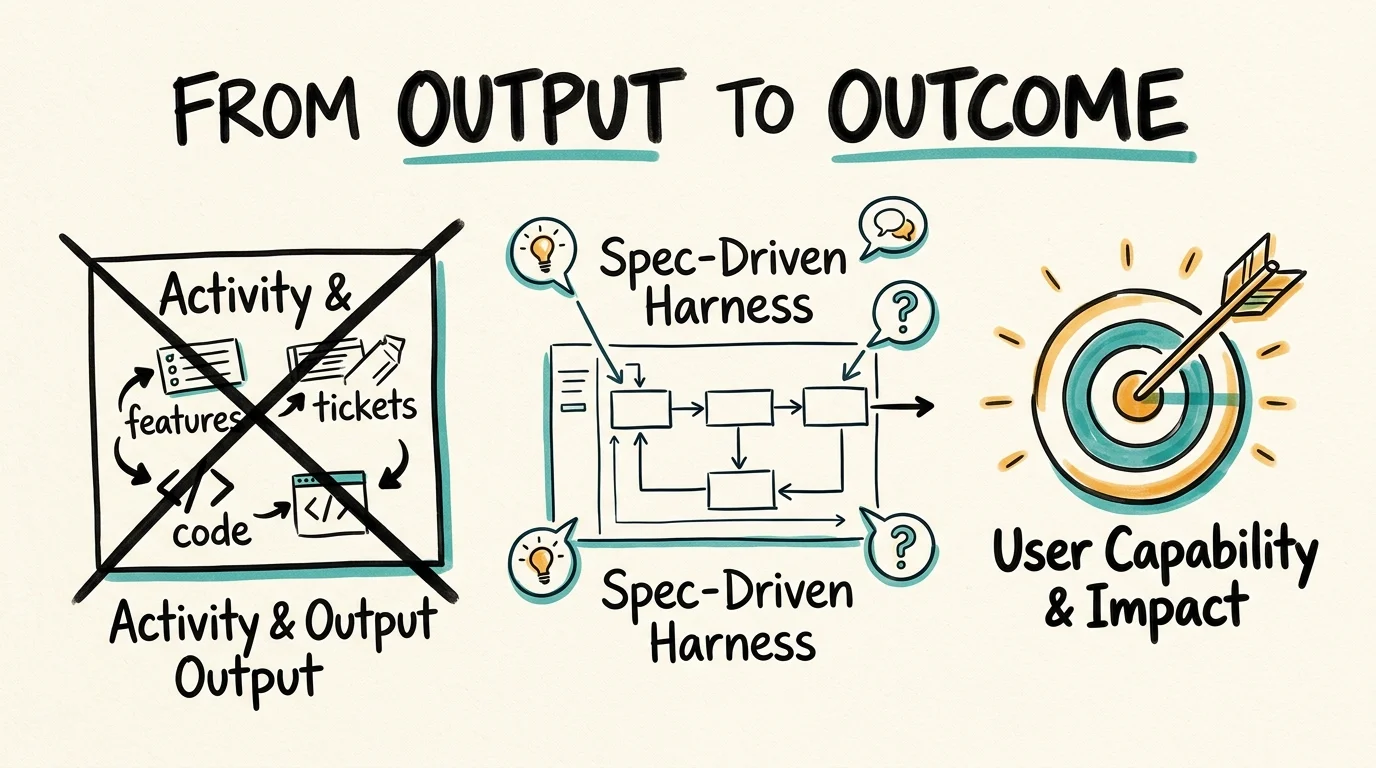
Your agents should focus on outcomes, not just on requirements. Are they oriented towards intent and outcomes enough? Are they validating and steering towards outcomes?
From software development to product development
Spec-driven development specifies how we do work here. It’s essentially documenting the operating model. The operating system for our software factory. As Markdown, but it’s still code. What are the stages, what are the gates, what are the rules, policies, constraints?
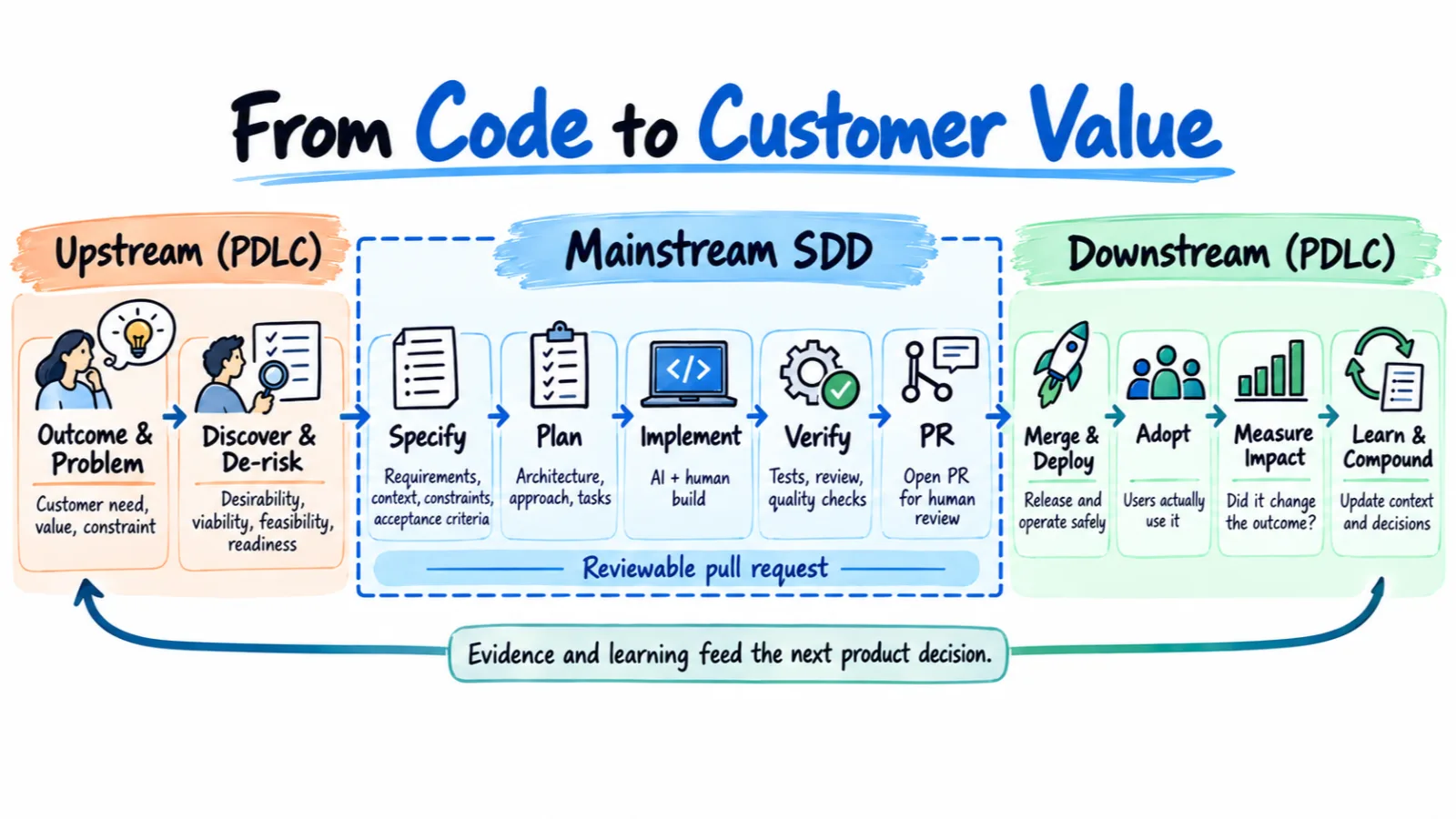
Essentially, what we want to see is the extension of what mainstream spec-driven development focuses on, which is specifying requirements all the way to opening a PR for human review, both upstream and downstream. I call that the shift from software development lifecycle, SDLC, to an agentic product development lifecycle.
Which starts with: what is the outcome? What is the problem? What is the intent? We don’t need to discover on everything. We need to discover when it’s useful enough or valuable enough potentially, and there’s high risk. Then we go through the mainstream software development lifecycle, but then we go back to PDLC when we measure adoption. Is it creating value for people? What can we learn?
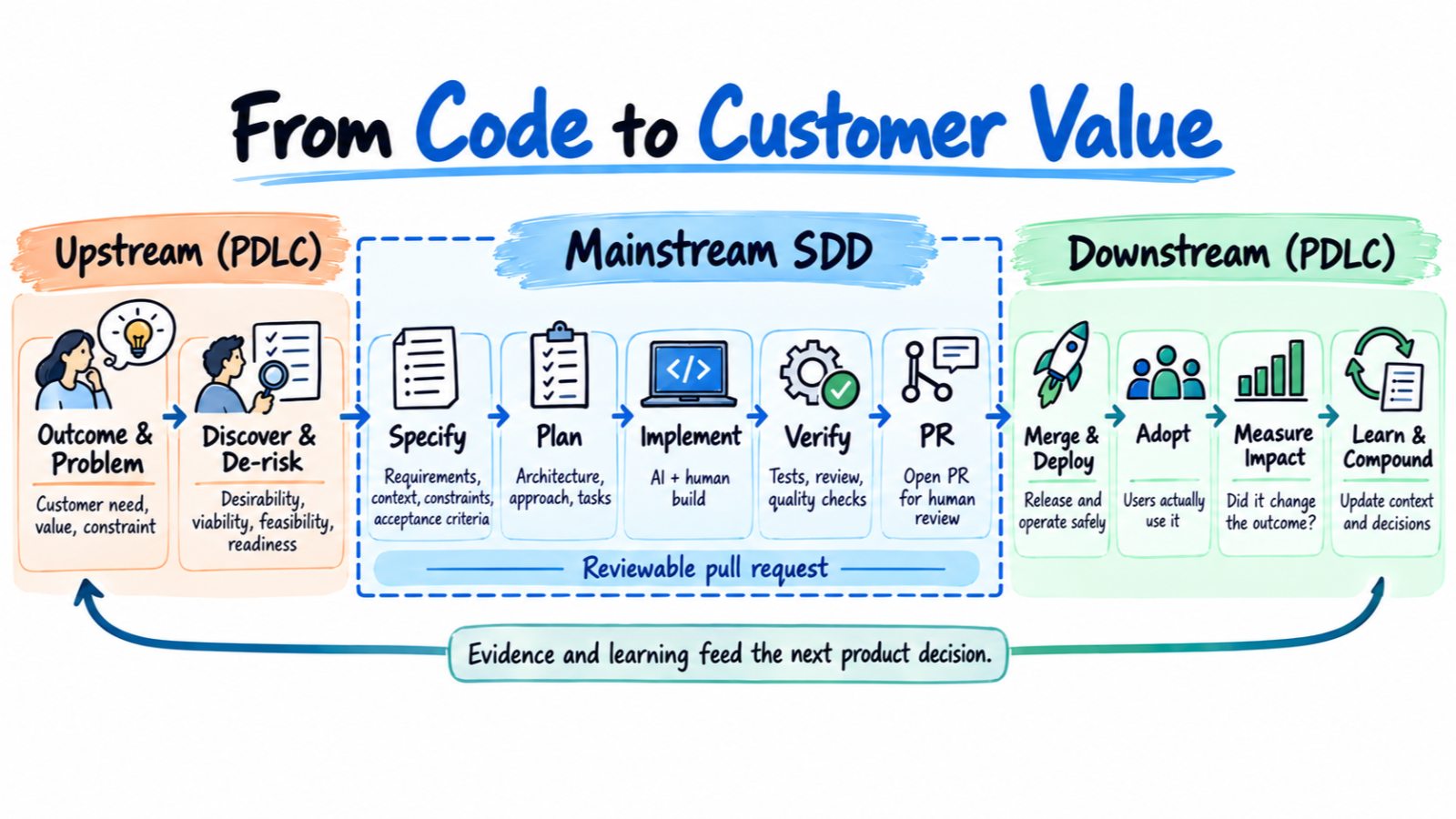
From the software leaders talk: the product loop starts before specification and continues through adoption and impact.
A trustable software factory
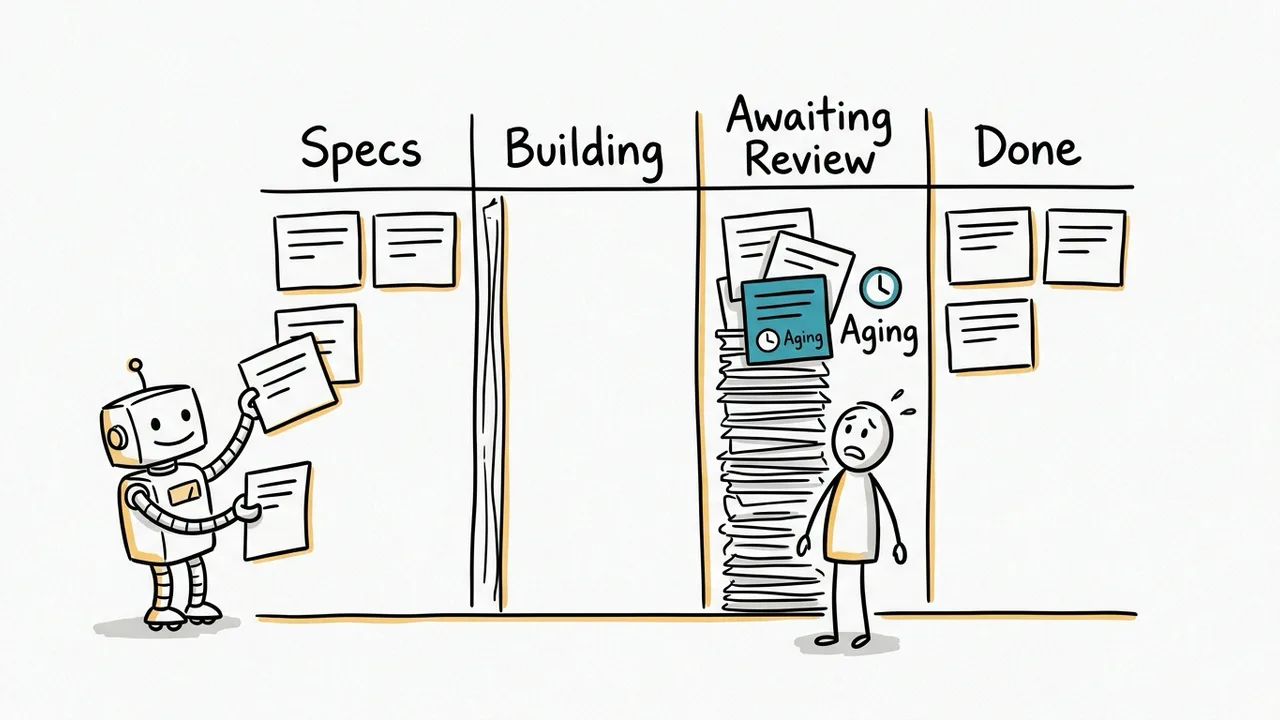
It’s not a trivial thing to create a trustable software factory. At the beginning, we would always have to at least sample test some of the code that this system creates. Over time, we should shift more and more from in the loop to on the loop. Verifying that the verification agents that we have are trustable.
They are non-deterministic models. You can have a deterministic process around them. To make sure that they’re creating useful outputs, that they’re driving useful outcomes. That’s our accountability.
The metastream: improve the system that runs the product loop
Even focusing on outcomes and closing the loop is not the whole product development lifecycle. What we want to add is continuously improving the system that actually runs this product loop. Observing not just the specific feature, but how did we work on this feature, humans and agents together?
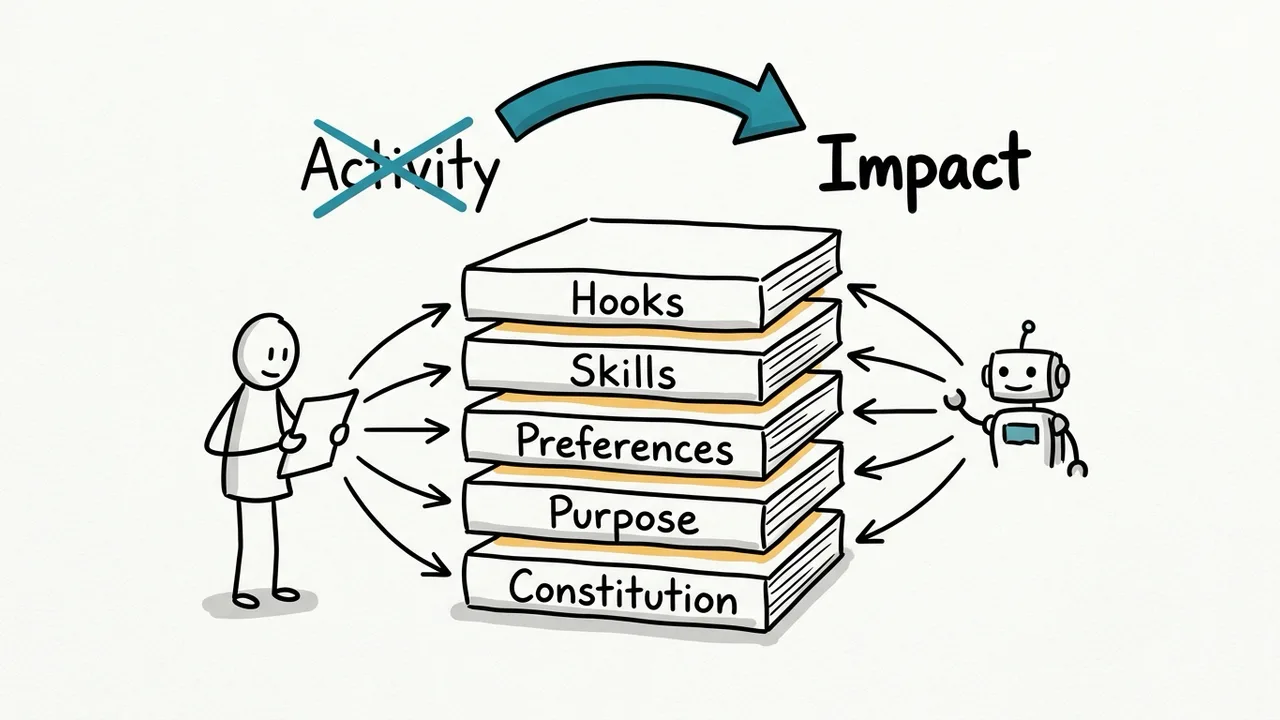
Maybe agents create pull requests of changes that they suggest to the process. Then humans review these pull requests and decide: do we accept that? Do we merge that into the way we work? Those pull requests are on the code that runs our system of work, whether it’s the skills, constitution files, agents, the CLAUDE.md.
Improve the skills, improve the context, improve the system that creates the code, and then rerun and see if it’s better. Do that until the software factory and its coding agents work as we expect.
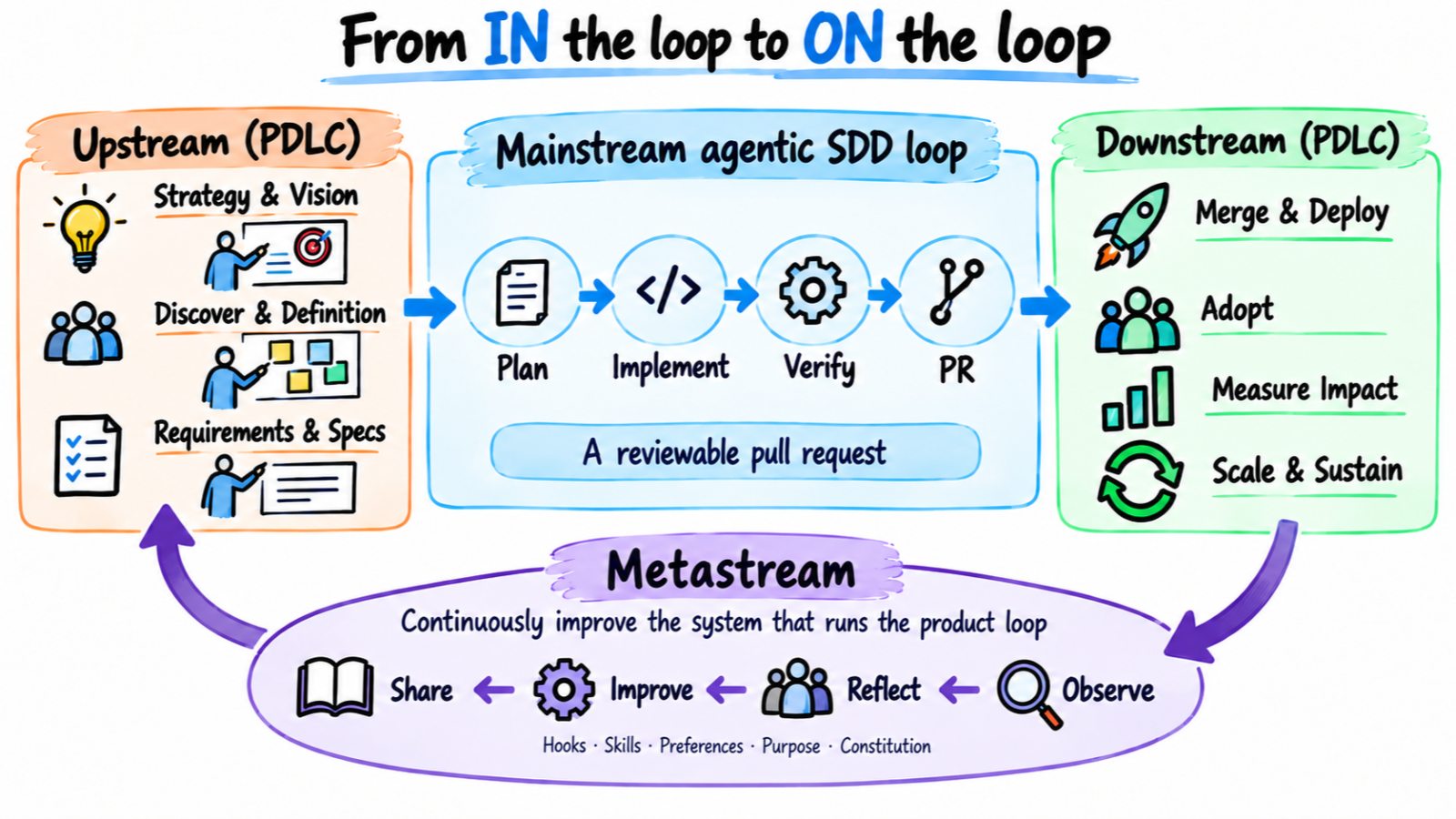
The metastream changes how future work gets done. It needs its own evidence of improvement.
Drawn from my October 13 LinkedIn Live. Use the check below on your own configuration. It examines outcome orientation, trustable output, and whether learning changes the harness. The product loop and the improvement loop are assessed separately.
Pick one real example
Bring your harness repository or the instructions, skills, and hooks active in your working context. Add a real spec and linked rollout or review evidence if you have them.
Use an AI tool you trust
Open the prompt in ChatGPT or Claude, or copy it into the agent where you work. Add the source in the same conversation. Check your own organization’s rules before sharing internal material with an AI provider.
Find the missing handoff
You’ll get a short executive read, the evidence behind it, and one practical change to try. Keep the delivery practices that already work.
Run the Spec-to-Outcome Check
It includes the lifecycle checks, harness assessment, evidence rules, and executive report format. Nothing you assess is sent to this site.
AI Prompt
# Spec-to-Outcome Check You are assessing whether a spec-driven development approach carries product intent through delivery, adoption, and outcome decisions, or chiefly carries work to a PR or release. Write for a VP Engineering, CTO, or leader responsible for AI-assisted product development. Give software delivery discipline full credit. A workflow can…
What the result can tell you
It should show where the inspected path ends, which parts of the product lifecycle have an owner and a decision, and where a leading signal or post-release review is missing. It should also show its sources and say when the evidence is too thin to call.
A repository can show what a framework supports. One spec can show what that artifact carries. Neither can prove how consistently a team works in practice. If the result skips that distinction, push back on it.
This prompt is a portable version of the open-source PDLC readiness method. The repo has the full rubric and report template. You can also read a sample comparison of spec-driven frameworks.
To use this as an AI skill, load pdlc-harness-readiness and its companion references from the same repository in your agent. Ask it to assess the effective harness for your task and working directory. The skill includes the five-axis rubric and evidence rules.
Want a second set of eyes?
Bring the result and the spec to a conversation. We can look at the handoff that matters most and decide what your team should test next.
Book a diagnostic conversation
Practical thinking on turning AI pilots, adoption, and portfolio work into business impact - by finding the constraint, changing the work, and proving value as you go.
Yuval Yeret helps product and tech leaders move from agile theater to evidence-informed delivery. Work with Yuval →