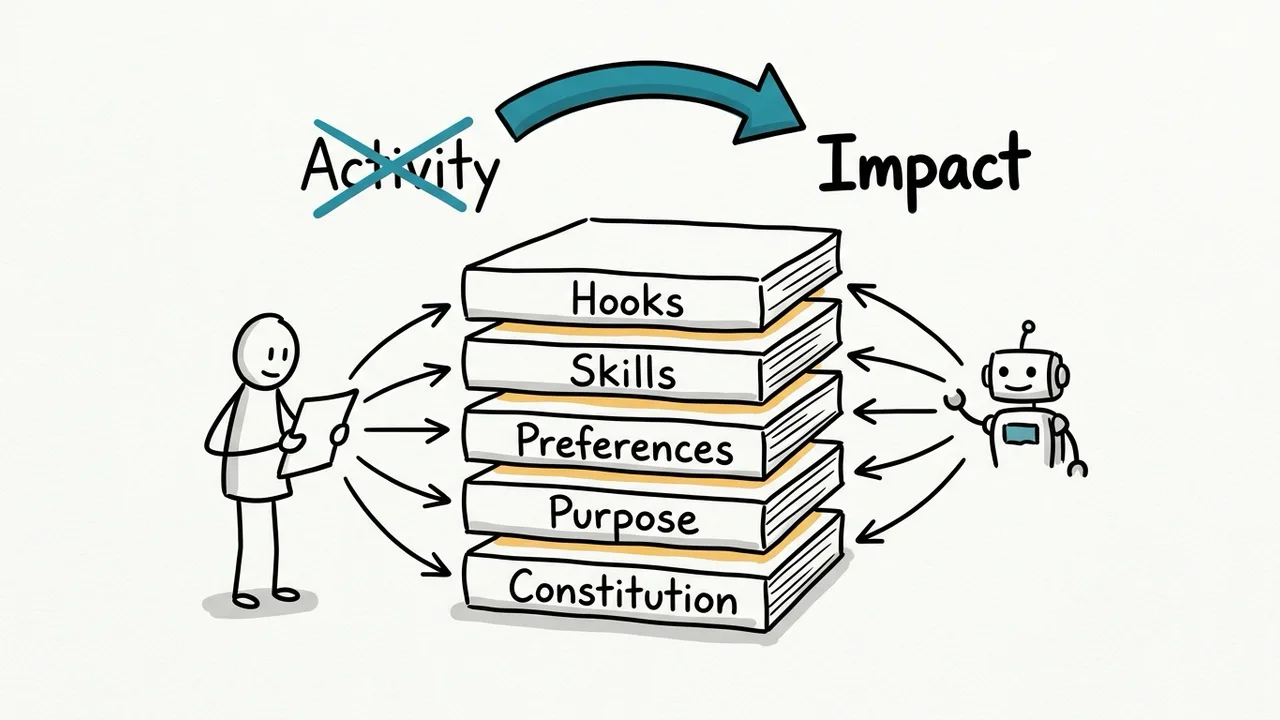
What an AI-Native Engineering Operating Model Actually Looks Like
AI agents write code faster than ever, but the bottleneck moved to human decision latency and review capacity. Here is the operating model that closes it: roles, rituals, and metrics.
AI agents write code faster than ever, but the bottleneck moved to human decision latency and review capacity. Here is the operating model that closes it: roles, rituals, and metrics.
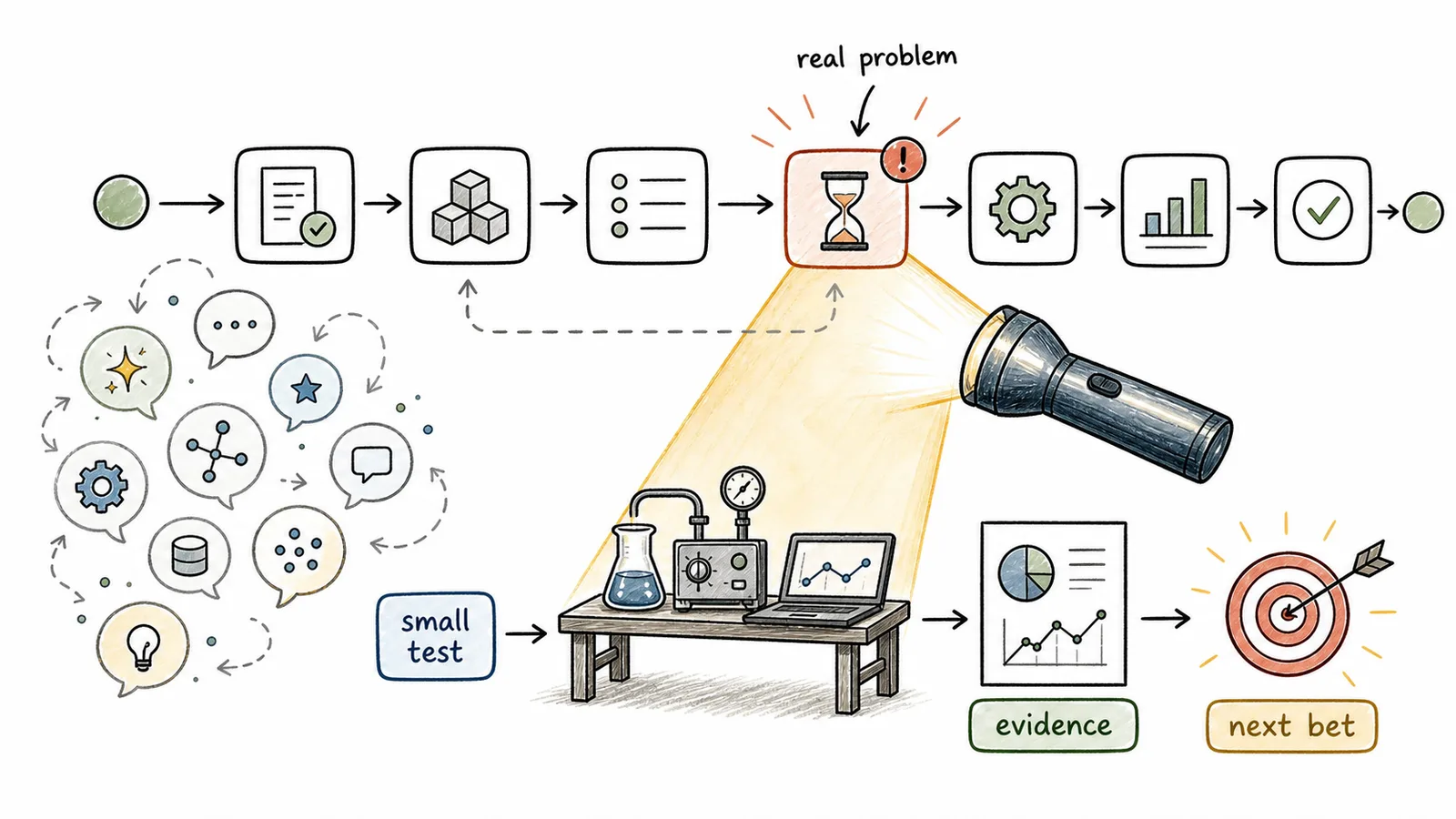
AI work pays off when it starts from a real business constraint, not a tool wishlist. Run a small test and check the problem is worth solving.
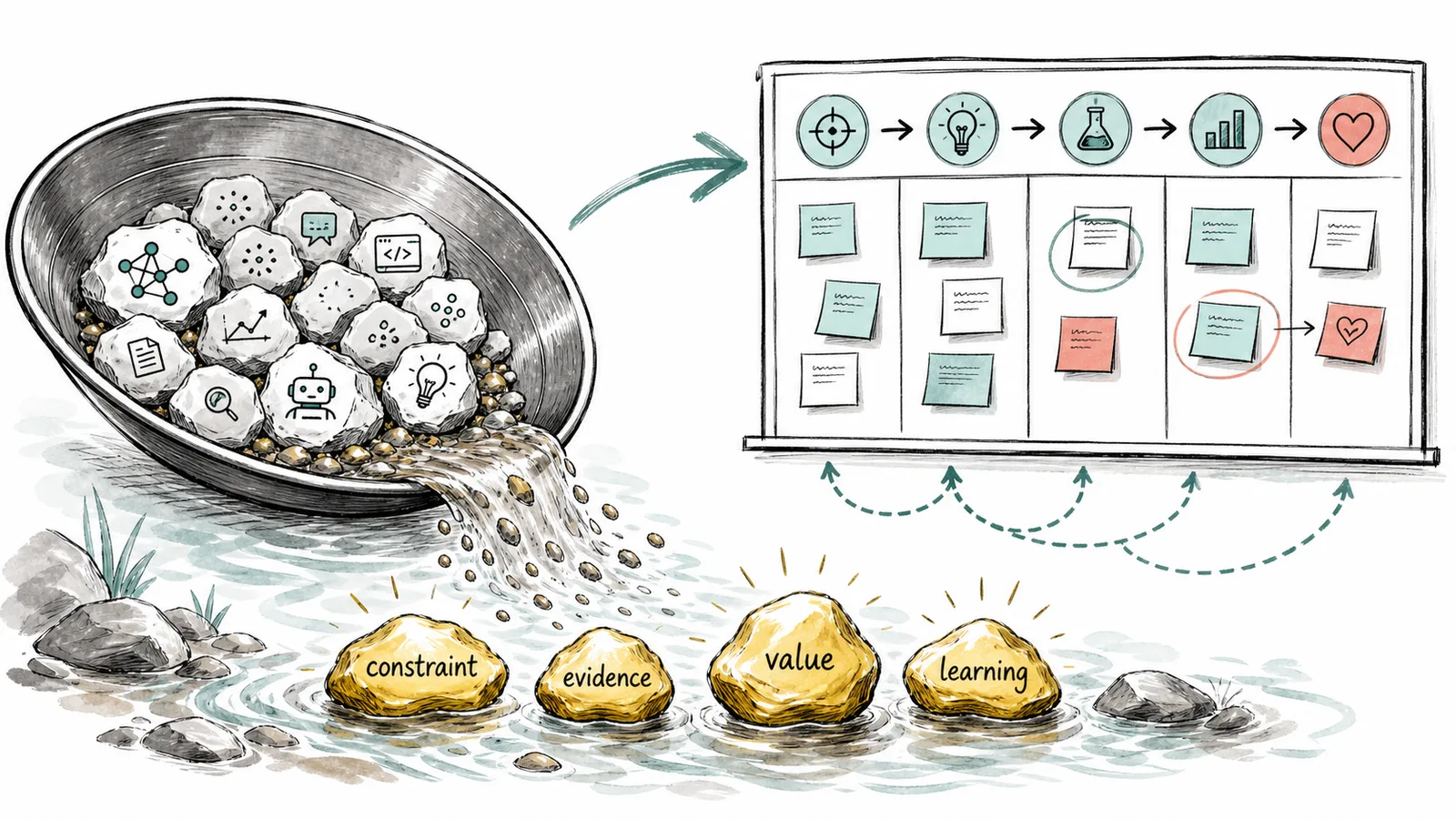
Most AI efforts start with tools and demos. Better to use product discovery to aim AI at a real business constraint and test the riskiest assumption first.
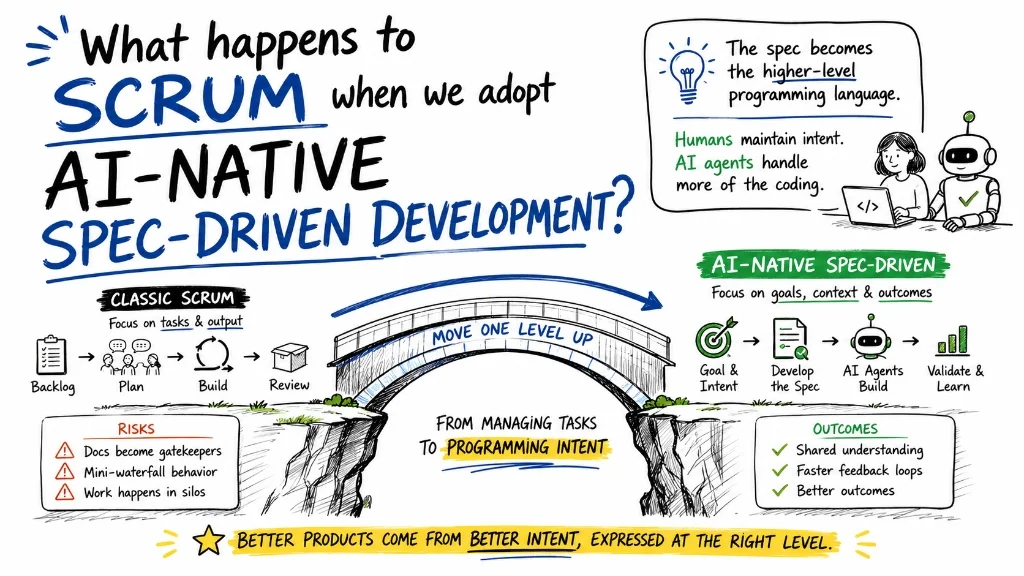
Spec-driven development looks like a step backward if you read it as requirements theater. The better frame: the spec is a higher-level language for intent.
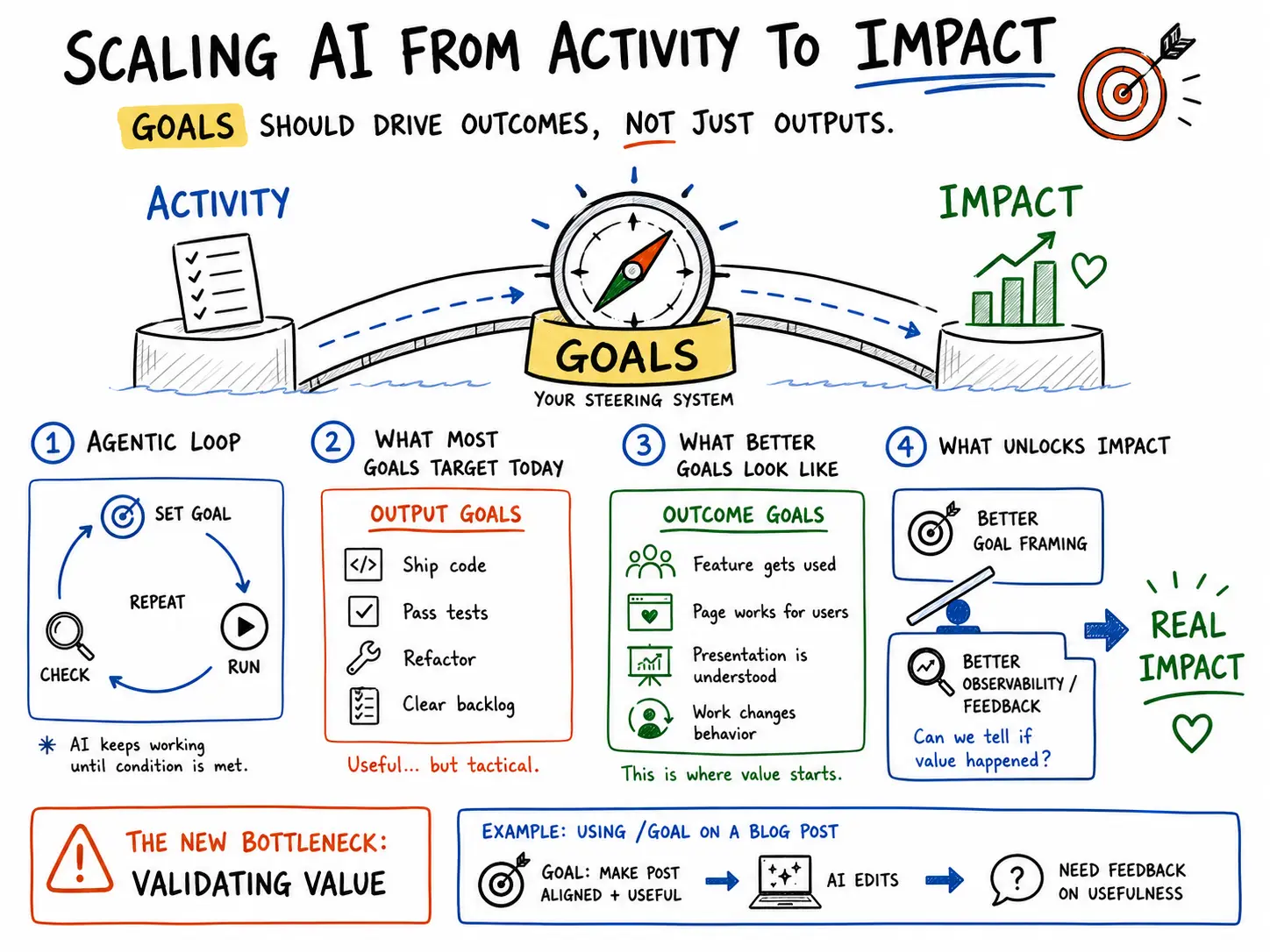
Spec-driven development points an agent at a deliverable. Goal-based loops let you point it at a condition instead: the question is whether the condition you picked is an outcome or just green tests.
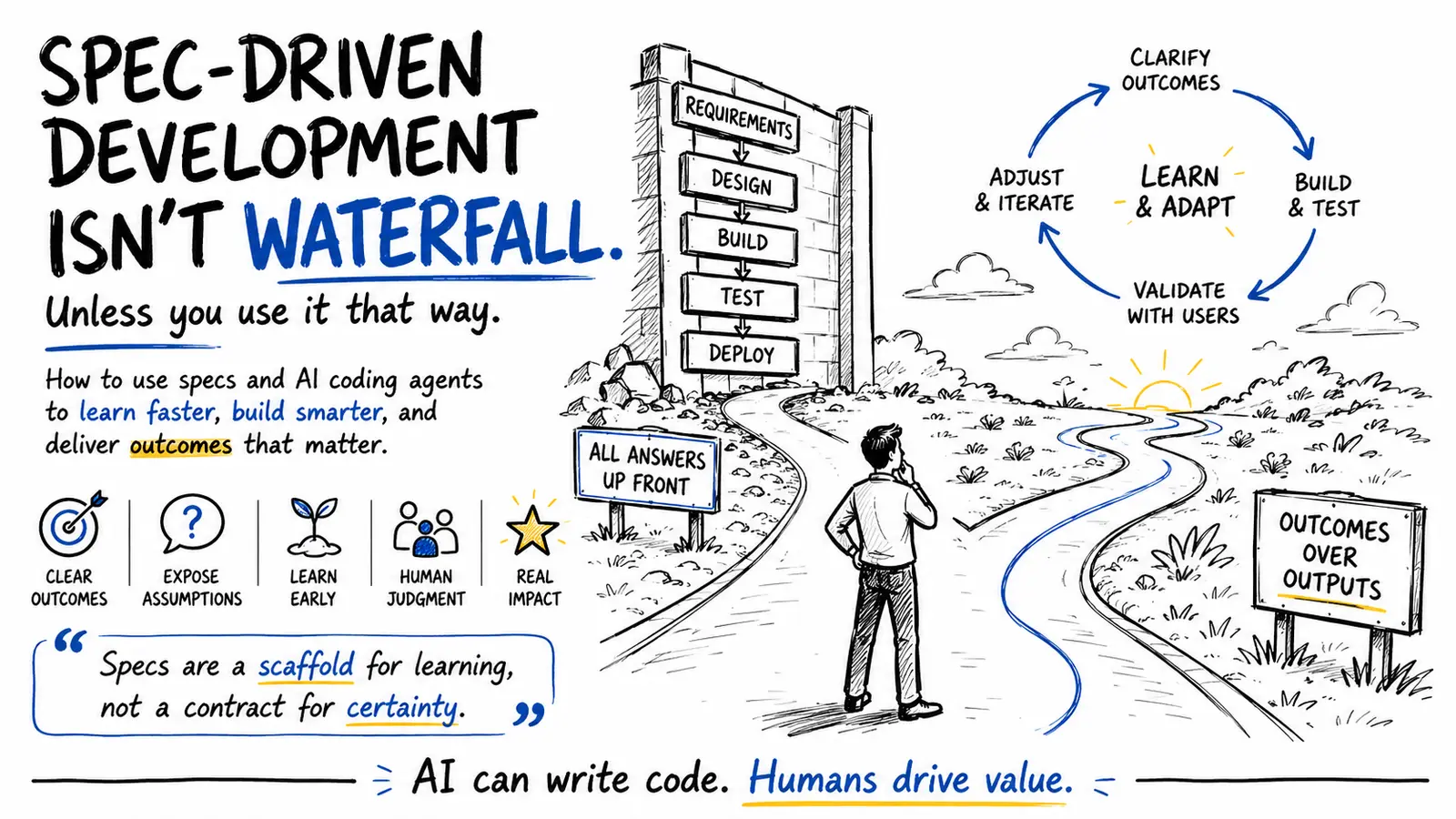
Spec-driven development can be a smarter way to steer AI coding agents, or waterfall with more tokens. The difference is whether the spec creates learning.