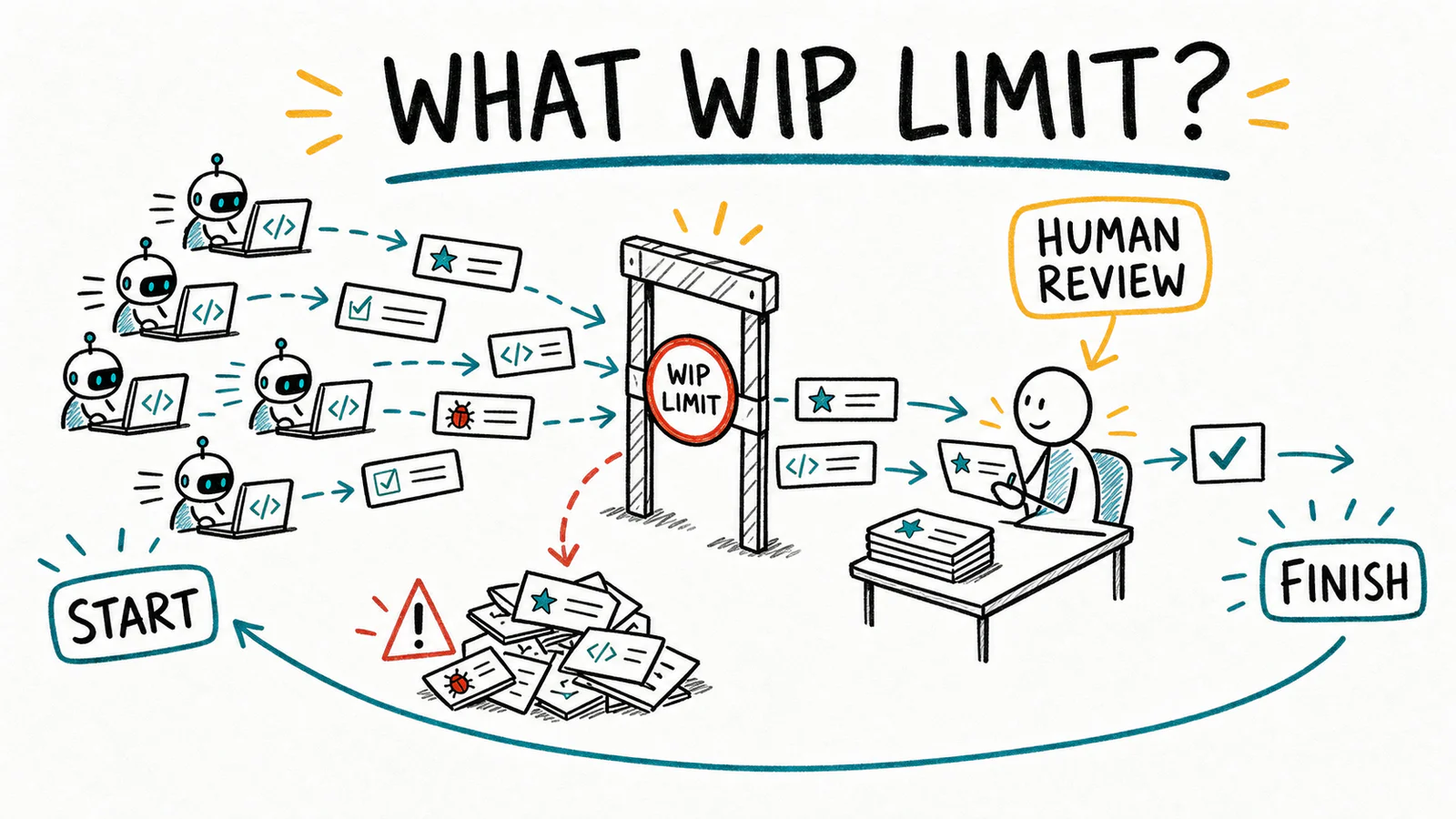
Do WIP Limits Still Make Sense When Agents Write the Code?
Starting numbers for active work and queues, covering solo and multiplayer spec-driven development, pod topology, flow buffers, and replenishment cadence.
Read more →Making sense of agility, scaling, OKRs, product operating models, and leadership: written from 15+ years in the field.
Starting numbers for active work and queues, covering solo and multiplayer spec-driven development, pod topology, flow buffers, and replenishment cadence.
Read more →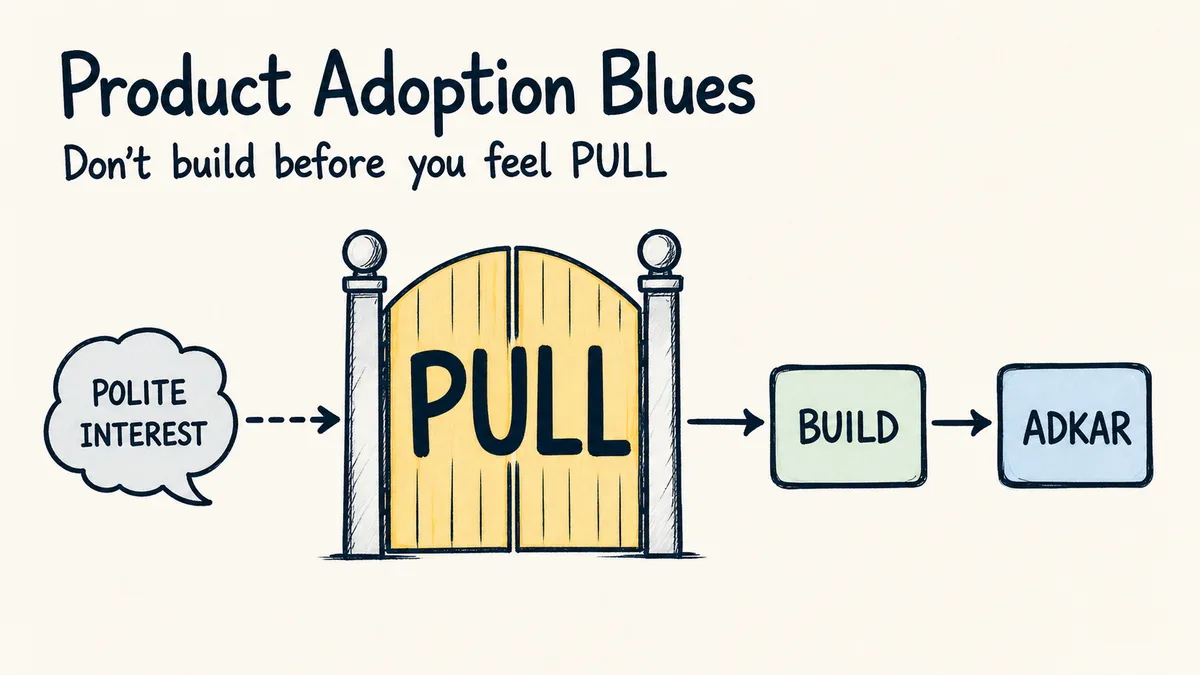
A mandated AI tool gets token adoption: people use it, do a demo, and go through the motions. Treat the change as a product, find the people with an unavoidable project, and check activation and churn before you roll it out to everybody.
Read more →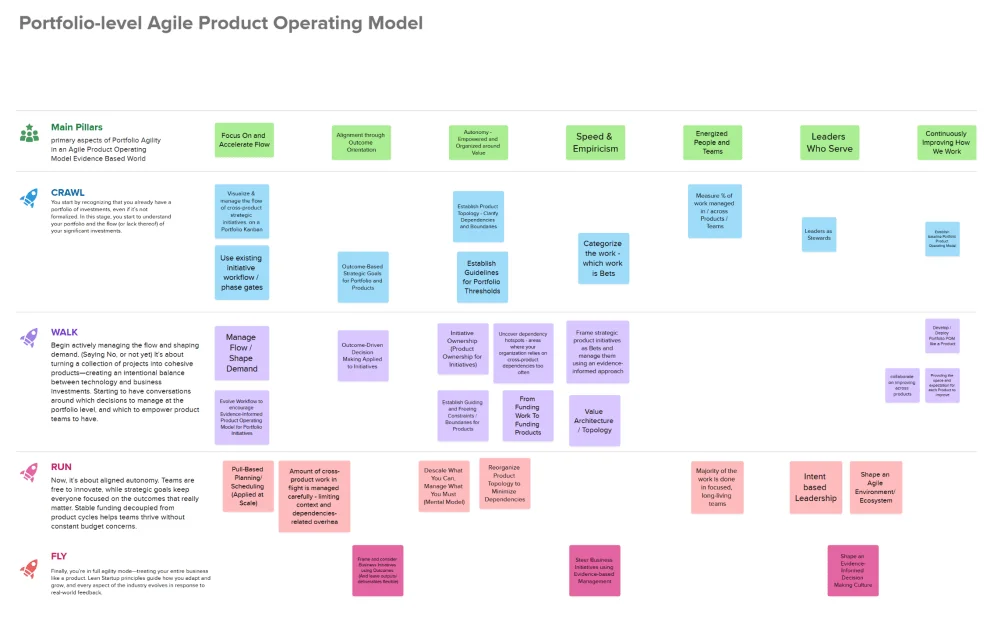
A minibook on portfolio agility: helping multi-product organizations see work clearly, improve flow, and steer investments with evidence instead of reported progress.
Read more →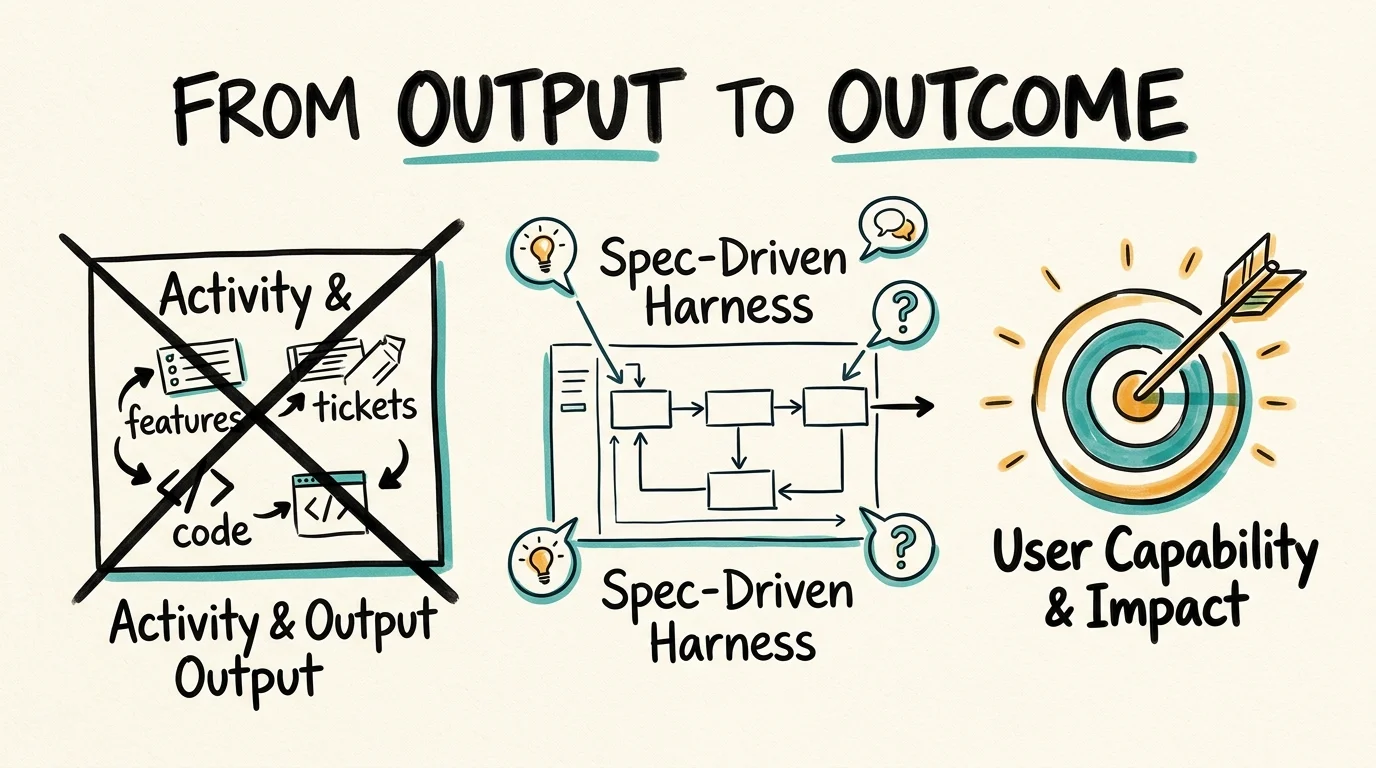
The real magic of spec-driven-development frameworks is how they make the code of the system running the agentic/human development lifecycle explicit, and opens the door to evolving this code to coach agents and humans towards more effective choices much more effectively than ever before.
Read more →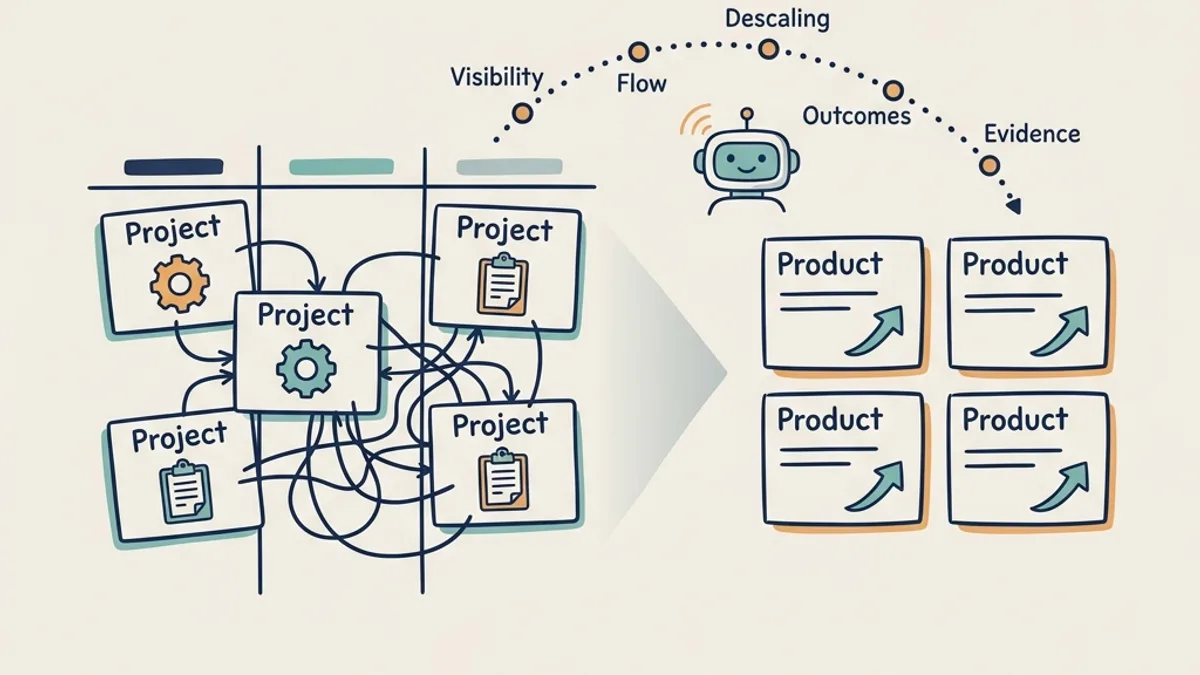
An AI coaching prompt from my "Product Orientation Through LPM" talk: pressure-test one real initiative, find the real gap, and get one experiment to run.
Read more →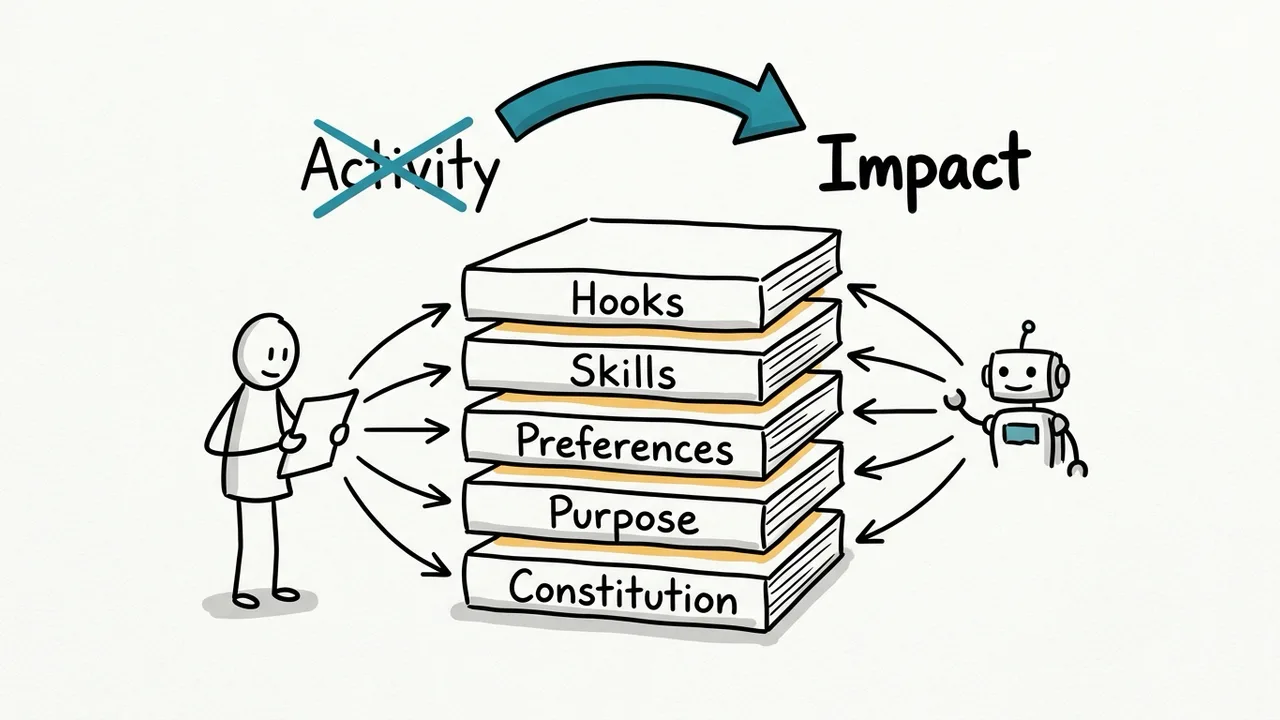
AI agents write code faster than ever, but the bottleneck moved to human decision latency and review capacity. Here is the operating model that closes it: roles, rituals, and metrics.
Read more →